Post by : Amit
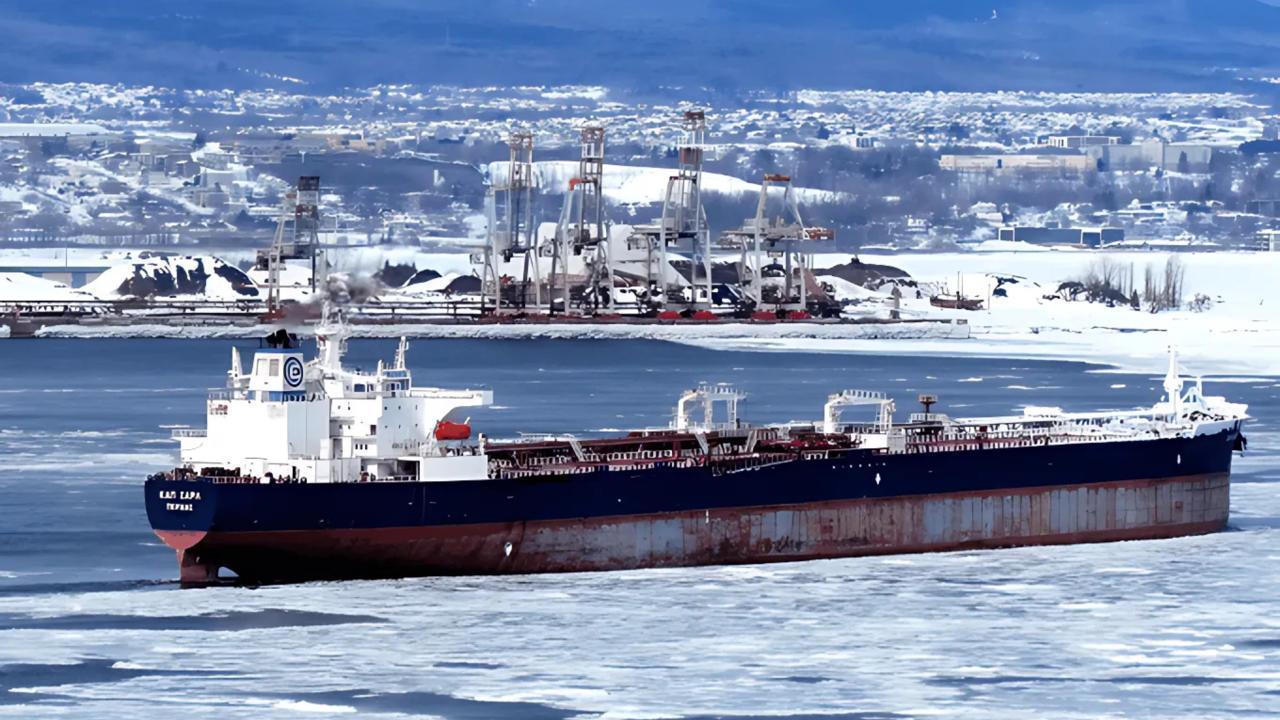
Photo : X / Fundación NUESTROMAR
Sanctioned Oil Tanker’s Arctic Transit Sparks Global Alarm
A sanctioned Suezmax oil tanker has completed a controversial and unprecedented journey through the Russian Arctic without obtaining the legally required permits, setting off alarm bells among maritime regulators, environmental watchdogs, and global trade experts.
The vessel — already blacklisted under Western sanctions — reportedly lacked valid insurance coverage and was overdue for critical safety inspections, making its voyage not only a geopolitical flashpoint but also a potential environmental catastrophe waiting to happen.
This is not just another incident of sanctions evasion. It’s a case study in how geopolitical tensions, legal loopholes, and climate-driven changes to shipping routes are colliding in the Arctic — a region where the consequences of an accident could be far-reaching and irreversible.
A Voyage Without Permission
According to vessel-tracking data, the tanker navigated the Northern Sea Route (NSR) over the past few weeks, bypassing international maritime protocols that require foreign-flagged ships to obtain explicit Russian government approval for Arctic transits. The NSR runs along Russia’s northern coastline and is increasingly being promoted by Moscow as an alternative shipping lane connecting Asia and Europe.
Russia’s Ministry of Transport has strict rules for vessels navigating these icy waters — including mandatory pilotage, escort by nuclear-powered icebreakers in certain zones, and pre-approved navigation plans. The sanctioned Suezmax appears to have ignored these formalities, moving without a registered permit and avoiding inspection by Russian authorities.
Moscow has heavily invested in promoting the NSR as a vital commercial artery, especially as melting ice opens the route for longer periods each year. But the presence of a sanctioned, unvetted tanker undermines Russia’s argument that the Arctic can be both economically lucrative and environmentally safe.
Sanctions, Safety, and Shadows of Enforcement
The vessel is part of a growing list of tankers sanctioned by the United States, European Union, and their allies as part of ongoing measures to cut off Russia’s oil export revenue in the wake of its invasion of Ukraine.
Sanctions typically bar these ships from Western ports, insurance, financing, and access to classification societies — independent organizations that certify vessel safety and seaworthiness. Without a valid classification certificate, a ship’s mechanical reliability, hull integrity, and safety systems cannot be confirmed.
In this case, the tanker is believed to have operated with either an unverified or non-compliant insurer, while also missing its mandatory periodic safety inspection deadlines. That combination — no insurance from a recognized provider and no up-to-date safety certification — would normally prevent a vessel from entering most regulated shipping lanes. But in the remote Russian Arctic, oversight is more challenging.
Maritime safety analysts describe the situation as “high-risk.” As one Arctic shipping expert noted, “The Northern Sea Route is not like crossing the Mediterranean. If a vessel isn’t structurally sound or lacks functioning safety equipment, a breakdown or spill could become uncontrollable very quickly in subzero, ice-laden waters.”
Environmental Risks Amplified by Arctic Conditions
Environmental organizations have long warned about the hazards of increased oil tanker traffic in the Arctic. Unlike in warmer regions, where oil spills can disperse more rapidly, petroleum products in icy waters can become trapped under sea ice, persist for years, and devastate local ecosystems.
A spill in the Russian Arctic could threaten migratory bird habitats, fisheries, and the livelihoods of indigenous communities who depend on clean waters for subsistence. Furthermore, cleanup operations would be severely hampered by a lack of nearby ports, limited seasonal daylight, and extreme weather.
In this instance, the risk was compounded by the fact that the vessel was overdue for inspection. Without current checks, there is no guarantee that its cargo containment systems were functioning properly, that corrosion was under control, or that emergency response equipment was operational.
Geopolitical Dimensions of the Incident
Beyond environmental concerns, this tanker’s voyage has significant geopolitical implications.
For Russia, allowing or not preventing the transit of a sanctioned vessel through the NSR could be interpreted as a strategic move. It signals that Moscow can facilitate the movement of oil despite Western restrictions and that the Northern Sea Route remains open to friendly or neutral trading partners, even for vessels under international scrutiny.
For Western governments, the incident poses a dilemma. Intervening in Arctic waters to intercept such a ship would be legally and diplomatically complex, especially given current tensions. The Arctic Council, the intergovernmental forum designed to address Arctic issues, has largely been inactive since 2022, removing a key venue for cooperative problem-solving.
The situation reflects a larger reality: the Arctic is becoming a stage for sanctions evasion, energy competition, and geopolitical posturing.
A Growing Problem: The Risk of Normalizing Sanctions Evasion
Maritime trade specialists warn that each time a sanctioned ship completes a high-profile voyage without consequence, the deterrent effect of sanctions erodes.
“This isn’t just about one tanker,” explained a European maritime policy analyst. “If vessel operators start to believe that remote routes like the Northern Sea Route or certain parts of the Southern Hemisphere are safe havens from sanctions enforcement, then you’ll see an expansion of the so-called ‘shadow fleet.’ That’s a direct threat to the credibility of the global maritime regulatory system.”
The “shadow fleet” — an informal network of older tankers often operating with opaque ownership, dubious insurance, and minimal safety oversight — has grown significantly since Western restrictions on Russian oil exports began. These vessels are often involved in ship-to-ship transfers in international waters, transiting routes with limited surveillance, and exploiting legal grey areas.
Calls for Tighter Monitoring and International Coordination
Experts in maritime security are now urging governments and international organizations to step up surveillance in Arctic waters. Suggested measures include:
However, implementing these measures will require cooperation between countries that currently have strained relations — a tall order in today’s geopolitical climate.
Environmental and Economic Stakes
The stakes go beyond immediate maritime safety. The Arctic is warming at roughly four times the global average rate, opening sea routes for longer periods each year. That means more vessels — sanctioned or not — will be tempted to use the NSR to cut transit times between Asia and Europe.
If incidents like this become more common, there could be both environmental and economic fallout. A major spill would likely prompt stricter regulations, higher insurance premiums, and potential trade disruptions.
Conversely, if shadow fleet operations in the Arctic go unchecked, legitimate shippers may be undercut by operators who evade safety and environmental compliance, distorting global freight markets.
A Dangerous Precedent in an Unforgiving Environment
The sanctioned Suezmax tanker’s Arctic transit is more than a maritime curiosity — it’s a warning sign. It demonstrates how sanctions enforcement gaps, environmental vulnerabilities, and shifting shipping patterns are intersecting in one of the world’s most fragile regions.
Unless decisive steps are taken to improve monitoring and enforcement, the Arctic could become a preferred route for sanctioned and substandard vessels — a trend with potentially devastating consequences.
For now, the vessel in question has completed its voyage without incident. But as many experts have pointed out, luck is not a sustainable maritime safety strategy. The question is not whether another such ship will attempt the same journey — but whether the world will be ready when it does.
Suezmax oil tanker, Russian Arctic shipping



Advances in Aerospace Technology and Commercial Aviation Recovery
Insights into breakthrough aerospace technologies and commercial aviation’s recovery amid 2025 chall

Defense Modernization and Strategic Spending Trends
Explore key trends in global defense modernization and strategic military spending shaping 2025 secu

Tens of Thousands Protest in Serbia on Anniversary of Deadly Roof Collapse
Tens of thousands in Novi Sad mark a year since a deadly station roof collapse that killed 16, prote

Canada PM Carney Apologizes to Trump Over Controversial Reagan Anti-Tariff Ad
Canadian PM Mark Carney apologized to President Trump over an Ontario anti-tariff ad quoting Reagan,

The ad that stirred a hornets nest, and made Canadian PM Carney say sorry to Trump
Canadian PM Mark Carney apologizes to US President Trump after a tariff-related ad causes diplomatic

Bengaluru-Mumbai Superfast Train Approved After 30-Year Wait
Railways approves new superfast train connecting Bengaluru and Mumbai, ending a 30-year demand, easi




