Post by : Amit
Photo : X / Kyrylo Shevchenko
Sanctions Tighten Grip on Nayara’s Oil Imports
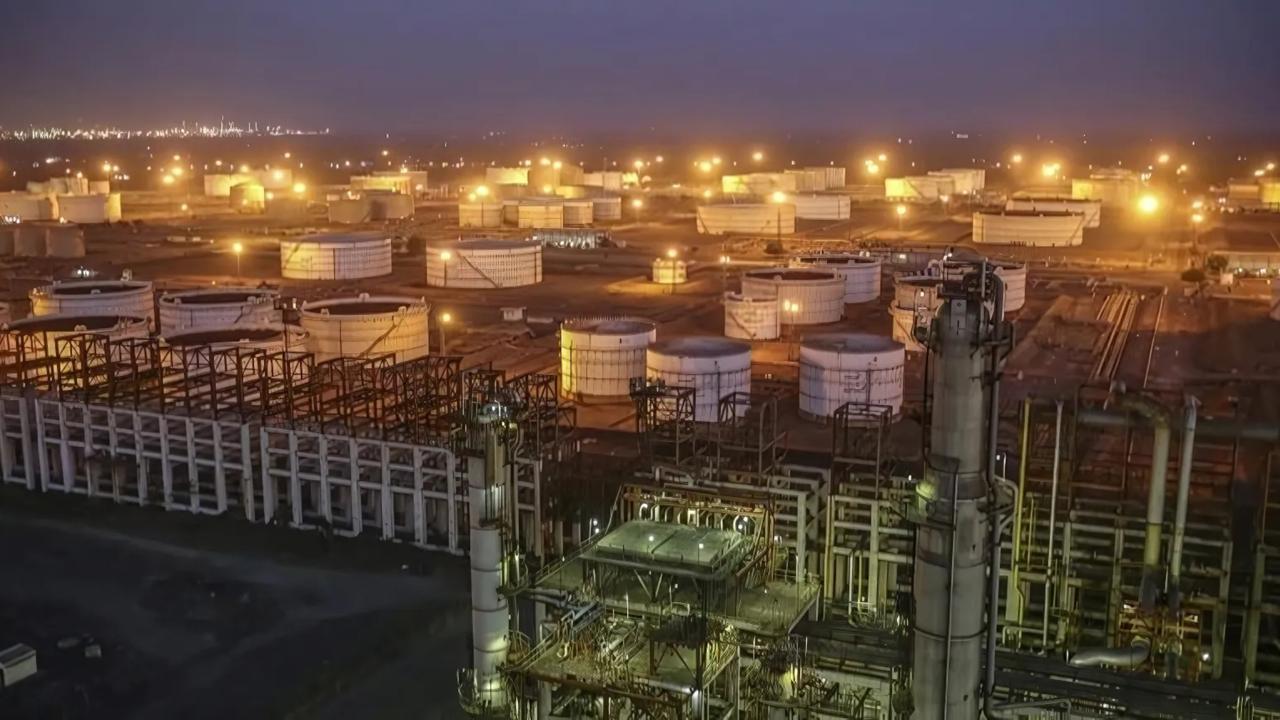
Nayara Energy, one of India’s largest private refiners, is confronting mounting operational challenges as U.S. sanctions increasingly target Russia-linked oil tankers. The company, which operates the massive 400,000 barrels-per-day Vadinar refinery in Gujarat, has seen multiple crude deliveries delayed or canceled in recent weeks. According to industry sources, the tightening of restrictions has placed unprecedented strain on the refiner’s supply chain, particularly its access to Russian crude — which has been its dominant feedstock for the past three years.
The immediate effect has been a scramble to secure alternative shipping options and crude sources, but analysts warn that these measures come with higher costs and logistical complexities. The sanctions are part of Washington’s intensified push to choke off Moscow’s oil revenues, but they are reverberating far beyond Russia’s borders, reshaping tanker logistics, freight rates, and trade flows across the global energy market.
Targeting Russia’s “Shadow Fleet”
At the core of the disruption is Washington’s crackdown on what’s known as Russia’s “shadow fleet” — an informal network of aging tankers that has become the backbone of Moscow’s oil export strategy since the start of the Ukraine war in 2022. These vessels, many over two decades old, operate outside conventional regulatory oversight, often sailing under flags of convenience and engaging in ship-to-ship transfers in international waters to obscure cargo origins.
The U.S. Treasury’s sanctions have progressively expanded to include individual ships, shipping companies, and intermediaries suspected of facilitating Russian oil trade at prices above the Western-imposed $60-per-barrel cap. By blacklisting these tankers, the U.S. seeks to disrupt the flow of discounted crude to major buyers like India and China, thereby shrinking the Kremlin’s wartime revenue.
For refiners like Nayara Energy, the consequences are immediate and concrete: the sudden unavailability of sanctioned vessels means fewer shipping options, higher chartering costs, and greater risk exposure in securing deliveries.
Nayara’s Russian Connection Under Strain
Nayara’s close ties to Russia date back to 2017, when a consortium led by Rosneft — Moscow’s state-owned oil giant — acquired a 49.13% stake in the company. Since the outbreak of the Ukraine conflict, these ties have deepened, with Nayara emerging as one of the largest buyers of Russia’s Urals blend outside of Europe.
By purchasing Russian barrels at steep discounts, Nayara has been able to significantly reduce input costs for its Vadinar refinery, which in turn has allowed it to remain competitive in both the domestic fuel market and export markets for diesel and gasoline. The savings also helped the company offset volatility in global crude benchmarks, enabling strong margins even during periods of price spikes.
But now, with a substantial portion of Russia’s shadow fleet effectively barred from servicing Indian ports, Nayara’s reliance on this trade is being tested like never before.
Shipments Delayed and Contracts Uncertain
Industry tracking data suggests that at least three shipments bound for Vadinar in the past month have been delayed due to difficulties in securing compliant vessels. In some cases, cargoes have been forced to wait at offshore transshipment hubs while alternative ships were sourced — a process that can add weeks to delivery timelines.
This disruption is not just an operational inconvenience; it has real financial implications. Chartering compliant vessels from a shrinking pool of eligible ships has driven freight rates upward, eroding the price advantage of Russian crude. Insurance premiums for tankers willing to transport Russian barrels have also surged, further squeezing margins.
Sources say some of Nayara’s long-term supply contracts with Russian sellers are now under renegotiation to account for these higher logistics costs and delivery uncertainties.
India’s Tightrope Diplomacy
India’s official stance on Russian oil imports has been consistent: as a developing economy with vast energy needs, it will buy crude from any source offering favorable terms. The government has repeatedly emphasized that such imports are essential for domestic energy security and economic stability.
However, cases like Nayara’s highlight the challenges of balancing this policy with the growing reach of Western sanctions. While government-to-government purchases and state-run refiners have largely avoided serious disruption, private-sector companies with Russian ownership stakes are more exposed to compliance risks. Financial transactions, in particular, face closer scrutiny from Western banks wary of secondary sanctions, which can slow or complicate payments for cargoes.
This diplomatic balancing act becomes more precarious as the U.S. and its allies continue to tighten enforcement, leaving India in the position of defending its import strategy while ensuring it does not run afoul of global financial systems.
Alternative Sourcing on the Table
Faced with mounting delivery challenges, Nayara is actively exploring alternative sourcing strategies. Spot purchases from Middle Eastern suppliers — notably Iraq’s Basra crude and the UAE’s Murban — are under consideration, though these grades are more expensive than Russian Urals. Switching feedstocks would also require operational adjustments at the Vadinar refinery, which has been optimized for processing medium-sour crudes like Urals.
Another option is to work through non-sanctioned intermediaries that can arrange compliant transport for Russian barrels. However, these arrangements typically involve complex shipping routes, multiple transfers, and higher insurance and administrative costs. There is also the risk that such intermediaries could later be targeted by sanctions, creating additional uncertainty.
Global Ripple Effects
The sanctions’ impact on Nayara is a microcosm of the wider disruption in the global oil supply chain. Freight rates for Aframax and Suezmax tankers — the vessel classes most commonly used for Russian crude — have surged in the Indian Ocean and Persian Gulf regions. This has ripple effects on other crude flows, as refiners in unrelated markets also face higher shipping costs.
The blacklisting of vessels has also intensified competition for compliant tonnage, prompting some traders to bid aggressively for available ships, further driving up rates. These developments threaten to undermine the economic rationale for buying Russian oil at a discount, especially for buyers located far from Russian ports.
Expert Perspectives on the Sanctions Strategy
Maritime and energy analysts are divided on the long-term efficacy of the U.S. sanctions. Proponents argue that constraining the shadow fleet will ultimately force Russia to sell less oil or accept deeper discounts, weakening its fiscal position. Critics, however, warn that the policy risks creating new distortions in the shipping market, benefiting opportunistic middlemen while failing to significantly dent Russia’s export volumes.
“Targeting the shadow fleet is like squeezing a balloon,” says Dr. Priya Malhotra, a senior fellow at the Energy Policy Institute. “You might shrink one part of the market, but the trade will simply reroute through less transparent channels.” She adds that refiners like Nayara “are caught in the crossfire of a sanctions regime designed for geopolitical impact rather than commercial predictability.”
The Vadinar Refinery: A Strategic Asset at Risk
Nayara’s Vadinar facility is not just one of India’s largest refineries; it is also among the most technologically advanced in Asia, with extensive secondary processing units that allow it to convert heavier, sour crudes into high-value fuels. Operating at or near full capacity is critical for maintaining profitability, as downtime or reduced throughput can quickly erode margins.
Any sustained disruption in feedstock supply — whether from sanctions, shipping bottlenecks, or geopolitical events — could therefore have outsized consequences, not only for Nayara’s bottom line but also for regional fuel availability.
A Test of Resilience
For Nayara Energy, the next few months will be a test of adaptability and resilience. Securing compliant shipping options, diversifying crude sources, and managing higher freight costs will be key to sustaining operations without sacrificing competitiveness. The company’s ability to navigate these challenges will also serve as a bellwether for other refiners heavily invested in Russian crude.
From a policy standpoint, the episode underscores the interconnectedness of energy markets and geopolitics. Sanctions aimed at one country can reverberate across continents, reshaping trade flows, altering cost structures, and forcing companies to rethink long-standing commercial relationships.
Washington’s sanctions strategy shows no sign of easing, and Moscow’s reliance on its shadow fleet is unlikely to disappear overnight. That leaves buyers like Nayara operating in an environment where every cargo is a logistical puzzle — and where the price of energy security is climbing higher with each passing month.
crude oil, import Export



Advances in Aerospace Technology and Commercial Aviation Recovery
Insights into breakthrough aerospace technologies and commercial aviation’s recovery amid 2025 chall

Defense Modernization and Strategic Spending Trends
Explore key trends in global defense modernization and strategic military spending shaping 2025 secu

Tens of Thousands Protest in Serbia on Anniversary of Deadly Roof Collapse
Tens of thousands in Novi Sad mark a year since a deadly station roof collapse that killed 16, prote

Canada PM Carney Apologizes to Trump Over Controversial Reagan Anti-Tariff Ad
Canadian PM Mark Carney apologized to President Trump over an Ontario anti-tariff ad quoting Reagan,

The ad that stirred a hornets nest, and made Canadian PM Carney say sorry to Trump
Canadian PM Mark Carney apologizes to US President Trump after a tariff-related ad causes diplomatic

Bengaluru-Mumbai Superfast Train Approved After 30-Year Wait
Railways approves new superfast train connecting Bengaluru and Mumbai, ending a 30-year demand, easi




