Post by : Amit
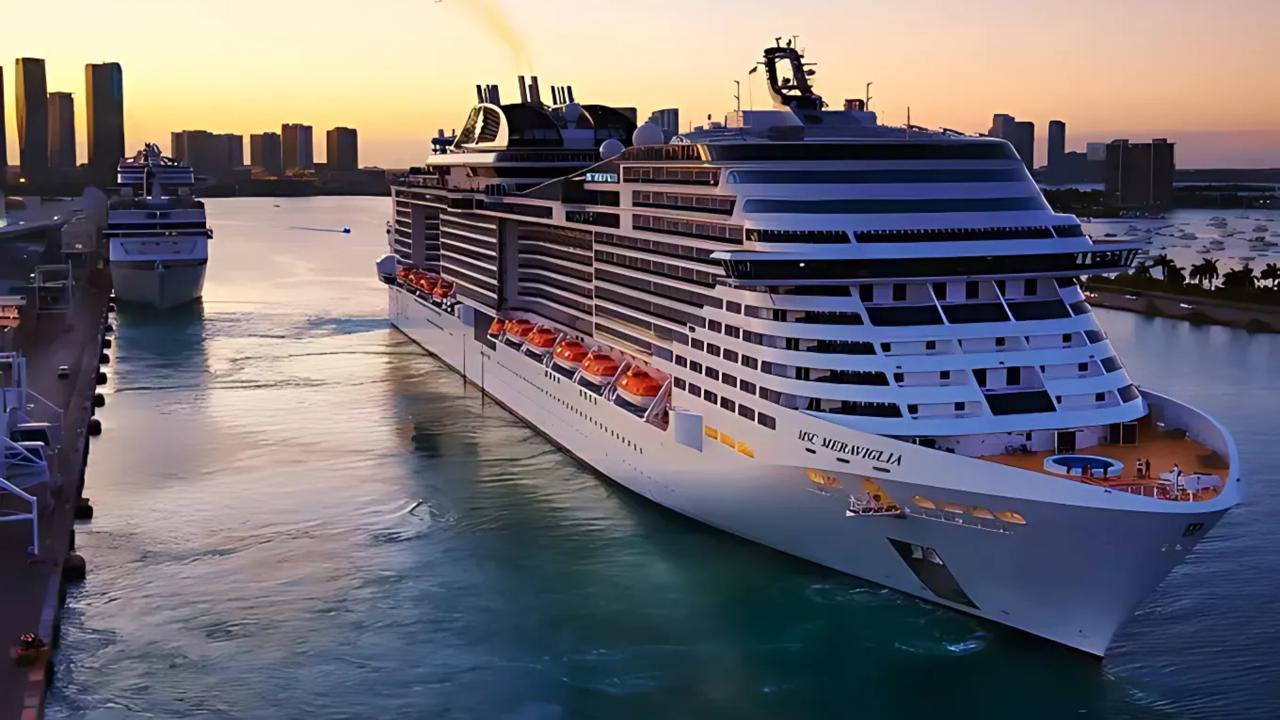
Photo : X / Economic Times
A Regulatory Milestone for Saudi Maritime Tourism
Saudi Arabia has officially launched its first-ever cruise ship regulations, laying the groundwork for a robust and internationally-aligned cruise industry along the Red Sea. The announcement marks a historic turning point for the Kingdom’s ambitions to become a global tourism powerhouse under Vision 2030, and opens new doors for foreign cruise operators, investors, and shipbuilders to enter the Saudi market with regulatory clarity.
The regulations, developed and issued by the Transport General Authority (TGA), will oversee cruise ship registration, safety, inspection, environmental compliance, and port operation protocols. More importantly, they create a formal legal environment where luxury cruise operations can thrive alongside Saudi Arabia’s emerging Red Sea resorts and smart city developments like NEOM and The Red Sea Global.
Enabling Maritime Tourism Under Vision 2030
Saudi Arabia’s Vision 2030 is more than a domestic reform agenda—it’s a strategic blueprint to rebrand the Kingdom as a world-class destination for leisure, investment, and sustainable growth. The cruise sector has now been officially embraced as a cornerstone of this transformation, with officials projecting up to 1.5 million cruise passengers annually by the end of the decade.
Until now, Saudi lacked formal regulations specific to cruise operations. Cruise lines like MSC and Scenic had to navigate port logistics through general shipping rules or partner with government bodies on a case-by-case basis. With the new framework in place, maritime tourism operators can plan long-term deployments, construct Saudi-flagged cruise ships, and establish permanent terminals with investor backing.
Cruise Sector to Catalyze Port Development and Shipbuilding
The TGA’s cruise ship regulation is also expected to stimulate domestic shipbuilding and naval engineering, particularly for luxury and mid-sized cruise vessels adapted to regional travel. Saudi Arabia is already investing heavily in marine infrastructure along the Red Sea coast, including the development of:
By enabling domestic ship registration and operational licensing, the new rules will allow Saudi investors and international cruise lines to commission custom-built vessels locally or deploy international fleets under Saudi flag administration.
Environmental and Safety Mandates at the Core
One of the key highlights of the new regulations is the emphasis on marine environmental sustainability and passenger safety. Saudi Arabia has committed to aligning its maritime tourism laws with IMO (International Maritime Organization) standards, including:
In a region rich with coral reefs, marine life, and ecologically sensitive zones, the Kingdom aims to build a cruise sector that prioritizes low environmental impact, with zero-discharge targets near coastal sanctuaries and real-time vessel tracking systems to prevent accidents.
Unlocking Investment and Foreign Participation
The cruise ship regulations are also designed to attract private investment and enable foreign cruise lines to establish long-term operations in Saudi waters. Under the new law:
This opens the doors for global players like Carnival, Royal Caribbean, and Norwegian Cruise Line to set up regional bases, creating jobs, port activity, and tourism revenue in the Kingdom while giving travelers a new alternative to Mediterranean and Caribbean routes.
Complementing Red Sea Megaprojects
The launch of the cruise ship regulatory framework is directly aligned with mega-tourism projects along the Red Sea, including:
These projects already include maritime terminals, cruise ports, and resort-linked docks, which will now be governed by uniform legal codes that simplify operations and ensure compliance.
Human Capital and Maritime Workforce Development
Saudi Arabia’s maritime transformation also includes a human capital component. The TGA regulations support the training and certification of Saudi seafarers, cruise crew members, and marine engineers. New maritime academies and partnerships with global cruise training programs are being set up to build a homegrown workforce for luxury shipping operations.
This localization push aims to create thousands of jobs in navigation, hospitality, maintenance, and port operations, supporting the Kingdom’s broader aim of reducing unemployment and diversifying income streams.
Boosting Regional Cruise Connectivity
Beyond domestic waters, Saudi Arabia envisions playing a central role in Middle East cruise itineraries, linking with UAE, Egypt, and Jordan to create multi-country Red Sea and Gulf routes. The cruise regulations are seen as a stepping stone toward bilateral maritime tourism agreements, positioning Saudi as a cruise turnaround port and not just a port of call.
This regional strategy would help spread tourism benefits across port cities and further integrate Saudi Arabia into the global cruise map—one of the fastest-growing sectors in post-pandemic leisure travel.
New Maritime Chapter Begins
With the launch of its first-ever cruise ship regulations, Saudi Arabia has moved beyond vision into execution. The move sends a strong message to global investors, cruise lines, and maritime technology providers: the Red Sea is open for business—and it’s being built for the future.
From eco-compliant cruise fleets to smart terminals and luxury tourism corridors, Saudi Arabia is fast becoming a serious player in maritime tourism and shipbuilding. And with formal regulations now in place, the waters ahead look more navigable than ever.
Marintime, Cruise Ship, Saudi Tourism



Advances in Aerospace Technology and Commercial Aviation Recovery
Insights into breakthrough aerospace technologies and commercial aviation’s recovery amid 2025 chall

Defense Modernization and Strategic Spending Trends
Explore key trends in global defense modernization and strategic military spending shaping 2025 secu

Tens of Thousands Protest in Serbia on Anniversary of Deadly Roof Collapse
Tens of thousands in Novi Sad mark a year since a deadly station roof collapse that killed 16, prote

Canada PM Carney Apologizes to Trump Over Controversial Reagan Anti-Tariff Ad
Canadian PM Mark Carney apologized to President Trump over an Ontario anti-tariff ad quoting Reagan,

The ad that stirred a hornets nest, and made Canadian PM Carney say sorry to Trump
Canadian PM Mark Carney apologizes to US President Trump after a tariff-related ad causes diplomatic

Bengaluru-Mumbai Superfast Train Approved After 30-Year Wait
Railways approves new superfast train connecting Bengaluru and Mumbai, ending a 30-year demand, easi




