Post by : Amit
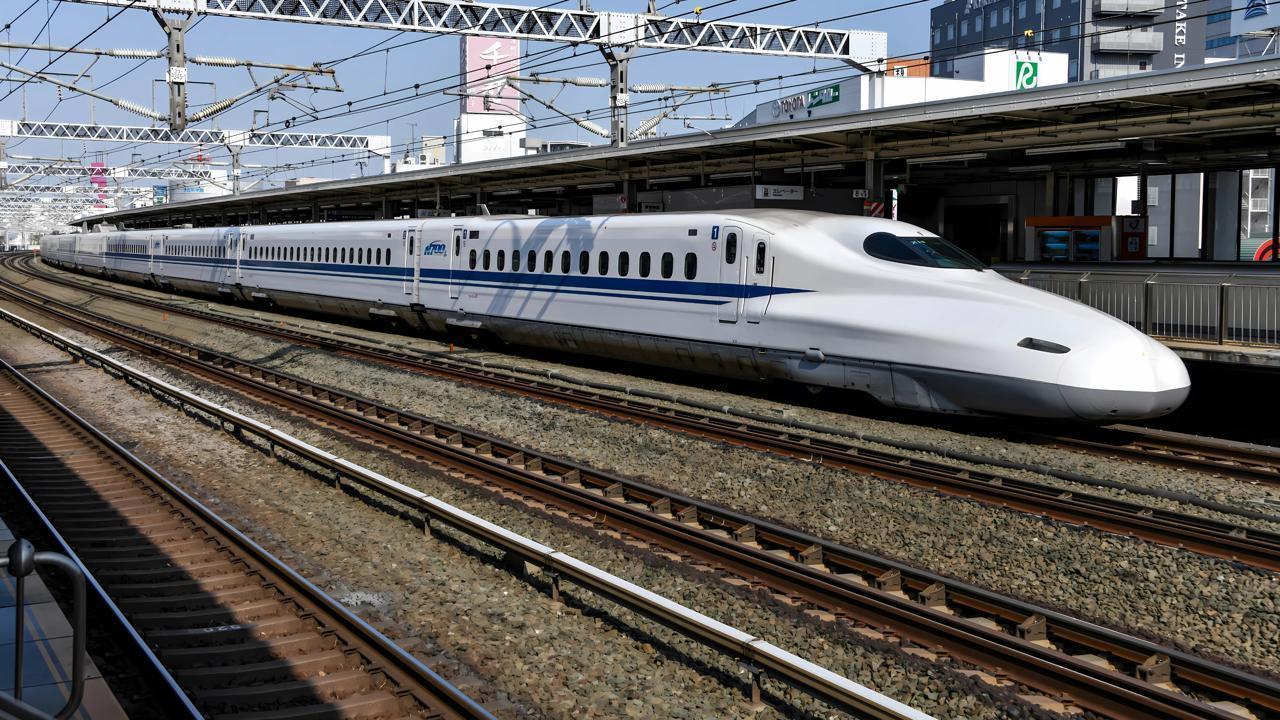
More than just a marvel of speed, Japan’s Shinkansen—the original “bullet train”—stands as one of the most transformative infrastructure projects in modern history. Launched in 1964, on the eve of the Tokyo Olympics, the Shinkansen didn’t just connect cities—it rewired a nation’s future, reshaped its economy, and redefined what high-speed rail could mean for the world.
Born out of necessity in the aftermath of World War II, the Shinkansen was Japan’s ambitious answer to rising urban congestion, regional inequality, and the demand for modern mobility. The first line, stretching between Tokyo and Osaka, reduced a grueling seven-hour journey to just four—an achievement that stunned the world at the time. Today, that same trip takes less than 2.5 hours, with trains known for arriving within seconds of schedule and recording zero passenger deaths due to accidents in over six decades of operation.
But the Shinkansen’s success runs deeper than speed. It ignited a new era of national connectivity, binding rural towns to urban centers, unlocking real estate markets, and driving regional economic regeneration. Industries boomed along the corridor. Small cities became business hubs. Tourism soared. And in a country where precision and safety are paramount, the bullet train became a symbol of national pride, engineering prowess, and public trust.
The network now covers more than 2,800 kilometers, forming a high-speed spine that supports Japan’s economy. Yet its legacy isn’t just physical—it’s environmental and ideological. The Shinkansen has helped Japan reduce its reliance on polluting transport by offering an electrified, energy-efficient rail alternative that emits a fraction of the carbon footprint of planes or automobiles. Over time, the system has evolved with innovations like maglev technology, automated control systems, and seismic shock absorbers, ensuring both progress and resilience in the face of natural disasters.
Globally, the Shinkansen has set the gold standard for high-speed rail. Its success inspired the creation of similar systems in Europe, China, South Korea, and now increasingly guides planning in the United States, where several high-speed rail projects hope to replicate Japan’s winning formula of speed, sustainability, and seamless integration.
At its heart, the Shinkansen is more than a transportation solution—it’s a nation-building catalyst. It transformed how people live, where they work, and how economies grow. As countries across the globe face mounting challenges around urbanization, climate change, and mobility, the Shinkansen remains a living blueprint for how visionary infrastructure can future-proof a country—on rails, at speed, and with purpose.
Japan, High Speed Rail Project



Advances in Aerospace Technology and Commercial Aviation Recovery
Insights into breakthrough aerospace technologies and commercial aviation’s recovery amid 2025 chall

Defense Modernization and Strategic Spending Trends
Explore key trends in global defense modernization and strategic military spending shaping 2025 secu

Tens of Thousands Protest in Serbia on Anniversary of Deadly Roof Collapse
Tens of thousands in Novi Sad mark a year since a deadly station roof collapse that killed 16, prote

Canada PM Carney Apologizes to Trump Over Controversial Reagan Anti-Tariff Ad
Canadian PM Mark Carney apologized to President Trump over an Ontario anti-tariff ad quoting Reagan,

The ad that stirred a hornets nest, and made Canadian PM Carney say sorry to Trump
Canadian PM Mark Carney apologizes to US President Trump after a tariff-related ad causes diplomatic

Bengaluru-Mumbai Superfast Train Approved After 30-Year Wait
Railways approves new superfast train connecting Bengaluru and Mumbai, ending a 30-year demand, easi




