Post by : Amit
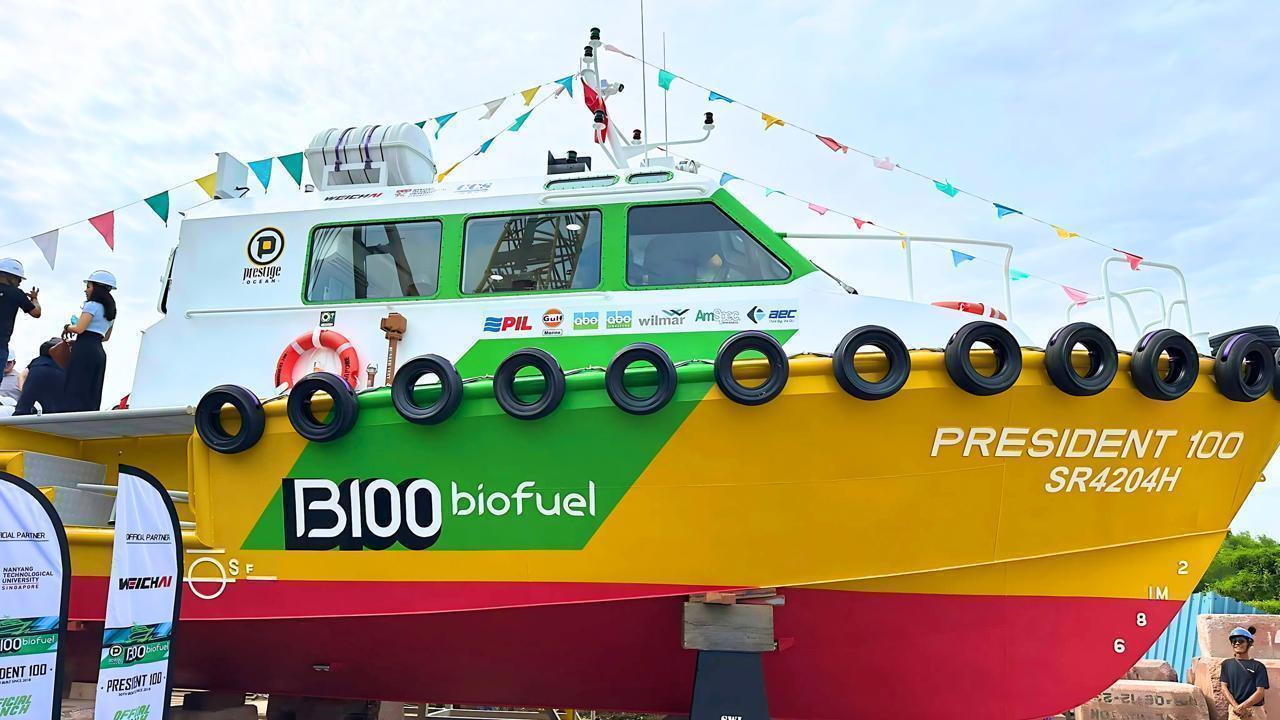
Photo : Linkdin / AmSpec Group
A Landmark for Green Maritime Propulsion in Asia
In a major step toward maritime decarbonization, Pinnacle Marine has launched Singapore’s first fully biodiesel-powered harbor craft, positioning the city-state as a regional leader in clean marine propulsion technologies. This innovation marks a significant milestone in Singapore’s drive to green its domestic fleet and aligns with its broader Maritime Singapore Decarbonisation Blueprint, which aims to cut emissions and transition port operations to sustainable fuels.
This new vessel stands as a working model of cleaner inland and nearshore shipping, powered entirely by bio-derived diesel fuel sourced from renewable feedstocks.
Meet the Vessel: PMAX 1
The newly launched harbor craft, named PMAX 1, is a dual-purpose vessel designed for bunkering support and transportation operations within Singapore’s bustling port environment. Built by Pinnacle Marine, the PMAX 1 operates on 100% biodiesel (B100)—a renewable, biodegradable fuel made from used cooking oil and other non-fossil organic matter.
PMAX 1 is equipped with biofuel-compatible marine engines, specially tuned for optimized combustion and low particulate emissions. Its deployment is expected to significantly reduce carbon dioxide (CO₂), sulfur oxides (SOₓ), and nitrogen oxides (NOₓ) emissions compared to conventional marine gas oil.
Biodiesel as a Decarbonization Pathway
While other low-carbon alternatives like LNG, hydrogen, and ammonia are still under development or in early stages of port infrastructure adaptation, biodiesel stands out as a drop-in solution. It requires minimal engine modifications and can utilize existing fueling logistics. This makes it a pragmatic transition fuel for port operations and short-haul marine vessels.
Singapore’s push toward biodiesel-powered harbor craft is part of a broader effort to accelerate the greening of the domestic maritime fleet by 2030, targeting net-zero emissions for port waterside operations by 2050.
Government and Industry Collaboration at Work
The PMAX 1 launch has been supported by the Maritime and Port Authority of Singapore (MPA) under its Green Port Programme and low-carbon shipping initiatives. MPA has provided regulatory facilitation and incentives to encourage early adopters of alternative fuels.
Industry leaders including Chevron, ExxonMobil, and Neste have also contributed to the development of Singapore’s biodiesel supply chain, helping ensure stable access to high-quality B100 fuel in port areas.
Pinnacle Marine CEO David Cheah emphasized that this is "just the beginning" and confirmed that the company plans to expand its biodiesel-powered fleet over the next five years, with additional vessels already under design.
Real-World Efficiency and Emission Results
Initial trials and operating data from PMAX 1 show a significant drop in total GHG emissions, alongside improved combustion stability. The vessel’s engine systems, supplied by a leading European OEM, have been optimized for B100 performance under tropical conditions.
Onboard monitoring systems are also tracking fuel efficiency and emissions output, feeding into a broader digital platform for real-time reporting and compliance with IMO environmental frameworks.
By switching from marine gas oil to B100, PMAX 1 reduces CO₂ emissions by up to 85% on a lifecycle basis—depending on feedstock and production pathway.
Setting a Precedent for Regional Adoption
Singapore’s pioneering step could set a precedent for other Asian ports—especially in Indonesia, Malaysia, Thailand, and Vietnam—which operate extensive domestic fleets and face mounting international pressure to decarbonize.
By proving that commercial harbor craft can operate reliably and economically on biodiesel, Pinnacle Marine has opened a new pathway for regional fleet operators to begin transitioning, even without large-scale infrastructure investments.
Biodiesel Production and Supply Considerations
Singapore has strategically positioned itself as a biofuel trading and refining hub, thanks in part to investments from Neste and local biodiesel producers. Neste’s Tuas plant, for example, is one of the world’s largest producers of renewable diesel and sustainable aviation fuel (SAF), capable of supporting the marine sector’s biofuel needs.
This existing capacity helps ensure supply chain continuity, a key concern for operators exploring alternatives to fossil-based marine fuels.
Towards a Cleaner Port Ecosystem
The PMAX 1 initiative ties into broader green port transformation efforts, including shore power infrastructure, electric tugboats, and smart emissions monitoring systems being tested across Singapore's maritime cluster.
With one-third of global trade flowing through the Singapore Strait, even marginal emission reductions in its harbor craft fleet can have a meaningful impact on global maritime emissions.
What’s Next for Biodiesel Marine Vessels?
The success of PMAX 1 has already sparked interest from other fleet owners and port service operators, with discussions underway for potential fleet conversions and newbuilds using the same B100-compatible engine configuration.
MPA is also reportedly working with class societies and R&D institutions to develop standards and certifications for 100% biodiesel operations, aiming to scale adoption across vessel types.
Pinnacle Marine, meanwhile, has committed to releasing performance and emissions data publicly to foster transparency and encourage industry-wide learning.
Biodiesel’s Viability Proven in Port Waters
With PMAX 1 now fully operational, Singapore has demonstrated that biodiesel is not just a theoretical solution, but a ready-to-deploy technology capable of greening port operations today.
Pinnacle Marine’s successful launch reaffirms Singapore’s status as a maritime innovation hub, and if widely adopted, this clean propulsion model could form a key pillar in Asia’s shift toward low-carbon shipping.
As global regulatory pressure intensifies, such early actions give Singapore a valuable head start—and may soon inspire other major ports to follow suit.
biodiesel, green marine, Singapore



Advances in Aerospace Technology and Commercial Aviation Recovery
Insights into breakthrough aerospace technologies and commercial aviation’s recovery amid 2025 chall

Defense Modernization and Strategic Spending Trends
Explore key trends in global defense modernization and strategic military spending shaping 2025 secu

Tens of Thousands Protest in Serbia on Anniversary of Deadly Roof Collapse
Tens of thousands in Novi Sad mark a year since a deadly station roof collapse that killed 16, prote

Canada PM Carney Apologizes to Trump Over Controversial Reagan Anti-Tariff Ad
Canadian PM Mark Carney apologized to President Trump over an Ontario anti-tariff ad quoting Reagan,

The ad that stirred a hornets nest, and made Canadian PM Carney say sorry to Trump
Canadian PM Mark Carney apologizes to US President Trump after a tariff-related ad causes diplomatic

Bengaluru-Mumbai Superfast Train Approved After 30-Year Wait
Railways approves new superfast train connecting Bengaluru and Mumbai, ending a 30-year demand, easi




