Post by : Amit
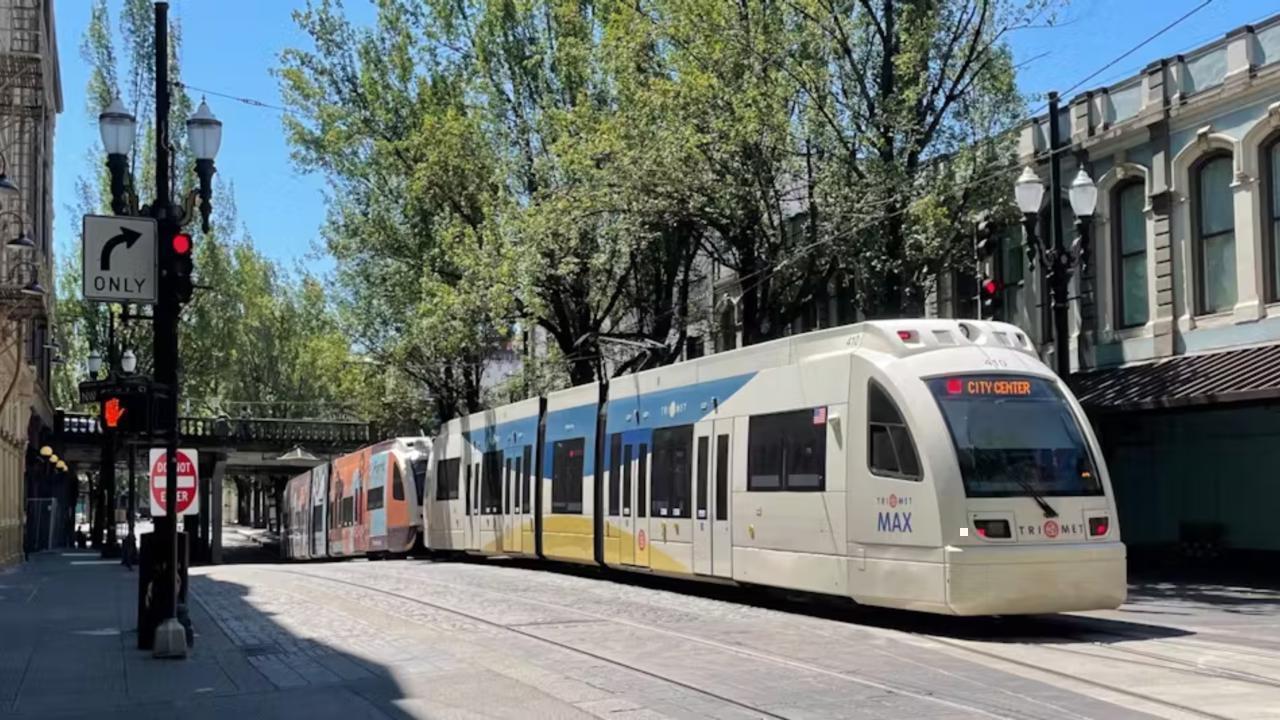
Photo : X / Mass Transit magazine
A Pivotal Change for Portland’s MAX Light Rail
TriMet, the public transit agency serving the Portland metropolitan area, has announced the closure of Skidmore Fountain Station as part of a wider initiative to improve the efficiency of its MAX light rail network. The decision, while sparking mixed reactions from riders, is rooted in the agency’s long-term goal to streamline travel times, reduce delays, and enhance operational reliability across its busiest routes.
Skidmore Fountain Station, located between Old Town/Chinatown and Oak/SW 1st Avenue on the MAX Blue and Red lines, has been in operation for decades. The stop serves a historically rich but relatively low-ridership area. By removing it from service, TriMet aims to shave minutes off certain trips and improve scheduling flexibility for trains navigating Portland’s downtown core.
Why the Closure is Happening Now
According to TriMet officials, the decision was informed by extensive ridership data, operational studies, and public consultation. Skidmore Fountain has consistently ranked among the system’s least-used stations, with passenger boardings significantly below the network average. In transit planning terms, low-ridership stations that are closely spaced can slow overall service without delivering proportional benefits to riders.
In downtown Portland, where stations are only a few blocks apart, removing one underused stop can have an outsized impact on operational flow. TriMet’s analysis found that closing Skidmore Fountain would allow trains to accelerate more quickly between stops, improving travel times not just through downtown but across the wider MAX network.
Improving Network Efficiency
One of the challenges facing urban rail systems is balancing accessibility with efficiency. More stops mean more boarding opportunities, but they also lead to slower trips and tighter scheduling margins. In recent years, TriMet has been exploring ways to optimize stop spacing on the MAX system, drawing on lessons from other U.S. cities like Seattle, Denver, and San Diego, where targeted station consolidation has led to noticeable travel time savings.
For the MAX, the closure of Skidmore Fountain is part of a broader set of operational improvements, including signal upgrades, maintenance investments, and timetable adjustments. The goal is to improve on-time performance, particularly during peak hours when even minor delays can cascade through the system.
The Role of Ridership Patterns
While Skidmore Fountain Station is located near popular attractions like the Portland Saturday Market and the waterfront, those destinations are also within a short walk of other MAX stations. TriMet’s surveys indicated that most riders who currently use Skidmore Fountain could easily shift to boarding at nearby stops without significantly increasing their walking distance.
In addition, the station’s ridership did not show significant spikes during major events — a contrast to other downtown stations that serve as key entry points for large crowds. This further strengthened the case for closure from an efficiency standpoint.
Safety and Accessibility Considerations
Safety has also been a factor in the decision. Skidmore Fountain Station’s location, partially beneath the Burnside Bridge, has presented visibility and security challenges over the years. TriMet has been working to enhance safety across the system through better lighting, surveillance, and staffing, but removing low-use stops in more isolated areas is also a tactic some transit agencies use to improve overall system security.
For accessibility, TriMet has pledged that nearby stations — all of which meet ADA requirements — will continue to serve riders with mobility needs. The walking distances between downtown stops are relatively short, ensuring that the closure does not significantly reduce access for passengers with disabilities.
Public Reactions and Community Input
The announcement has drawn a mix of responses. Some riders and downtown business owners have expressed disappointment, citing concerns that removing the station could make the area less accessible to tourists and shoppers. Others worry about potential impacts on local vendors at the Saturday Market.
However, many daily commuters and transit advocates have voiced support, noting that the MAX’s downtown segment can feel slow and that removing one or two low-use stops could meaningfully improve travel times. TriMet held public engagement sessions before finalizing the decision, presenting data and hearing feedback from stakeholders. While opinions varied, the agency emphasized that network-wide benefits had to take precedence.
What Happens Next
Closure of the Skidmore Fountain Station will not be immediate. TriMet plans to implement the change during a scheduled service adjustment period to minimize disruption. Ahead of closure, signage will be installed to direct riders to the nearest stations, and wayfinding updates will be made in maps, schedules, and trip-planning apps.
The physical infrastructure of the station may remain in place for some time, but fare equipment and active platforms will be decommissioned. TriMet has not yet confirmed whether the site will eventually be repurposed or removed entirely.
Anticipated Benefits for MAX Riders
Once Skidmore Fountain is removed from service, MAX trains will be able to maintain higher average speeds through downtown, particularly on the Blue and Red lines. The cumulative effect of even small time savings at individual stops can be significant — especially for riders traveling from one end of the network to the other.
Improved travel times also allow for more efficient train scheduling, reducing the risk of service bunching and enabling better coordination between lines. Over the long term, TriMet hopes these adjustments will help attract more riders by making the MAX a faster and more competitive travel option compared to driving.
A Broader Strategy for Transit Modernization
The Skidmore Fountain closure is part of a pattern seen in transit agencies across North America, where operational improvements often involve difficult trade-offs. Consolidating stops, upgrading infrastructure, and investing in fleet modernization are all part of TriMet’s broader strategy to adapt the MAX to changing travel patterns and rising expectations for speed and reliability.
Other planned initiatives include track and switch upgrades, additional low-floor trains to improve accessibility, and further integration with bus services and regional transit partners. These efforts are aimed at delivering a more seamless and dependable rider experience.
Lessons from Other Cities
Portland is not alone in making these types of adjustments. In recent years, cities such as San Francisco, Boston, and Minneapolis have undertaken station consolidation projects to optimize service. In most cases, travel times improved measurably, and ridership eventually rebounded as the overall system became more efficient.
Transit experts point out that while closures can be politically sensitive, they can also be an effective way to improve core service performance without major infrastructure spending. The key, they note, is to ensure that alternative access points remain close enough to serve the needs of most riders.
Looking to the Future of the MAX
As TriMet continues to modernize the MAX, decisions like the Skidmore Fountain closure illustrate the balancing act between serving hyper-local needs and maintaining system-wide efficiency. While the move may inconvenience a small portion of riders, the anticipated network benefits could help the MAX remain a vital, competitive transit option in the years ahead.
In the end, TriMet’s goal is to ensure that the MAX is not only a symbol of Portland’s commitment to sustainable urban mobility but also a practical, reliable choice for everyday travel. By making targeted changes now, the agency hopes to position the network to handle future growth, evolving commuting patterns, and the challenges of an increasingly complex urban environment.
Portland MAX station closure, Skidmore Fountain Station



Advances in Aerospace Technology and Commercial Aviation Recovery
Insights into breakthrough aerospace technologies and commercial aviation’s recovery amid 2025 chall

Defense Modernization and Strategic Spending Trends
Explore key trends in global defense modernization and strategic military spending shaping 2025 secu

Tens of Thousands Protest in Serbia on Anniversary of Deadly Roof Collapse
Tens of thousands in Novi Sad mark a year since a deadly station roof collapse that killed 16, prote

Canada PM Carney Apologizes to Trump Over Controversial Reagan Anti-Tariff Ad
Canadian PM Mark Carney apologized to President Trump over an Ontario anti-tariff ad quoting Reagan,

The ad that stirred a hornets nest, and made Canadian PM Carney say sorry to Trump
Canadian PM Mark Carney apologizes to US President Trump after a tariff-related ad causes diplomatic

Bengaluru-Mumbai Superfast Train Approved After 30-Year Wait
Railways approves new superfast train connecting Bengaluru and Mumbai, ending a 30-year demand, easi




