Post by : Amit
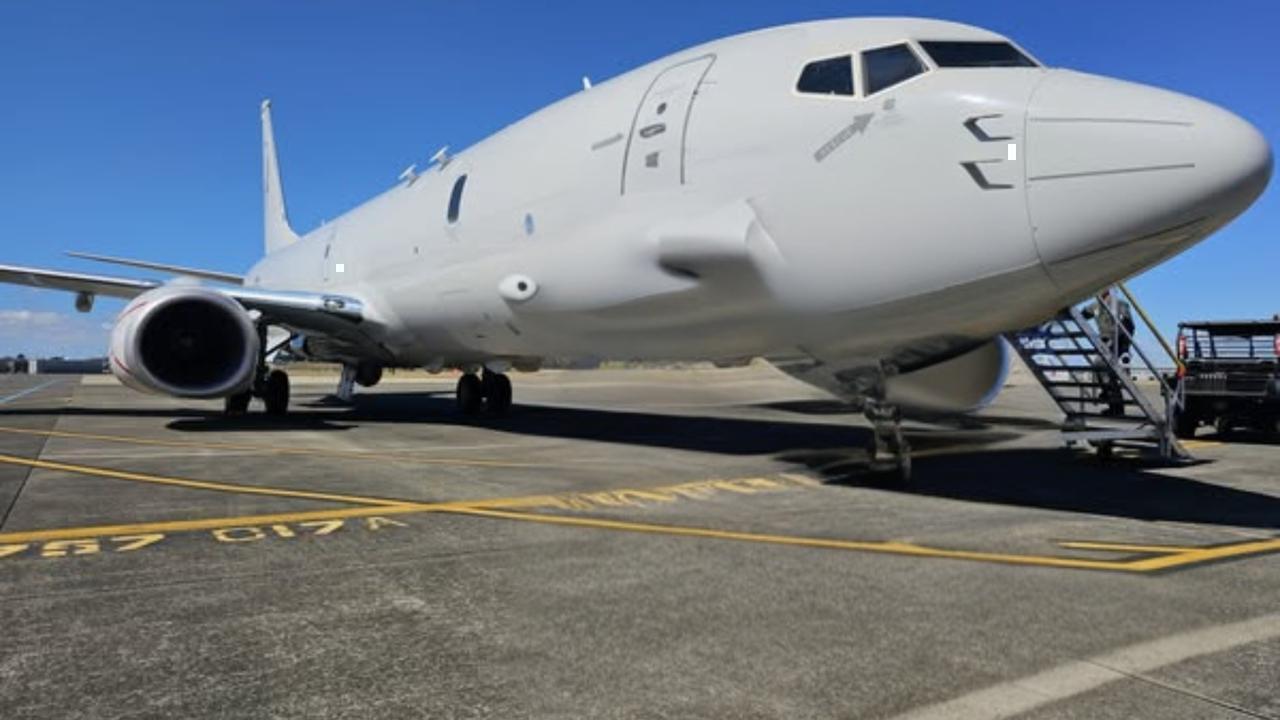
Photo: Facebook / NZ Defence Force
A Major Leap for South Korea's Maritime Surveillance
In a significant step towards bolstering its maritime defense capabilities, South Korea has commenced operations with its newly acquired Boeing P-8A Poseidon maritime patrol aircraft. The development marks a major enhancement in the Republic of Korea Navy's ability to monitor vast oceanic territories, deter regional threats, and respond to evolving security challenges in the Asia-Pacific.
The P-8A Poseidon, widely regarded as one of the world’s most advanced maritime patrol and anti-submarine warfare platforms, is now officially in active service following its arrival earlier this year. South Korea joins a select group of nations operating the P-8A, including the United States, United Kingdom, Australia, Norway, India, and New Zealand.
Enhancing Maritime Domain Awareness and Anti-Submarine Warfare
The induction of the P-8A into South Korean service is expected to significantly strengthen the country’s maritime domain awareness, a critical capability in the region's increasingly contested waters. The Poseidon’s ability to conduct long-range surveillance, anti-submarine warfare (ASW), anti-surface warfare, and intelligence, surveillance, and reconnaissance (ISR) missions positions it as a strategic asset for the Korean Peninsula.
Equipped with sophisticated radar systems, advanced sensors, and the capacity to carry torpedoes and anti-ship missiles, the P-8A Poseidon can detect, track, and engage underwater and surface threats with high precision. The aircraft is capable of covering vast distances over the open sea, making it particularly well-suited to safeguard South Korea’s interests in the East Sea, Yellow Sea, and beyond.
Strategic Context: Addressing Regional Security Threats
South Korea's acquisition and operationalization of the P-8A come at a time of heightened tensions in Northeast Asia. Persistent security concerns arising from North Korea's missile and submarine developments, as well as increasing Chinese naval activities in the region, have underscored the need for enhanced maritime situational awareness and response capabilities.
The P-8A’s entry into service is expected to serve as both a deterrent and an operational advantage for South Korea, particularly in countering North Korea’s evolving undersea warfare capabilities, including its ballistic missile submarine program. Additionally, the aircraft offers interoperability with allied forces, including the United States Navy, with whom South Korea maintains close defense ties.
Acquisition Timeline and Delivery Milestones
South Korea initially ordered six P-8A aircraft through the US Foreign Military Sales (FMS) program, with the contract awarded to Boeing in 2018. The first aircraft was delivered to the Republic of Korea Navy in early 2024, followed by training and operational familiarization phases.
The fleet is expected to achieve full operational capability in the coming years as deliveries continue and crews complete necessary mission readiness programs. This marks one of the most significant enhancements to South Korea's naval aviation capabilities in decades.
Technological Superiority of the P-8A Poseidon
The Boeing P-8A Poseidon is a militarized version of the Boeing 737-800 commercial airliner, extensively modified for maritime operations. Its capabilities far exceed those of legacy maritime patrol aircraft, offering cutting-edge systems such as:
With a mission endurance of over 10 hours and the ability to fly at high subsonic speeds and altitudes, the P-8A is capable of both high-speed transit and extended loitering for persistent maritime surveillance.
Regional Reactions and Geopolitical Implications
The introduction of the P-8A into South Korea’s arsenal is likely to be closely watched by regional powers. China, whose naval presence in the region has grown significantly, may view this development as part of a broader trend of enhanced maritime surveillance by US allies in the Indo-Pacific.
Similarly, North Korea, which has been expanding its missile and submarine capabilities, may perceive the Poseidon as a formidable tool capable of undermining its strategic deterrence. However, for South Korea and its partners, the P-8A represents a stabilizing force aimed at maintaining open sea lines of communication and ensuring maritime security.
Japan, Australia, and India—other regional operators of the P-8—have all lauded the aircraft's operational effectiveness, and South Korea’s move is likely to increase multilateral opportunities for joint maritime exercises and intelligence sharing.
Operational Integration and Future Outlook
South Korea’s Navy has already begun integrating the P-8A into its broader maritime defense framework. The aircraft will complement existing assets such as P-3 Orion patrol aircraft, although the Poseidons are expected to gradually take over key missions as the older platforms are phased out.
In addition to bolstering anti-submarine warfare, the P-8A will enhance South Korea’s ability to conduct search and rescue operations, environmental monitoring, and disaster response—capabilities that are increasingly relevant in the region’s busy maritime corridors.
Looking ahead, the P-8A fleet could also serve as a foundation for future developments in unmanned systems integration and network-centric warfare, areas where the Poseidon has already shown potential within US Navy operations.
A New Chapter in South Korean Naval Aviation
The operationalization of the Boeing P-8A Poseidon marks a historic milestone for South Korean naval aviation. By investing in one of the world’s most advanced maritime patrol platforms, South Korea is signaling its intent to play a more proactive role in regional maritime security while deepening interoperability with key allies.
As the geopolitical environment in East Asia continues to evolve, the P-8A’s combination of surveillance, deterrence, and combat capabilities will be instrumental in maintaining stability and safeguarding the nation’s maritime interests.
The Poseidons' presence in South Korea’s skies and seas heralds a new era of enhanced vigilance, preparedness, and strategic reach for the country’s armed forces.
East Asia, South Korea, Aviation



Advances in Aerospace Technology and Commercial Aviation Recovery
Insights into breakthrough aerospace technologies and commercial aviation’s recovery amid 2025 chall

Defense Modernization and Strategic Spending Trends
Explore key trends in global defense modernization and strategic military spending shaping 2025 secu

Tens of Thousands Protest in Serbia on Anniversary of Deadly Roof Collapse
Tens of thousands in Novi Sad mark a year since a deadly station roof collapse that killed 16, prote

Canada PM Carney Apologizes to Trump Over Controversial Reagan Anti-Tariff Ad
Canadian PM Mark Carney apologized to President Trump over an Ontario anti-tariff ad quoting Reagan,

The ad that stirred a hornets nest, and made Canadian PM Carney say sorry to Trump
Canadian PM Mark Carney apologizes to US President Trump after a tariff-related ad causes diplomatic

Bengaluru-Mumbai Superfast Train Approved After 30-Year Wait
Railways approves new superfast train connecting Bengaluru and Mumbai, ending a 30-year demand, easi




