Post by : Saif
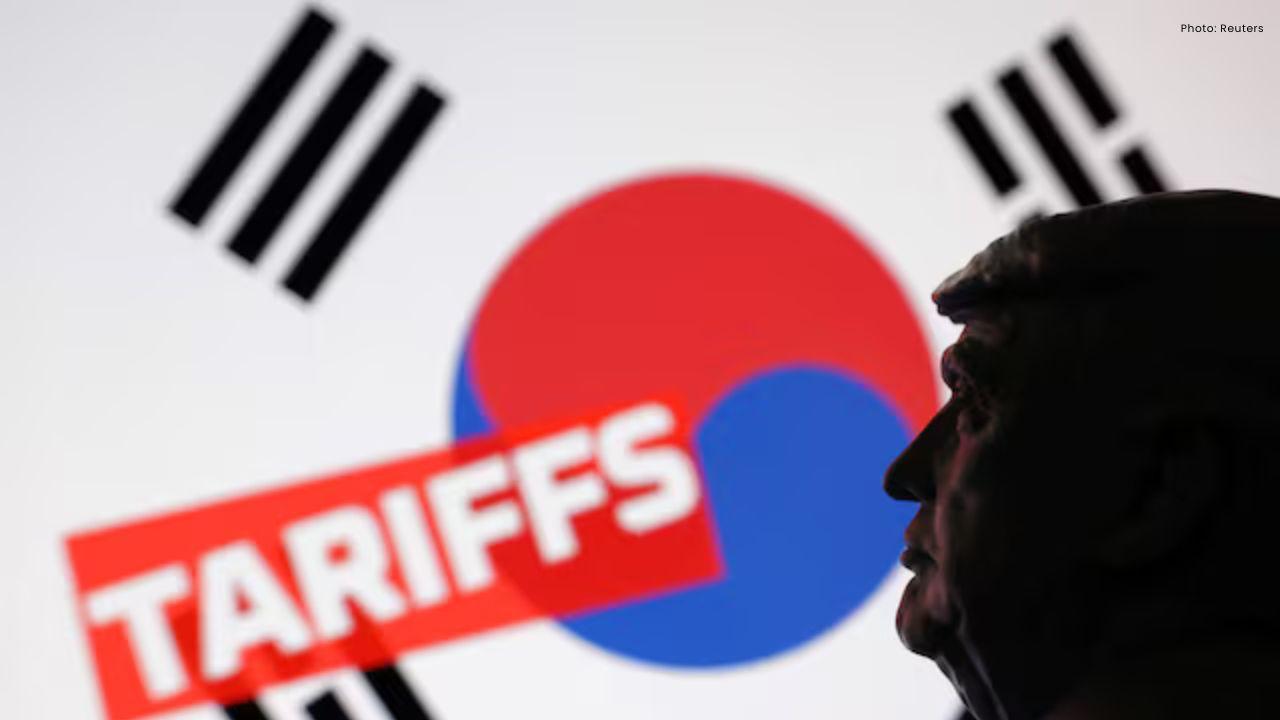
South Korea has said that new tariffs announced by the United States on certain advanced computer chips are unlikely to cause serious damage to its companies in the short term. However, officials in Seoul have made it clear that the situation is still uncertain and must be watched closely.
South Korean Trade Minister Yeo Han-koo said the first round of US measures mainly targets high-end artificial intelligence chips made by American companies such as Nvidia and AMD. These chips are used for powerful computing tasks and advanced AI systems. He explained that South Korea mostly exports memory chips, which are not included in the current tariff list. Because of this, the immediate effect on South Korean chipmakers is expected to be limited.
Even so, the minister warned that it is too early to feel safe. He said there is still uncertainty about whether the United States will expand the tariffs in a second phase and include more types of chips or related products. The South Korean government, he added, will continue to work closely with chip companies to protect their interests and prepare for possible changes.
Earlier this week, US President Donald Trump signed a proclamation imposing a 25 percent tariff on certain advanced AI chips. The move was made under national security rules and follows a long investigation into semiconductor imports. The US government says it wants to reduce its dependence on foreign-made chips and encourage more production inside the country.
The White House has said the tariffs are narrowly focused. They will not apply to chips used in US data centers, consumer electronics, civil industrial uses, or public sector projects. This has helped ease some concerns in global markets, at least for now.
However, stronger warnings have also been issued. US Commerce Secretary Howard Lutnick said that South Korean and Taiwanese chipmakers that do not invest in manufacturing in the United States could face much higher tariffs in the future, possibly up to 100 percent. These comments suggest that Washington may use trade pressure to push foreign companies to build factories on American soil.
The new tariffs are part of a wider US strategy to strengthen its domestic chip industry and reduce reliance on suppliers from places like Taiwan. For South Korea, which is one of the world’s largest chip producers, the situation presents both risks and challenges.
While the short-term impact may be small, future decisions by the United States could reshape global chip trade. South Korea’s cautious response shows it is preparing for tougher times ahead, even as it hopes dialogue and cooperation can prevent serious disruption to its vital semiconductor industry.
#trending #latest #SouthKorea #USChinaTech #ChipIndustry #Semiconductors #USTariffs #GlobalTrade #TechNews



Advances in Aerospace Technology and Commercial Aviation Recovery
Insights into breakthrough aerospace technologies and commercial aviation’s recovery amid 2025 chall

Defense Modernization and Strategic Spending Trends
Explore key trends in global defense modernization and strategic military spending shaping 2025 secu

Tens of Thousands Protest in Serbia on Anniversary of Deadly Roof Collapse
Tens of thousands in Novi Sad mark a year since a deadly station roof collapse that killed 16, prote

Canada PM Carney Apologizes to Trump Over Controversial Reagan Anti-Tariff Ad
Canadian PM Mark Carney apologized to President Trump over an Ontario anti-tariff ad quoting Reagan,

The ad that stirred a hornets nest, and made Canadian PM Carney say sorry to Trump
Canadian PM Mark Carney apologizes to US President Trump after a tariff-related ad causes diplomatic

Bengaluru-Mumbai Superfast Train Approved After 30-Year Wait
Railways approves new superfast train connecting Bengaluru and Mumbai, ending a 30-year demand, easi




