Post by : Saif
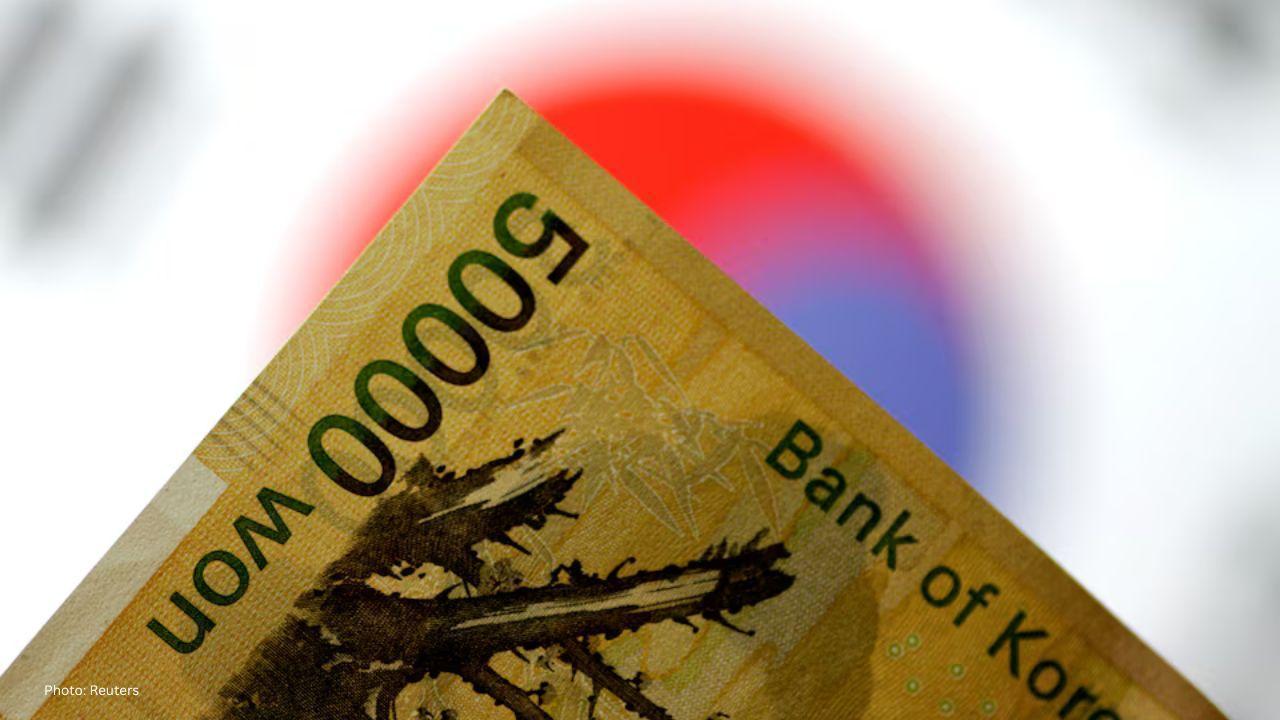
South Korea’s Finance Minister Koo Yun-cheol has promised to keep the country’s currency, the won, stable. But during a rare press conference on Wednesday, he did not offer any new or immediate steps to fix the currency’s recent weakness. This has left many investors and traders unsure about what the government will do next.
The South Korean won has been falling for months. This has caused worry in the financial market because a weak currency makes imports more expensive and increases risks for the economy. The won touched its weakest level since early April earlier this week, showing how much pressure it is under.
Minister Koo said the government is watching the market closely. He spoke about “speculative trading and herd-like behaviour,” meaning some traders may be following the trend without real economic reasons. He added that all options were being considered, but he did not give any details about what actions might be taken.
He explained that the won is reacting more sensitively than other currencies because there is a strong, structural demand for U.S. dollars inside the country. This means businesses and investors often need dollars for trade or overseas investments, which puts more pressure on the won.
Many in the market expected the minister to offer clear steps after he met with the National Pension Service (NPS), exporting companies, and domestic brokerages in recent days. But the press conference did not include any new measures. One local currency trader described it as “bland,” saying the lack of real policy news disappointed investors.
Right after the press conference, the won lost part of its earlier gains. It traded at 1,465.5 per dollar, up only 0.3% from the previous session, compared with a session high of 1,457.0.
Minister Koo also talked about a new consultative group that was created with the NPS on Monday. Some thought this group might be used to bring in the large pension fund to support the won temporarily. But Koo said this was not the plan. Instead, the group will focus on long-term goals, such as improving investment returns and maintaining overall market stability.
When reporters asked if the government might offer incentives for exporters to bring back their overseas earnings or give tax benefits to encourage domestic stock investments, Koo said neither idea was being considered at the moment.
The won has weakened more than 7% in the second half of 2025. Several factors have contributed to this, including concerns over an investment package related to a trade deal with the United States. Retail investors in South Korea have also been putting more money into overseas markets, increasing dollar demand. The National Pension Service has also been expanding its foreign investments, which puts extra pressure on the currency.
Many analysts now expect the Bank of Korea to keep interest rates unchanged because raising rates could push the economy into further slowdown, while cutting rates could weaken the won even more.
South Korea faces a delicate situation: it must balance economic growth, market stability, investor confidence, and international pressures. For now, the government is promising stability, but without clear actions, markets may continue to remain uneasy.
#trending #latest #SouthKorea #WonCurrency #ForexMarket #EconomicNews #armustnews



Advances in Aerospace Technology and Commercial Aviation Recovery
Insights into breakthrough aerospace technologies and commercial aviation’s recovery amid 2025 chall

Defense Modernization and Strategic Spending Trends
Explore key trends in global defense modernization and strategic military spending shaping 2025 secu

Tens of Thousands Protest in Serbia on Anniversary of Deadly Roof Collapse
Tens of thousands in Novi Sad mark a year since a deadly station roof collapse that killed 16, prote

Canada PM Carney Apologizes to Trump Over Controversial Reagan Anti-Tariff Ad
Canadian PM Mark Carney apologized to President Trump over an Ontario anti-tariff ad quoting Reagan,

The ad that stirred a hornets nest, and made Canadian PM Carney say sorry to Trump
Canadian PM Mark Carney apologizes to US President Trump after a tariff-related ad causes diplomatic

Bengaluru-Mumbai Superfast Train Approved After 30-Year Wait
Railways approves new superfast train connecting Bengaluru and Mumbai, ending a 30-year demand, easi




