Post by : Amit
Photo: Reuters
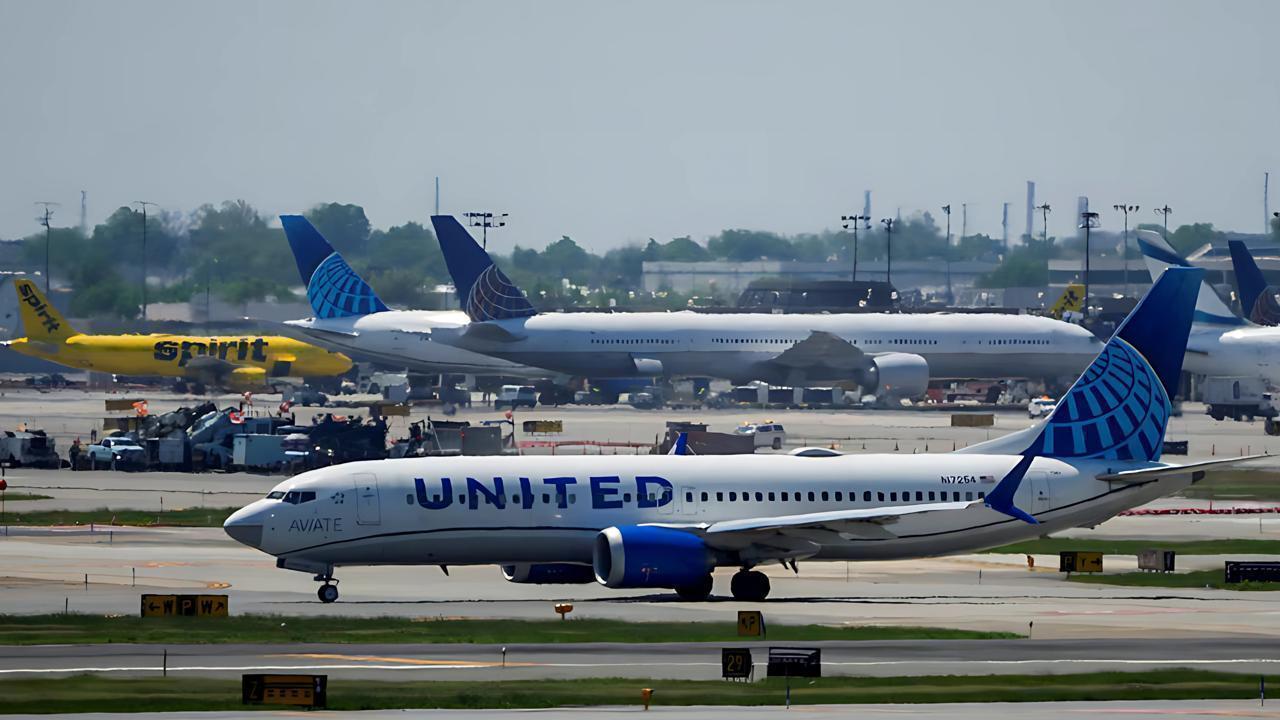
As the U.S. airline industry continues to reshape itself through partnerships and consolidation efforts, Spirit Airlines has voiced sharp concerns over a proposed cooperation pact between JetBlue Airways and United Airlines, calling it a potential violation of U.S. antitrust law.
In a formal communication submitted to the U.S. Department of Transportation (DOT) and Department of Justice (DOJ) this week, Spirit claimed the newly branded "Blue Sky Alliance" between JetBlue and United could undermine competition, inflate airfares, and give the two airlines an unfair share of lucrative domestic and international markets—especially in the Northeast and transcontinental corridors.
The complaint comes just months after JetBlue’s failed merger attempt with Spirit was blocked by a U.S. District Court in 2024, a landmark ruling that cited antitrust violations and potential harm to price-sensitive travelers. Now, Spirit contends that JetBlue is attempting to sidestep merger scrutiny by engaging in a strategic alliance that may achieve similar anti-competitive effects under the radar.
JetBlue and United announced the formation of the Blue Sky Alliance earlier this month, calling it a “strategic partnership” intended to optimize schedules, coordinate select routes, and expand codeshare agreements. The alliance reportedly includes shared frequent flyer benefits, reciprocal airport lounge access, and joint network planning on overlapping routes in the U.S. Northeast, Florida, California, and select transatlantic flights.
While JetBlue insists the partnership is not a merger and does not involve equity ownership, the agreement mirrors aspects of the previously dismantled Northeast Alliance (NEA) between JetBlue and American Airlines, which was ruled anti-competitive by a U.S. court in 2023.
United has defended the alliance as a way to “enhance connectivity, reduce redundancies, and offer passengers more choice,” particularly in slot-constrained airports like New York-JFK, Newark, Boston Logan, and San Francisco.
Spirit, the nation’s largest ultra-low-cost carrier (ULCC), argues that the Blue Sky Alliance could create a virtual duopoly in major markets, leaving budget-conscious travelers with fewer low-fare options. The airline specifically pointed to competitive harm on routes such as:
Spirit claims that by coordinating flight schedules, gate slots, and marketing, JetBlue and United could effectively fix prices or exclude smaller competitors from key routes. The alliance could also lead to fewer non-stop options and a reduction in fare-stimulating competition in some of the country’s busiest corridors.
The concern isn’t without precedent. In 2023, the U.S. Department of Justice successfully challenged the JetBlue–American Airlines NEA, citing that it allowed both carriers to coordinate pricing and schedules in violation of Section 1 of the Sherman Antitrust Act.
In 2024, a separate federal judge blocked JetBlue’s attempt to acquire Spirit entirely, ruling that it would reduce choices for budget travelers and raise fares across key markets.
Now, Spirit fears a repeat scenario where collaboration achieves the same results as a merger—without regulatory transparency or the formal merger approval process.
In response, United Airlines issued a statement downplaying the controversy, calling the Blue Sky Alliance “fully compliant with all regulatory frameworks” and “designed to offer network efficiencies, not market dominance.” JetBlue echoed the sentiment, saying that their partnership with United is pro-competitive, improves connectivity, and doesn’t involve exclusive cooperation on all routes.
Both airlines noted that the agreement has not been submitted as a joint venture and remains non-binding in many operational areas. Still, the coordination on routes and loyalty programs is expected to influence consumer behavior and reshape route economics.
The Spirit–JetBlue legal saga and now the Blue Sky Alliance raise broader questions about the future of airline alliances in the U.S. domestic market. As consolidation options become legally and politically difficult, more carriers may turn to deep alliances as an alternative means of growth and market access — effectively creating “pseudo-mergers” that test the boundaries of antitrust law.
JetBlue Airline



Advances in Aerospace Technology and Commercial Aviation Recovery
Insights into breakthrough aerospace technologies and commercial aviation’s recovery amid 2025 chall

Defense Modernization and Strategic Spending Trends
Explore key trends in global defense modernization and strategic military spending shaping 2025 secu

Tens of Thousands Protest in Serbia on Anniversary of Deadly Roof Collapse
Tens of thousands in Novi Sad mark a year since a deadly station roof collapse that killed 16, prote

Canada PM Carney Apologizes to Trump Over Controversial Reagan Anti-Tariff Ad
Canadian PM Mark Carney apologized to President Trump over an Ontario anti-tariff ad quoting Reagan,

The ad that stirred a hornets nest, and made Canadian PM Carney say sorry to Trump
Canadian PM Mark Carney apologizes to US President Trump after a tariff-related ad causes diplomatic

Bengaluru-Mumbai Superfast Train Approved After 30-Year Wait
Railways approves new superfast train connecting Bengaluru and Mumbai, ending a 30-year demand, easi




