Post by : Amit
Photo : X / aviation.com.ua
A Strategic Step in Asia’s Expanding MRO Market
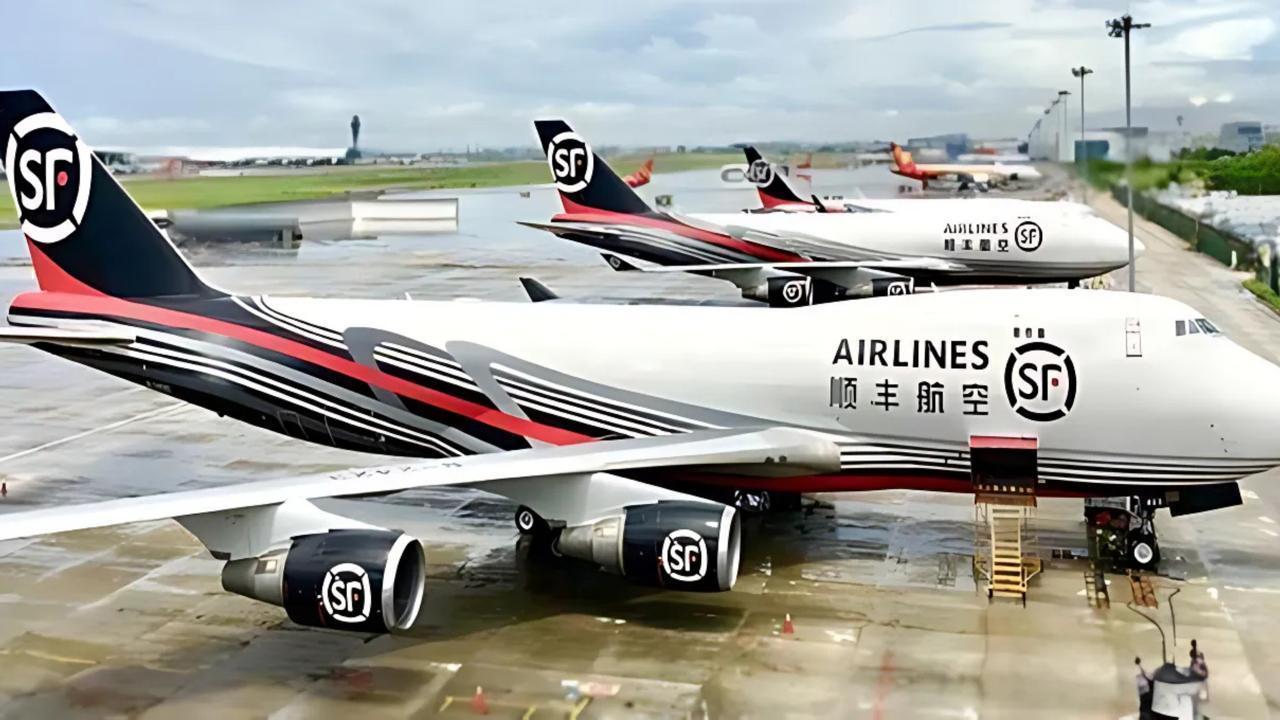
In a move set to reshape China’s aircraft maintenance, repair, and overhaul (MRO) landscape, Singapore Technologies Engineering Ltd. (ST Engineering) and China’s SF Airlines have officially opened a state-of-the-art airframe maintenance hangar in Ezhou, Hubei Province. The facility, developed under their joint venture, marks a critical step in meeting surging demand for MRO services in Asia as both passenger and cargo fleets grow rapidly post-pandemic.
The opening of this new facility is more than just an infrastructure addition—it’s a signal of China’s intent to become self-sufficient in aircraft servicing while also attracting international business. With domestic carriers adding capacity at record rates and e-commerce giants driving unprecedented air cargo volumes, industry analysts view the project as a timely response to escalating maintenance needs.
Ezhou: A New Maintenance Hub in the Making
The hangar is strategically located in Ezhou, home to China’s first cargo-focused airport, Ezhou Huahu Airport, which opened in 2022 as the central hub for SF Airlines’ freight operations. This location was no accident—its proximity to SF Airlines’ core logistics network ensures seamless integration between flight operations and aircraft servicing.
By situating the MRO hub in Ezhou, the joint venture benefits from immediate access to high-volume cargo aircraft traffic, reducing ferrying costs and downtime for maintenance. For SF Airlines, the largest cargo carrier in China, this also means quicker turnaround for its growing Boeing 757 and 767 freighter fleet.
A Facility Built for Today’s and Tomorrow’s Aircraft
The new hangar boasts advanced maintenance bays capable of handling wide-body and narrow-body aircraft, including modern freighters and passenger jets. It’s equipped with the latest inspection, repair, and component overhaul technologies to meet international safety and regulatory standards.
This means the facility is not just a domestic solution—it’s positioned to compete for global contracts, especially from airlines operating within Asia’s busy trade corridors. With China’s aviation market expected to account for nearly 20% of global air traffic by 2040, having a competitive MRO hub is strategically essential.
Strengthening China’s Self-Reliance in Aircraft Maintenance
Historically, a significant portion of Chinese airlines’ heavy maintenance work—particularly for wide-body aircraft—has been outsourced to facilities in Southeast Asia or Europe due to capacity limits at home. This new joint venture directly addresses that gap.
By localizing more MRO services, carriers can reduce lead times, cut costs, and improve operational reliability. For SF Airlines, it also means greater control over fleet readiness, a key factor in meeting the fast-moving demands of the e-commerce delivery market.
ST Engineering’s Global Experience Meets Local Expertise
For ST Engineering, one of the world’s leading MRO providers, the partnership offers a direct channel into China’s massive aviation market. The company brings decades of experience in airframe, engine, and component servicing, as well as advanced predictive maintenance systems.
The collaboration allows SF Airlines to leverage ST Engineering’s established global standards, quality control processes, and training programs—ensuring the Ezhou facility meets international benchmarks from day one.
A Boost for Cargo and Passenger Fleets Alike
While SF Airlines’ immediate priority is cargo aircraft, the new hangar has been designed with flexibility in mind. It can accommodate passenger aircraft, making it a viable partner for commercial airlines operating in China’s domestic and regional markets.
This dual-purpose capability will be critical as the Chinese aviation industry continues to diversify. Cargo growth remains strong due to cross-border e-commerce, but passenger travel demand is also rebounding sharply, pushing airlines to expand and modernize fleets.
Meeting the Demand Surge in Post-Pandemic Aviation
Globally, the MRO sector is facing mounting pressure from rising fleet sizes, aging aircraft, and the return of full-scale airline operations. In Asia, this challenge is amplified by the region’s rapid economic growth and increasing air connectivity.
By opening the Ezhou hangar, ST Engineering and SF Airlines are stepping into a market where demand for skilled technicians, hangar capacity, and specialized tooling already exceeds supply. For many carriers, securing maintenance slots months in advance has become the norm—a bottleneck the joint venture aims to ease.
Driving Economic Development in Hubei Province
Beyond aviation benefits, the new hangar is expected to generate significant economic activity in the region. The project will create hundreds of skilled jobs for technicians, engineers, and support staff, as well as opportunities for local suppliers in tooling, parts manufacturing, and logistics.
Hubei’s provincial government has expressed strong support for the venture, citing its alignment with China’s broader strategy to develop high-tech, high-value industries outside the country’s coastal hubs.
Advanced Technologies for Efficiency and Safety
The facility incorporates advanced diagnostic and inspection tools, including borescope analysis, non-destructive testing (NDT), and digital maintenance tracking systems. These systems enable engineers to detect wear and tear before it becomes a safety issue, aligning with the global shift toward predictive maintenance.
Additionally, the hangar’s layout has been optimized for workflow efficiency—shorter taxi distances, faster aircraft positioning, and dedicated work zones for structural, avionics, and systems maintenance all contribute to reduced turnaround times.
Training and Workforce Development
A critical factor in the project’s success is workforce readiness. To address the skilled labor shortage in aviation maintenance, the joint venture is investing heavily in training programs. These include partnerships with Chinese aviation universities and vocational institutes, as well as on-the-job mentoring by ST Engineering experts.
This strategy not only ensures a steady pipeline of qualified technicians but also raises overall industry skill levels in China’s central regions.
Sustainability and Green MRO Practices
Both ST Engineering and SF Airlines have emphasized that the facility will incorporate sustainable maintenance practices. Plans include waste reduction programs, energy-efficient lighting and HVAC systems, and environmentally friendly materials in maintenance processes.
These efforts align with the aviation industry’s broader push toward reducing its carbon footprint—not just in flight operations but across the entire supply chain.
Competitive Positioning in Asia’s MRO Sector
The Asia-Pacific MRO market is becoming increasingly competitive, with major players in Singapore, Malaysia, and South Korea all expanding capacity. By opening a large-scale facility inside China, the ST Engineering–SF Airlines JV gains a competitive edge in serving domestic airlines without the added cost and time of cross-border servicing.
Moreover, the Ezhou hangar’s integration with a major cargo hub creates a logistical advantage that few rivals can match.
Long-Term Growth Plans
While the current facility represents a major step, both partners have signaled that this is only the beginning. Future plans could include expanding the hangar to handle additional aircraft simultaneously, adding engine overhaul shops, and developing component repair capabilities on-site.
Such expansion would make Ezhou not just a domestic maintenance hub, but potentially a key MRO center for all of Northeast Asia.
Industry Impact and Outlook
The launch of this MRO hangar underscores a key trend in global aviation: the shift toward regionalizing maintenance capabilities to reduce dependency on distant service providers. For China, this means greater resilience and capacity to support both cargo and passenger growth without bottlenecks.
As more airlines in Asia modernize fleets with fuel-efficient models like the Boeing 787 and Airbus A350, the need for technically advanced MRO services will only increase. Facilities like Ezhou’s will be at the heart of this transformation, ensuring aircraft stay airworthy, efficient, and compliant with the latest safety standards.
The ST Engineering–SF Airlines MRO joint venture is not just a business expansion—it’s a strategic investment in the future of China’s aviation ecosystem. By combining international expertise with local operational advantages, the Ezhou hangar stands to become a model for how cargo and passenger airlines can secure reliable, high-quality maintenance in a rapidly evolving market.
In the words of one aviation analyst, “This is more than a hangar; it’s an anchor for China’s next stage of aviation growth.”
ST Engineering MRO China, SF Airlines maintenance hangar



Advances in Aerospace Technology and Commercial Aviation Recovery
Insights into breakthrough aerospace technologies and commercial aviation’s recovery amid 2025 chall

Defense Modernization and Strategic Spending Trends
Explore key trends in global defense modernization and strategic military spending shaping 2025 secu

Tens of Thousands Protest in Serbia on Anniversary of Deadly Roof Collapse
Tens of thousands in Novi Sad mark a year since a deadly station roof collapse that killed 16, prote

Canada PM Carney Apologizes to Trump Over Controversial Reagan Anti-Tariff Ad
Canadian PM Mark Carney apologized to President Trump over an Ontario anti-tariff ad quoting Reagan,

The ad that stirred a hornets nest, and made Canadian PM Carney say sorry to Trump
Canadian PM Mark Carney apologizes to US President Trump after a tariff-related ad causes diplomatic

Bengaluru-Mumbai Superfast Train Approved After 30-Year Wait
Railways approves new superfast train connecting Bengaluru and Mumbai, ending a 30-year demand, easi




