Post by : Amit
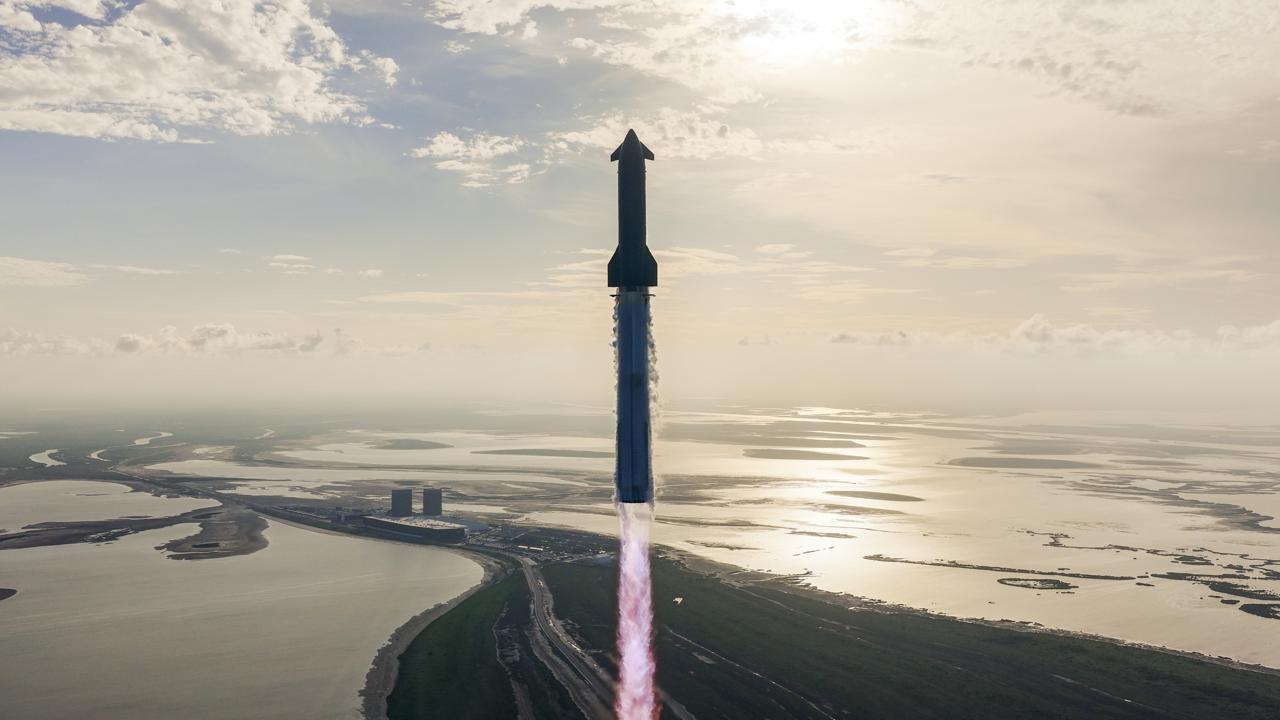
Photo : X / SpaceX
A Historic Leap for SpaceX Starship
SpaceX has once again pushed the boundaries of spaceflight. The company’s flagship next-generation launch system, the SpaceX Starship, successfully completed its first full-duration flight test of the year. This milestone not only marks a pivotal technical achievement but also strengthens the narrative that the future of space transportation is inching closer to reality. For a vehicle designed to transform space access through fully reusable rockets, the test underscores progress toward making interplanetary missions more achievable.
Why the Full-Duration Flight Matters
A full-duration test is more than just a long burn; it is a simulation of the actual conditions the SpaceX Starship would endure in future missions. By sustaining its engines through the complete flight timeline, engineers validated core design assumptions, stress-tested propulsion systems, and monitored how the massive stainless-steel vehicle withstands extended high-thrust performance. Such a test is critical because it shifts Starship from short bursts and prototypes toward real operational profiles that could eventually carry cargo, satellites, and even humans to the Moon and Mars.
Building Confidence in Reusable Rockets
SpaceX has long championed the idea of reusable rockets as the cornerstone of affordable and sustainable spaceflight. The successful duration test offers hard data that Starship’s Raptor engines can deliver sustained performance, a necessity for reusability. By demonstrating the engines’ reliability across the entire flight phase, SpaceX can now refine its re-entry and refurbishment cycles, cutting down on the cost and turnaround time between missions. This achievement also gives confidence to regulators and customers watching closely for proof that Starship’s ambitious claims can be translated into reliable operations.
Engineering Feats Under Pressure
Starship’s test involved firing multiple Raptor engines simultaneously while monitoring thousands of data points in real time. Temperatures, vibration loads, fuel flows, and combustion stability all needed to align with predictive models. SpaceX’s engineers, known for their rapid test-and-learn philosophy, will now comb through the results to spot minor deviations and strengthen future builds. The fact that the test ran its full course without major anomalies is itself a triumph, considering the complexity of handling methane-fueled propulsion at this scale.
Starship’s Role in NASA’s Artemis Program
The timing of the full-duration test aligns with broader strategic goals. Starship has been selected by NASA as a critical component of its Artemis program, intended to return astronauts to the lunar surface later this decade. For NASA, reliability and repeatability are non-negotiable. Each successful test places SpaceX closer to certifying Starship for missions that could land humans on the Moon and establish sustainable exploration infrastructure. Without a proven heavy-lift, reusable rocket, these long-term goals would face significant delays.
Global Eyes on SpaceX’s Ambitions
Governments, private companies, and rival space agencies are all watching SpaceX’s progress with great interest. While competitors in China, Europe, and Russia pursue their own heavy-lift systems, none has yet demonstrated a fully reusable rocket at Starship’s scale. By pulling ahead in the race for reusability, SpaceX positions itself as not just a launch provider but as a space logistics leader for the 21st century. The recent test reinforces this positioning, signaling to the world that Starship is not just an idea but a rapidly maturing system.
Addressing the Skepticism
Despite the excitement, skepticism remains. Critics argue that while SpaceX excels in headline-grabbing tests, operational consistency remains unproven. Full-duration ground or near-space tests are crucial, but they must be followed by repeated launches, recoveries, and re-flights without major setbacks. Reusable rockets at this scale have never been achieved, and each success raises expectations while magnifying the impact of potential failures. SpaceX’s challenge is not just proving it can work once but proving it can work every time.
Environmental and Community Impact
The Starship program has not been without controversy. Environmental groups in Texas, where the tests are conducted, have raised concerns about the ecological footprint of repeated engine firings and potential debris from failed launches. The latest full-duration test, conducted under tighter regulatory scrutiny, was an opportunity for SpaceX to demonstrate that progress can align with safety and environmental considerations. How SpaceX balances rapid development with community trust will shape public perception as much as the engineering achievements themselves.
The Economics of Future Missions
Beyond the engineering, the successful test speaks volumes about the economic implications of Starship’s eventual deployment. By enabling larger payloads and lowering the per-kilogram cost to orbit, Starship could transform commercial space access. Satellite operators, telecom providers, and deep-space exploration initiatives would all benefit. Moreover, for customers like NASA and potential Mars colonization backers, lower costs mean expanded mission opportunities. SpaceX’s test is not just about rockets; it is about reshaping the economic foundation of space.
A New Era for Space Propulsion
The Raptor engines that power Starship represent a leap in flight test propulsion. Fueled by liquid methane and liquid oxygen, they provide higher efficiency and align with Mars colonization goals, as methane can potentially be manufactured on the Red Planet. The full-duration success shows that the engines are not only powerful but also scalable for future missions. This engineering vision is what sets Starship apart from earlier vehicles, making it both a practical solution for near-Earth launches and a futuristic vehicle for interplanetary travel.
The Road Ahead for Starship
Looking ahead, SpaceX plans to build on the momentum of this test with additional trials, each more ambitious than the last. Future milestones will include orbital launches, recovery attempts, and integrated mission profiles that simulate real-world scenarios. The company’s philosophy—testing fast, failing fast, and iterating even faster—will continue to guide progress. Each success like the recent test reduces technical unknowns and boosts investor, customer, and regulatory confidence.
Inspiration Beyond Engineering
Starship’s journey resonates beyond the realm of engineers and scientists. For millions of people worldwide, each update on SpaceX’s program stirs imagination about humanity’s future in space. The successful test is not just a technical milestone; it is an emotional one, rekindling the dream of reaching new worlds. In a time when global challenges often dominate headlines, Starship represents something profoundly hopeful: the possibility of exploration, discovery, and a shared human future beyond Earth.
Challenges That Remain
Yet, enormous hurdles remain. Heat shield performance during re-entry, rapid refurbishment cycles, orbital refueling, and planetary landing dynamics are just a few of the areas demanding further breakthroughs. Each test like this one addresses one piece of the puzzle, but the mosaic is far from complete. If SpaceX can solve these challenges, Starship will not only be the most powerful rocket ever built but also the most revolutionary.
A Defining Step Toward the Future
The successful full-duration test of the SpaceX Starship stands as a defining step in the evolution of reusable rockets and spaceflight. It validates years of design work, accelerates timelines for lunar and Martian exploration, and strengthens SpaceX’s position as a leader in propulsion innovation. While much work remains, the milestone represents progress that is as much symbolic as it is technical. SpaceX has shown that the dream of accessible, sustainable, and interplanetary space travel is no longer confined to science fiction—it is unfolding in real time.
SpaceX Starship, reusable rockets, flight test



Advances in Aerospace Technology and Commercial Aviation Recovery
Insights into breakthrough aerospace technologies and commercial aviation’s recovery amid 2025 chall

Defense Modernization and Strategic Spending Trends
Explore key trends in global defense modernization and strategic military spending shaping 2025 secu

Tens of Thousands Protest in Serbia on Anniversary of Deadly Roof Collapse
Tens of thousands in Novi Sad mark a year since a deadly station roof collapse that killed 16, prote

Canada PM Carney Apologizes to Trump Over Controversial Reagan Anti-Tariff Ad
Canadian PM Mark Carney apologized to President Trump over an Ontario anti-tariff ad quoting Reagan,

The ad that stirred a hornets nest, and made Canadian PM Carney say sorry to Trump
Canadian PM Mark Carney apologizes to US President Trump after a tariff-related ad causes diplomatic

Bengaluru-Mumbai Superfast Train Approved After 30-Year Wait
Railways approves new superfast train connecting Bengaluru and Mumbai, ending a 30-year demand, easi




