Post by : Amit
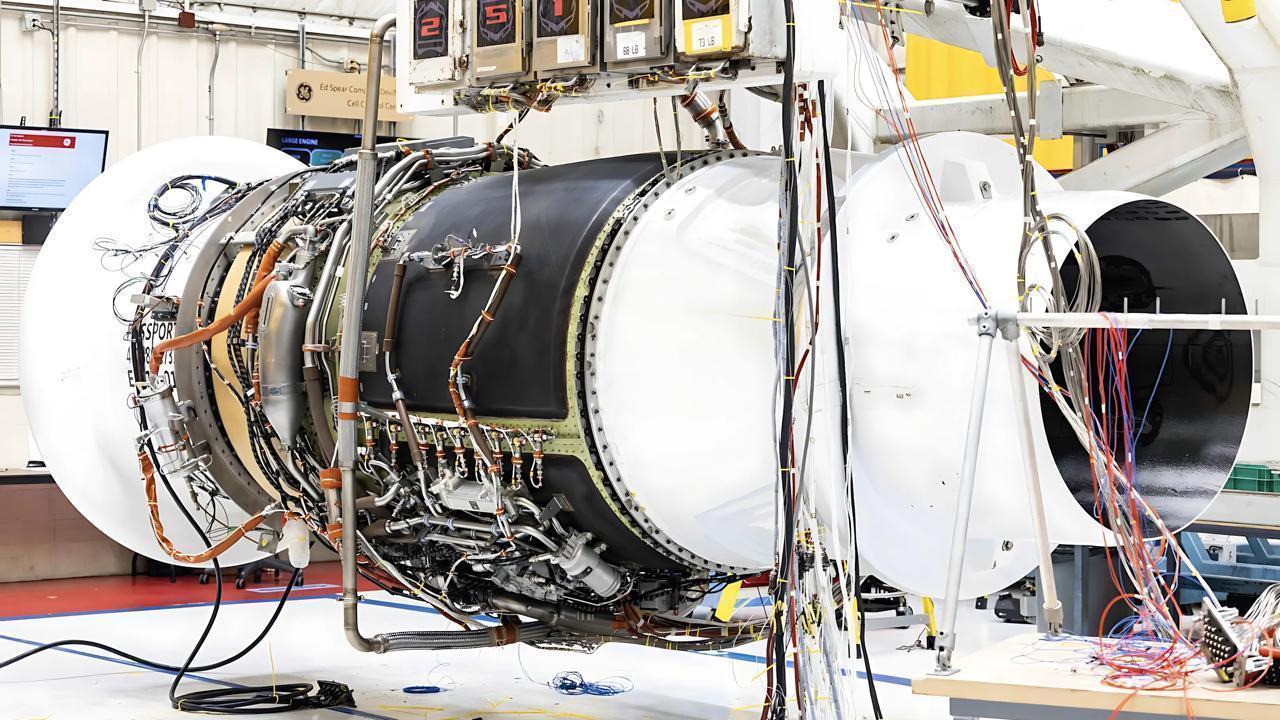
Photo : X / GE Aerospace
A New Era for Hybrid Propulsion
A new aerospace startup is developing what it says will be the world’s first turbine‑based hybrid‑electric aircraft powerplant, promising to redefine how regional and advanced air mobility aircraft are powered. The system, currently in early development, combines a small gas turbine with advanced electric generation and energy‑management technology to create a lightweight, efficient propulsion solution tailored for next‑generation aircraft.
The announcement underscores how aerospace innovators are looking beyond batteries alone to deliver cleaner aviation solutions. While all‑electric propulsion has gained attention in recent years, engineers face major hurdles when scaling battery systems for longer ranges and higher payloads. A hybrid approach — using a turbine to generate electric power on board — could be the missing link that enables commercial viability.
The Technology Behind the Concept
According to the company’s leadership, the hybrid powerplant uses a compact turbine optimized not for thrust but for continuous electrical generation. The electricity is then routed through high‑efficiency inverters and distributed to electric motors driving the propellers or fans.
This design eliminates the need for heavy onboard energy storage, significantly reducing the weight penalty associated with battery‑only aircraft. The turbine operates at its most efficient power setting, while the electric drivetrain handles thrust control and distribution, giving designers new flexibility in how they configure future aircraft.
“Pure battery propulsion is ideal for short‑range urban missions,” said the startup’s chief engineer in a briefing. “But if you want to extend that range to hundreds of miles or carry larger payloads, hybrid systems are essential. Our turbine‑electric solution provides the continuous power to make it happen.”
Market Focus: Regional and Urban Air Mobility
The company sees its powerplant as a bridge technology for the emerging advanced air mobility (AAM) sector — including regional commuter aircraft, eVTOL air taxis, and short‑haul cargo planes. Current battery technology can support only limited endurance and payload, restricting many designs to 30‑ to 50‑minute flight times.
With a turbine‑electric hybrid, aircraft could operate regional routes of 200 to 500 miles while still offering lower emissions and quieter operations than conventional turboprops or small jets. This approach also reduces dependency on large‑scale charging infrastructure, which remains a bottleneck for widespread electric aviation adoption.
Industry analysts note that such technology could also serve as a stepping stone to future hydrogen‑electric powerplants, which would require similar high‑voltage distribution and motor architectures.
The Competitive Landscape
Several aerospace companies are pursuing hybrid‑electric propulsion, but most efforts to date have paired piston engines or small turboprops with batteries. What differentiates this startup’s approach is a turbine optimized purely as an onboard generator, rather than as a direct thrust source.
This architecture is attracting interest from both regional aircraft developers and major aviation OEMs. While the startup has not disclosed specific partners, executives say multiple preliminary design studies are underway with airframers seeking scalable, certifiable propulsion solutions.
“This is a realistic path to market,” said aviation consultant Graham Warwick. “Battery energy density is improving, but slowly. Turbine hybrids could power the first generation of certified electric‑assisted aircraft, and that means revenue sooner rather than later.”
Certification Path and Technical Challenges
The turbine‑electric hybrid will still face significant engineering and regulatory hurdles. The system must integrate seamlessly with electric propulsion motors while meeting rigorous FAA and EASA standards for safety, redundancy, and thermal management. Engineers are particularly focused on power‑to‑weight ratios, cooling requirements for high‑voltage components, and ensuring that the turbine operates cleanly at steady state.
The company expects to begin ground testing of its first prototype unit within the next 18 months, followed by flight testing with a partner aircraft manufacturer. Certification could take several years, depending on whether regulators treat the hybrid as an evolution of existing turbine standards or as an entirely new propulsion category.
Why Turbine Hybrids Make Sense Now
The aerospace sector is under growing pressure to reduce carbon emissions, but the physics of battery storage remain stubborn. Even the best lithium‑ion cells have far less energy density than jet fuel. While this is manageable for short urban flights, it limits regional operations where airlines need multi‑hour endurance.
Turbine‑hybrid propulsion solves this by producing onboard electricity from conventional fuel at a much more consistent and efficient rate than a piston engine. Because the turbine runs continuously at its most efficient RPM, emissions per passenger can drop significantly compared to traditional aircraft engines.
Additionally, the hybrid system supports distributed propulsion — placing small electric motors at multiple points along a wing or fuselage to improve aerodynamic efficiency, reduce noise, and enable new aircraft layouts. This flexibility is particularly attractive to designers of next‑generation eVTOL and short takeoff and landing (STOL) aircraft.
Industry Reception and Investment Interest
The startup has already secured seed funding from a consortium of aviation investors and is reportedly in talks with several major strategic partners. Industry observers expect additional funding rounds as ground testing begins, especially if early results confirm the projected 20% to 30% improvement in fuel efficiency over comparable small turbine aircraft.
Large aerospace OEMs and regional carriers are watching closely. With passenger demand rebounding and governments tightening emissions requirements, operators are searching for propulsion solutions that can enter service quickly — without waiting for major leaps in battery technology.
“This is a pragmatic approach,” said Richard Aboulafia, managing director at AeroDynamic Advisory. “The market needs real solutions within the decade. Hybrid‑electric aircraft using turbines are achievable now, not just on paper.”
Looking Beyond Batteries Alone
While all‑electric aircraft continue to capture headlines, most analysts believe the future of sustainable aviation will involve multiple parallel technologies. Batteries will dominate ultra‑short routes and urban air mobility, hydrogen fuel cells may power specialized designs, and turbine hybrids will fill the middle ground where both range and reliability matter.
By focusing on a turbine optimized for electrical generation, the startup is positioning itself to serve a wide range of aircraft sizes and mission profiles. The company says its powerplant will scale from smaller commuter planes with six to nine seats up to larger 19‑seat regional aircraft, giving it flexibility to adapt as market demand evolves.
Future Roadmap
The startup’s next steps include completing detailed design reviews, establishing a dedicated test facility, and securing additional aerospace partners to integrate the powerplant into early demonstrator aircraft.
Executives are cautious about setting firm service‑entry dates but say they are targeting mid‑decade flight demonstrations and the start of certification trials shortly afterward. If successful, the turbine‑electric system could be ready for production by the late 2020s, aligning with the expected rollout of many AAM platforms.
Broader Implications for Aviation
The development of a turbine‑based hybrid electric powerplant could mark an important transition point for aviation. It acknowledges that while the industry is committed to electrification, practical solutions must fit within today’s regulatory and operational realities. Rather than waiting for batteries to catch up, hybrid propulsion can deliver immediate improvements in emissions and economics — helping the sector make tangible progress toward its sustainability goals.
“This isn’t about waiting for the perfect technology,” said the company’s CEO. “It’s about delivering something that works now and can evolve as energy storage improves. We’re building a system designed for the real world, not just for the lab.”
As the aerospace industry races toward a lower‑carbon future, innovations like this turbine‑hybrid powerplant demonstrate that pragmatic engineering, rather than radical reinvention, may drive the first wave of electric‑assisted flight. If the startup can meet its performance targets and navigate certification successfully, it could open the door to a new generation of efficient, versatile aircraft that bridge today’s aviation and tomorrow’s clean‑energy future.
Startup, Turbine‑Hybrid Electric Aircraft Engine



Advances in Aerospace Technology and Commercial Aviation Recovery
Insights into breakthrough aerospace technologies and commercial aviation’s recovery amid 2025 chall

Defense Modernization and Strategic Spending Trends
Explore key trends in global defense modernization and strategic military spending shaping 2025 secu

Tens of Thousands Protest in Serbia on Anniversary of Deadly Roof Collapse
Tens of thousands in Novi Sad mark a year since a deadly station roof collapse that killed 16, prote

Canada PM Carney Apologizes to Trump Over Controversial Reagan Anti-Tariff Ad
Canadian PM Mark Carney apologized to President Trump over an Ontario anti-tariff ad quoting Reagan,

The ad that stirred a hornets nest, and made Canadian PM Carney say sorry to Trump
Canadian PM Mark Carney apologizes to US President Trump after a tariff-related ad causes diplomatic

Bengaluru-Mumbai Superfast Train Approved After 30-Year Wait
Railways approves new superfast train connecting Bengaluru and Mumbai, ending a 30-year demand, easi




