Post by : Amit
Aerial Transit Gets a Lift in Tamil Nadu’s Tourism Strategy
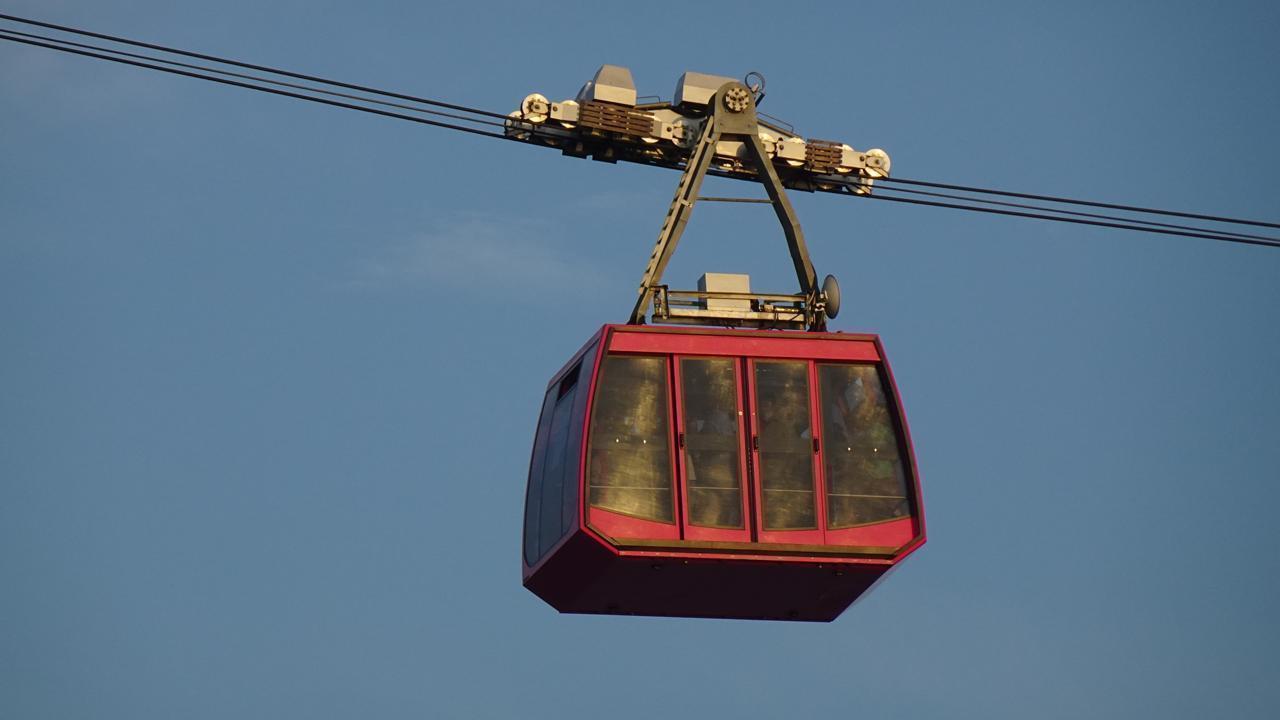
The Chennai Metro Rail Limited (CMRL) has officially confirmed plans to develop urban ropeway systems in key regions across the state. The initiative, designed to improve last-mile connectivity while offering a scenic and sustainable transport alternative, is being pitched as a game-changer for both local commuters and domestic travelers.
This comes as the state government shifts its focus toward multimodal mobility models, blending surface rail, metro, and aerial cable transport under a unified urban transit framework. The idea, while not entirely new, is receiving renewed institutional backing amid a broader tourism rejuvenation push under the Tamil Nadu Infrastructure Development Board (TNIDB).
CMRL, known for developing and operating Chennai's expanding metro system, is being tasked with preparing detailed feasibility and implementation reports for a range of ropeway alignments—especially in areas with tourism potential or difficult terrain.
From Metros to Mountains: CMRL Expands Its Horizon
Speaking to local media outlets on July 21, senior officials from CMRL confirmed that preliminary site assessments have begun in hill stations, religious pilgrimage centers, and congested urban zones where land acquisition for conventional rail or road infrastructure remains a persistent challenge.
Among the locations under active consideration are Yercaud, Ooty, Kodaikanal, Palani Hills, and certain sectors of Chennai’s northern coastline. These regions, while rich in cultural and environmental assets, often suffer from access issues, especially during peak tourist seasons. The introduction of ropeways could help mitigate traffic congestion, reduce carbon footprints, and create unique aerial experiences for visitors.
Initial surveys are also exploring the potential for intra-city ropeways as part of Chennai's last-mile connectivity ecosystem. These shorter-distance, point-to-point systems could link metro stations with densely populated neighborhoods or coastal landmarks such as Marina Beach.
Feasibility Studies and Technical Assessments Underway
CMRL is now in the process of identifying the topographical, environmental, and logistical parameters required for ropeway construction. The organization has partnered with specialized consultants and international technology providers with experience in high-altitude cable mobility systems. Detailed project reports (DPRs) are expected to be submitted to the TNIDB in phases, starting later this year.
Technical assessments will examine soil stability, wind patterns, local biodiversity, and passenger flow projections. According to a preliminary internal estimate, the average ropeway system could span between 2 to 5 kilometers per corridor and will feature automated cable cars with smart ticketing systems integrated with Chennai Metro’s mobile app and fare network.
Energy efficiency and environmental compatibility will be key concerns. Officials have emphasized that all ropeway systems will be designed to run on electric drives, with options for solar augmentation, particularly in non-urban settings.
Tourism and Transit: A Symbiotic Vision
Tamil Nadu’s tourism sector—already one of the largest in India—is being reimagined through the lens of accessible mobility. According to the state tourism department, Tamil Nadu attracted over 300 million domestic tourists in 2024, many of whom faced transportation bottlenecks at hill stations and pilgrimage routes.
By introducing ropeway systems in these areas, the state hopes to unlock economic value, support local hospitality sectors, and extend average tourist stay duration. Government officials also see potential in ropeways becoming standalone attractions, much like in Gulmarg (Jammu & Kashmir), Dharamshala (Himachal Pradesh), or the Girnar ropeway in Gujarat.
The planned ropeway projects are expected to follow a Public-Private Partnership (PPP) model, with capital investment likely to be shared between the state government, CMRL, and private consortiums specializing in aerial transit technology. Some foreign players—particularly from Switzerland, Austria, and France—have reportedly shown early interest in project participation.
Urban Integration and Economic Inclusivity
While tourism is a primary driver, CMRL is also exploring utility-focused ropeways that address urban mobility gaps. For instance, in north Chennai, areas like Royapuram and Washermanpet—which lack high-capacity rail systems—could benefit from short-range aerial transit, especially in places where slum redevelopment and high-density housing limit ground-based infrastructure expansion.
Officials indicated that such systems could transport up to 3,000 passengers per hour per direction (PPHPD) and are significantly more economical than underground metro construction. For comparison, ropeway systems typically cost one-fourth to one-sixth the per-kilometer cost of metro rail, while offering faster installation and minimal land disruption.
Such options are being examined not just as technical alternatives but as inclusive mobility tools that provide affordable, safe access to marginalized communities and physically challenged users.
Environmental and Cultural Safeguards Prioritized
Given that many of the proposed ropeway corridors pass through ecologically sensitive or heritage-rich areas, CMRL has committed to adhering to rigorous Environmental Impact Assessments (EIA) and Heritage Conservation Guidelines. The ropeways will be designed to avoid wildlife disruption, particularly in the Western Ghats and Nilgiri Biosphere zones, which are home to endemic species.
The use of elevated pylons with minimal land footprint, silent electric drives, and anti-glare cabin surfaces will help minimize both visual and acoustic pollution. Local gram sabhas and stakeholders in tribal regions will be consulted to ensure that ropeway systems respect community rights and cultural landscapes.
Experts from the Indian Institute of Technology (IIT) Madras and the Anna University Department of Civil Engineering have been invited to serve on a multidisciplinary advisory panel that will guide route alignment and environmental compatibility.
Policy Push and Institutional Coordination
The ropeway initiative aligns with India’s National Ropeways Development Programme – “Parvatmala”, launched by the Union Ministry of Road Transport and Highways (MoRTH). Tamil Nadu is one of the 12 states selected for accelerated ropeway integration under the program, which aims to build over 250 kilometers of cable-propelled transport systems by 2030.
Coordination between central agencies, state departments, and municipal corporations is already underway. The Tamil Nadu Urban Infrastructure Financial Services Limited (TNUIFSL) has been tasked with identifying potential funding models and tendering processes, while CMRL will function as the technical implementation partner.
Chief Minister M. K. Stalin, who has repeatedly emphasized the role of sustainable transit in inclusive development, has reportedly reviewed early plans and requested fast-tracking of approvals for at least two pilot corridors before the end of FY 2025–26.
Public Response and Future Outlook
Initial public response to the ropeway announcement has been largely positive, especially from tourism stakeholders and residents in hill regions. Environmental groups, while supportive of reduced surface impact, have called for stringent biodiversity audits and real-time monitoring systems to ensure minimal disruption during and after construction.
Urban planners are viewing the development as part of a “horizontal expansion” strategy—using airspace as a legitimate corridor for public transport, especially in cities constrained by land availability and rising population densities.
CMRL has indicated that ropeway alignments will be chosen not just for engineering feasibility but for economic and social value addition. Corridors that connect employment centers, educational hubs, or remote hamlets to the broader metro system will be prioritized.
With DPRs underway and political will aligned, Tamil Nadu may soon join the growing global league of regions leveraging ropeway transit—not just for novelty, but as a serious tool for multimodal mobility and regional development.
As construction timelines and contracts are finalized over the coming months, all eyes will be on how fast and how far Tamil Nadu can take its airborne mobility vision—and whether it can become a replicable model for the rest of India.
Tamil Nadu, Ropeways, Cable Car



Advances in Aerospace Technology and Commercial Aviation Recovery
Insights into breakthrough aerospace technologies and commercial aviation’s recovery amid 2025 chall

Defense Modernization and Strategic Spending Trends
Explore key trends in global defense modernization and strategic military spending shaping 2025 secu

Tens of Thousands Protest in Serbia on Anniversary of Deadly Roof Collapse
Tens of thousands in Novi Sad mark a year since a deadly station roof collapse that killed 16, prote

Canada PM Carney Apologizes to Trump Over Controversial Reagan Anti-Tariff Ad
Canadian PM Mark Carney apologized to President Trump over an Ontario anti-tariff ad quoting Reagan,

The ad that stirred a hornets nest, and made Canadian PM Carney say sorry to Trump
Canadian PM Mark Carney apologizes to US President Trump after a tariff-related ad causes diplomatic

Bengaluru-Mumbai Superfast Train Approved After 30-Year Wait
Railways approves new superfast train connecting Bengaluru and Mumbai, ending a 30-year demand, easi




