Post by : Meena Rani
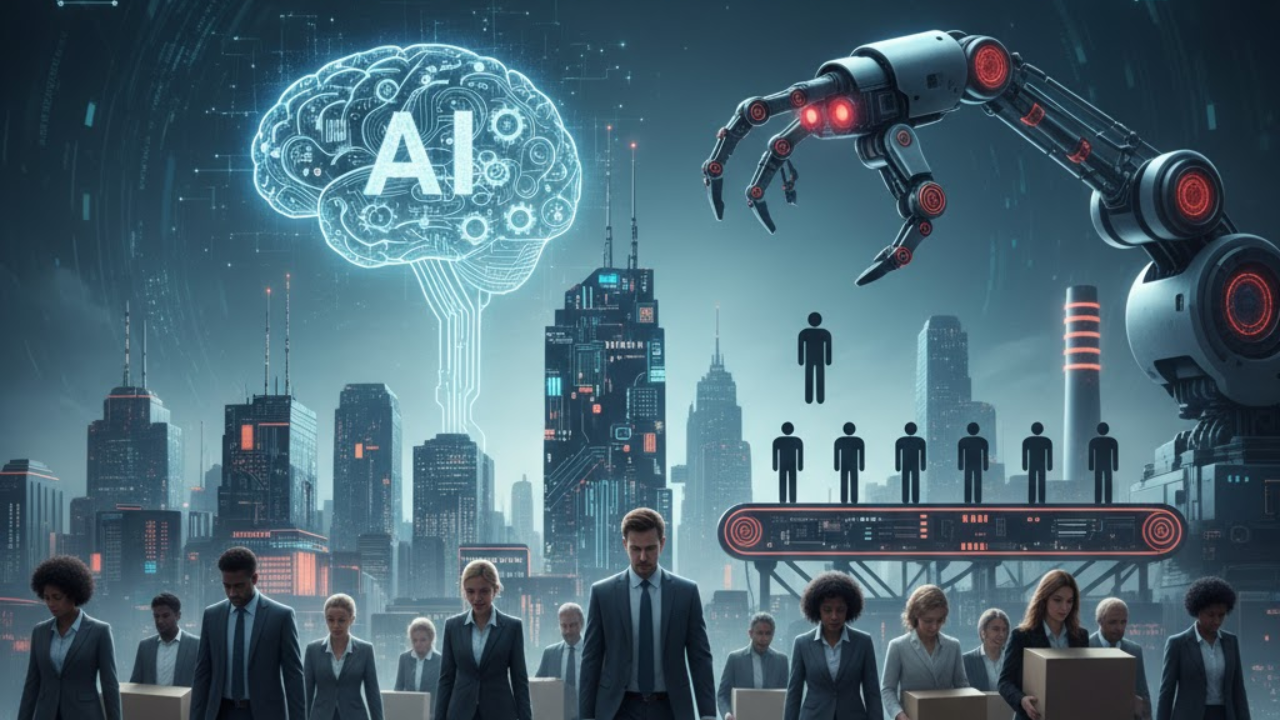
Across the globe, 2025 has brought another wave of large-scale layoffs, especially in technology, finance, and consumer sectors. Over 158,000 tech employees have already lost their jobs this year as companies restructure and shift focus toward AI-driven productivity.
Major firms such as Microsoft, Salesforce, Oracle, and Intel have collectively cut tens of thousands of jobs as they realign their businesses around artificial intelligence and automation. Even non-tech multinationals like Nestlé have joined the trend, announcing workforce reductions of more than 16,000 roles to streamline operations and protect margins.
This wave represents more than just cost cutting — it signals a deep transformation in how work is being redefined in the age of AI.
The most significant factor driving layoffs today is the rise of artificial intelligence and automation. Across industries, repetitive and process-based roles — especially in support, data entry, testing, and back-office operations — are being automated.
Customer support chatbots powered by generative AI have replaced a major portion of human agents. Similarly, automation tools are increasingly capable of handling tasks in data processing, finance, and even software engineering. Companies are finding they can maintain or even improve efficiency with fewer human resources.
Inflation, high interest rates, and slower global growth have pushed companies to optimize costs. Workforce reduction is one of the fastest ways to cut expenditure while protecting profitability. Many businesses that overhired during the pandemic boom years are now correcting course to balance growth and efficiency.
From 2020 to 2023, companies focused on aggressive growth, hiring across functions to capture demand. However, as revenue growth moderates, focus has shifted to operational efficiency. Leadership teams now emphasize “doing more with less,” merging roles, and deploying automation to replace manual workflows.
As AI tools reshape industries, the demand for human skills has changed. Roles in analytics, data science, and AI integration are rising, while positions in legacy systems, manual testing, or traditional operations are fading. Companies are replacing outdated roles with new, tech-driven ones — often through layoffs and selective rehiring.
In mature industries, market expansion opportunities are limited. Firms are responding by improving profit margins rather than chasing new customers. Reducing headcount, consolidating teams, and outsourcing non-core tasks are central to this approach.
Tech firms are leading the current layoff wave. Many large IT companies are trimming thousands of employees as part of AI integration plans. For instance, major global technology companies have reduced teams in sales, customer success, and operations while simultaneously hiring AI specialists.
In India, the IT industry has also seen “silent layoffs,” where employees are released without formal announcements. These cuts typically target non-billable staff, middle management, and redundant positions.
Even consumer goods giants like Nestlé and Unilever have begun restructuring, citing the need for “leaner, more digital-first” organizations. Automation in supply chains and AI-driven demand forecasting are helping these companies operate with smaller workforces.
Banks and financial institutions are embracing AI in risk assessment, compliance, and customer interaction. With these systems handling previously manual processes, institutions have been able to reduce operational roles. Several global banks have signaled additional job cuts in 2025 as part of digital transformation programs.
Functions such as HR, accounting, payroll, and procurement — once handled manually — are increasingly being automated. AI-powered tools and enterprise resource platforms are allowing businesses to run global operations with fewer administrative staff.
Automation in warehouses, cashierless retail stores, and AI-driven logistics management are further cutting labor needs. Robotics and predictive analytics are transforming manual jobs into technology-managed systems.
The rapid pace of layoffs has created anxiety across industries. Many professionals, particularly those in mid-level roles, fear being replaced by automation. The widening skills gap means workers without AI literacy or digital proficiency risk falling behind.
While companies tout efficiency gains, the human impact — job loss, reduced morale, and financial stress — is significant. In tech hubs like California, Bengaluru, and Singapore, reduced spending by laid-off workers is also impacting local economies.
Layoffs can improve short-term profitability but may harm innovation and culture. Excessive cost cutting risks hollowing out teams and damaging morale among remaining employees. Over time, companies that over-prioritize efficiency may struggle to retain talent and innovate.
Widespread layoffs dampen consumer demand, particularly in urban centers heavily dependent on technology and services. If automation-driven job cuts outpace the creation of new roles, governments may face pressure to introduce stronger worker protection, retraining schemes, or even basic income policies.
Employees deserve honest explanations. Clear communication reduces confusion and resentment, preserving a company’s reputation and minimizing panic among remaining staff.
Providing fair severance, extended benefits, and access to career counseling or outplacement programs can help affected workers transition smoothly. Such measures demonstrate responsibility and empathy.
Instead of mass layoffs, companies can offer reskilling programs to redeploy employees into new AI, data, or automation-focused roles. Investing in internal mobility can transform redundancy into opportunity.
Gradual or performance-based restructuring avoids sudden shocks. Companies can evaluate progress and minimize over-cutting by phasing workforce changes across months or quarters.
Businesses should ensure that automation complements human talent rather than blindly replacing it. Ethical AI strategies can include “human-in-the-loop” systems and role redefinitions that pair technology with oversight.
Layoff Numbers and Hiring Trends: Whether layoffs stabilize or expand as AI adoption accelerates.
Skill Evolution: Growth in demand for AI-related, creative, and analytical roles.
Government Intervention: Potential policy measures for labor protection and retraining.
Regional Disparities: Impact differences between high-tech hubs and smaller economies.
AI’s Second Wave: The next phase of automation may affect white-collar sectors like legal, finance, and consulting.
Social Impact: Rise in gig and contract work as permanent jobs decline.
The AI revolution is reshaping industries faster than any prior wave of technology. While automation promises unprecedented productivity, it also disrupts livelihoods and forces millions to adapt.
For employees, the message is clear: continuous learning, adaptability, and proactive reskilling are no longer optional. For companies, the challenge lies in balancing efficiency with empathy — ensuring that the drive toward automation doesn’t erode trust, creativity, or innovation.
Ultimately, the future of work will depend not on how many jobs AI replaces, but on how wisely humans use technology to create new opportunities.
Disclaimer:
This article is for informational and editorial purposes only. It does not constitute financial, career, or legal advice. Readers should consult professionals or conduct their own research before making employment or strategic decisions.
tech layoffs 2025, AI automation layoffs, job cuts, workforce trends, future of work, restructuring, big tech



Advances in Aerospace Technology and Commercial Aviation Recovery
Insights into breakthrough aerospace technologies and commercial aviation’s recovery amid 2025 chall

Defense Modernization and Strategic Spending Trends
Explore key trends in global defense modernization and strategic military spending shaping 2025 secu

Tens of Thousands Protest in Serbia on Anniversary of Deadly Roof Collapse
Tens of thousands in Novi Sad mark a year since a deadly station roof collapse that killed 16, prote

Canada PM Carney Apologizes to Trump Over Controversial Reagan Anti-Tariff Ad
Canadian PM Mark Carney apologized to President Trump over an Ontario anti-tariff ad quoting Reagan,

The ad that stirred a hornets nest, and made Canadian PM Carney say sorry to Trump
Canadian PM Mark Carney apologizes to US President Trump after a tariff-related ad causes diplomatic

Bengaluru-Mumbai Superfast Train Approved After 30-Year Wait
Railways approves new superfast train connecting Bengaluru and Mumbai, ending a 30-year demand, easi




