Post by : Amit
Photo: Linkdin / GESS Engineering
The future of automotive innovation, Toyota, the world’s largest car manufacturer by volume, has announced its plans to incorporate artificial intelligence (AI) into the design process of its next-generation vehicles. The move signals a fundamental shift in how cars are conceptualized, styled, and engineered, positioning the Japanese automotive giant at the forefront of digital transformation in the global auto industry.
The announcement, which comes as part of Toyota's broader strategy to integrate cutting-edge technologies across its operations, underscores the company’s commitment to accelerating innovation in an increasingly competitive and fast-changing mobility landscape. As AI continues to reshape industries worldwide, Toyota's decision reflects the growing role of machine learning and data-driven decision-making in sectors traditionally driven by human creativity and engineering.
AI: From Concept to Creation
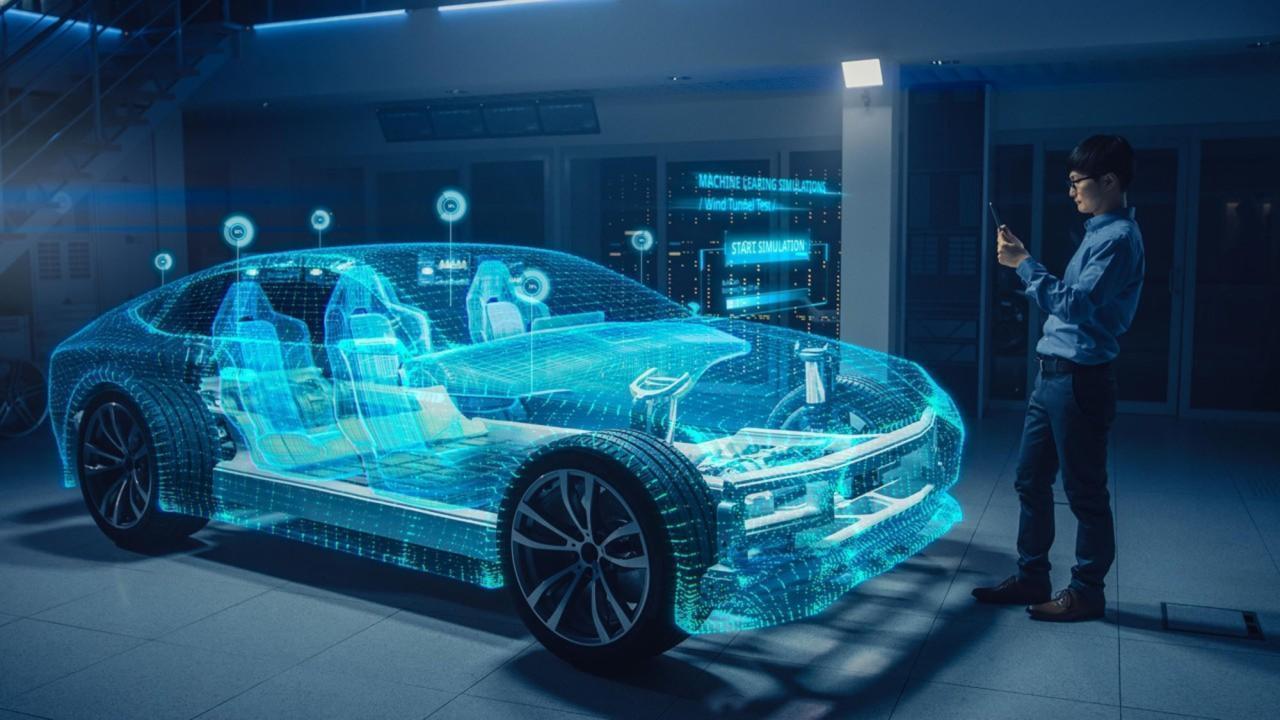
At the heart of Toyota's new approach is the use of advanced AI algorithms capable of analyzing vast datasets related to aerodynamics, ergonomics, materials, and consumer preferences. By feeding these parameters into machine learning models, Toyota's AI systems can generate car design concepts that not only meet safety and performance standards but also cater to aesthetic trends and environmental goals.
Toyota plans to use AI in the early stages of car design, including the creation of digital sketches, virtual modeling, and rapid prototyping. This AI-driven process promises to dramatically shorten development timelines while enhancing design efficiency and accuracy.
Company executives have revealed that the AI system will act as a creative co-pilot—offering designers a suite of options based on real-world data and predictive analytics. The human design team will remain central to the process, but AI will provide them with more informed, optimized pathways that might not have been considered through traditional methods.
Pioneering a New Era in Automotive Design
This marks a significant evolution in car design, an area long dominated by human craftsmanship, intuition, and artistic flair. Traditionally, car design has relied heavily on the expertise of designers working with clay models and CAD software. Toyota’s embrace of AI will not eliminate this human element but rather augment it—ushering in what company insiders call a "hybrid design methodology" where machine intelligence and human creativity collaborate.
For Toyota, this approach is about more than just aesthetics. The company aims to leverage AI to improve vehicle aerodynamics, fuel efficiency, safety, and manufacturing scalability. By rapidly generating and testing design variations in a virtual environment, Toyota can reduce costly physical prototypes and move from concept to production faster.
Sustainability at the Core
Toyota’s AI design initiative is also closely aligned with its sustainability objectives. With the global automotive industry under pressure to cut emissions and adopt greener materials, AI offers Toyota the tools to model environmental impacts early in the design process.
AI algorithms can suggest design alterations that reduce material waste, optimize the use of lightweight composites, and even recommend features that enhance battery performance in electric vehicles. This proactive sustainability approach reflects Toyota’s broader corporate philosophy, encapsulated in its "Environmental Challenge 2050" roadmap, which aims for carbon neutrality across the vehicle lifecycle.
Competitive Advantage in a Rapidly Evolving Market
Toyota's decision to harness AI for car design is also seen as a strategic response to intensifying competition from both established automakers and agile newcomers. Brands like Tesla, Rivian, and NIO are already incorporating AI into various aspects of vehicle development, including autonomous driving, battery management, and predictive maintenance.
By bringing AI into the design studio, Toyota hopes to maintain its leadership position while meeting the evolving expectations of tech-savvy consumers who increasingly demand innovation, customization, and sustainability.
In markets like North America, Europe, and Asia-Pacific, younger consumers are particularly drawn to brands that reflect technological sophistication and eco-friendly values. AI-driven design could allow Toyota to rapidly iterate and deliver vehicles tailored to these preferences, keeping pace with shifting consumer tastes and regulatory demands.
Risks and Challenges
Despite the promise, Toyota’s AI initiative is not without challenges. Industry experts caution that over-reliance on AI could risk homogenization in design, where algorithms tend to favor the most statistically "optimal" shapes and features, potentially reducing the distinctiveness of brand identity.
There are also concerns about the ethical dimensions of AI in creative industries. How much of the design should be attributed to machines versus human designers? Will AI stifle innovation by favoring safer, data-backed decisions over bold, disruptive ideas?
Toyota acknowledges these concerns and has emphasized that human designers will retain the final decision-making authority. The AI systems are intended as tools—not as replacements for the human eye and intuition that define iconic automotive design.
Integration with Manufacturing and Beyond
Toyota’s AI ambitions extend beyond just design. The company is also exploring how AI can enhance manufacturing processes, supply chain logistics, and customer experience. The goal is to create an integrated AI ecosystem where insights from design, production, and even post-sale vehicle performance feed back into continuous improvement loops.
For example, AI-generated designs can be optimized for ease of assembly, recyclability, and compatibility with existing manufacturing lines, further reducing costs and environmental impacts. In dealerships, AI could help personalize vehicle configurations for buyers based on regional trends, usage patterns, and individual preferences.
Collaboration with Tech Partners
To bring its AI vision to life, Toyota is collaborating with leading technology companies, universities, and research institutions. While the company has not disclosed specific partners, industry insiders speculate that major AI players such as NVIDIA, Google DeepMind, and Japanese AI firms are involved.
These partnerships aim to combine Toyota’s deep automotive expertise with cutting-edge advances in AI, machine learning, and computational design. By pooling resources, Toyota hopes to leapfrog incremental changes and move toward truly transformative vehicle concepts.
The Road to AI-Designed Cars on the Road
While AI-designed vehicles are still in the experimental phase, Toyota aims to roll out its first production models influenced by AI within the next few years. Initially, these models may feature subtle design improvements that enhance efficiency, aerodynamics, or user experience. Over time, however, AI is expected to play a central role in shaping entire vehicle platforms, including electric vehicles (EVs), hybrid models, and even hydrogen-powered cars.
The company’s AI strategy is also expected to have ripple effects across the broader industry, pushing competitors to accelerate their own digital transformation efforts. As AI tools become more accessible and powerful, automotive design may evolve into a highly automated, data-driven process—one that still celebrates human creativity but within a vastly expanded technological framework.
Driving Toward an AI-Powered Future
Toyota's decision to employ AI in the car design process is a landmark moment for both the company and the global automotive sector. By combining the power of machine learning with human ingenuity, Toyota is positioning itself to deliver vehicles that are not only more efficient and sustainable but also more attuned to the needs and desires of the modern consumer.
As the boundaries between digital and physical design continue to blur, AI is poised to become an indispensable part of how mobility solutions are conceived, built, and experienced. For Toyota, this is not just about staying ahead of competitors—it's about shaping the very future of how the world moves.
Toyota, Ai



Advances in Aerospace Technology and Commercial Aviation Recovery
Insights into breakthrough aerospace technologies and commercial aviation’s recovery amid 2025 chall

Defense Modernization and Strategic Spending Trends
Explore key trends in global defense modernization and strategic military spending shaping 2025 secu

Tens of Thousands Protest in Serbia on Anniversary of Deadly Roof Collapse
Tens of thousands in Novi Sad mark a year since a deadly station roof collapse that killed 16, prote

Canada PM Carney Apologizes to Trump Over Controversial Reagan Anti-Tariff Ad
Canadian PM Mark Carney apologized to President Trump over an Ontario anti-tariff ad quoting Reagan,

The ad that stirred a hornets nest, and made Canadian PM Carney say sorry to Trump
Canadian PM Mark Carney apologizes to US President Trump after a tariff-related ad causes diplomatic

Bengaluru-Mumbai Superfast Train Approved After 30-Year Wait
Railways approves new superfast train connecting Bengaluru and Mumbai, ending a 30-year demand, easi




