Post by : Amit
Photo : X / Oli London
A Retailer Known for Rural America Adapts to a Digital Future
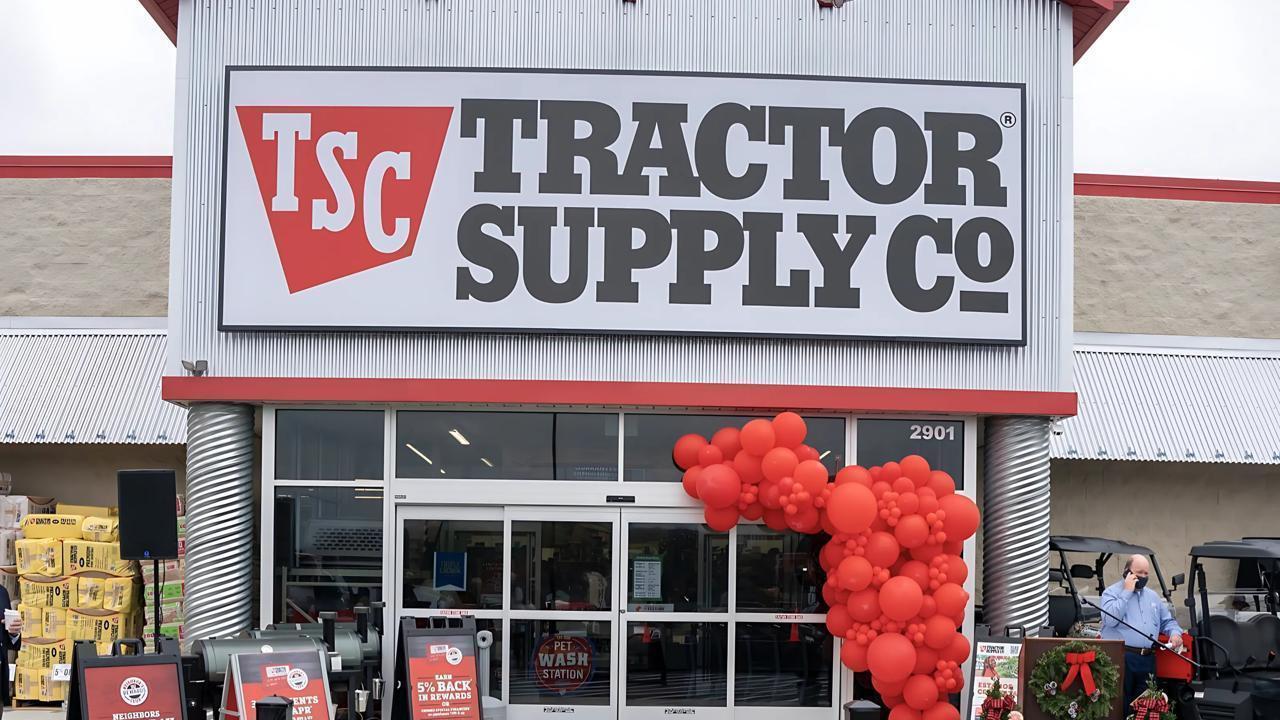
Tractor Supply, the iconic U.S. retailer synonymous with rural living and outdoor lifestyles, is doubling down on one of the most challenging and competitive fronts in modern retail: last-mile delivery. In a world where consumer expectations are increasingly shaped by same-day and next-day service models pioneered by giants like Amazon and Walmart, Tractor Supply’s move signals a decisive pivot to modernize its logistics backbone and cater to changing customer habits.
The company, long recognized for selling everything from livestock feed and farm equipment to pet supplies and outdoor furniture, faces a unique challenge. Its stores are rooted in rural and semi-rural markets, where delivery density is lower, routes are longer, and costs are higher. By committing fresh investments into last-mile delivery, Tractor Supply is betting it can capture new sales, deepen loyalty among its core customer base, and position itself as the go-to supplier for both everyday essentials and big-ticket rural products.
Why Last-Mile Delivery Matters for Tractor Supply
The last mile — the final leg of a product’s journey to the customer — is often the most expensive and complex segment of supply chains. For Tractor Supply, this complexity is magnified. Unlike dense urban markets, rural delivery means longer distances, fewer stops per route, and higher per-unit transportation costs. Yet, customer expectations for speed and convenience have shifted dramatically since the pandemic, even in rural America.
Tractor Supply’s leadership has recognized that investing in delivery is no longer optional; it is fundamental to retaining and growing market share. Company executives have pointed out that customers purchasing bulky products like chicken coops, riding mowers, or livestock troughs increasingly expect seamless delivery options rather than relying solely on in-store pickup or arranging their own transport.
By enhancing last-mile delivery, Tractor Supply aims not only to increase convenience but also to unlock incremental revenue by making it easier for customers to buy higher-margin, larger items without logistical headaches.
Blending Store Networks with Logistics Efficiency
One of Tractor Supply’s biggest advantages in pursuing last-mile expansion is its dense store network. With over 2,200 locations across 49 states, most of which are situated within driving distance of rural households, the company has a ready-made infrastructure to act as micro-fulfillment hubs.
Instead of building costly new distribution centers, Tractor Supply is increasingly positioning its existing stores as critical nodes in the delivery network. By doing so, it leverages existing real estate, reduces capital expenditure, and improves speed to customer. This “ship-from-store” model has already been embraced by many retailers, but in Tractor Supply’s case, it takes on added importance because rural customers often live far from regional warehouses.
Logistics experts say this strategy could allow Tractor Supply to maintain a competitive edge in regions where other major retailers have less penetration. In practical terms, a store in rural Kentucky or Nebraska could serve as both a community shopping hub and a staging ground for same-day delivery of farm essentials.
Technology as the Backbone of the Rollout
Tractor Supply is not approaching this challenge through physical logistics alone. Technology is playing a critical role in orchestrating its last-mile expansion. The retailer has invested heavily in digital platforms that integrate inventory management, order fulfillment, and customer-facing delivery tracking.
Customers can now place online orders through Tractor Supply’s app or website and receive real-time delivery updates. This transparency is designed to build trust with rural shoppers who may be newer to relying on e-commerce for larger, essential purchases.
Behind the scenes, route optimization software helps ensure deliveries are as efficient as possible, reducing mileage, fuel costs, and delivery times. In addition, Tractor Supply has been exploring partnerships with third-party logistics providers and gig-economy delivery services in areas where demand justifies outsourcing.
The combination of data-driven logistics and customer-facing digital tools reflects a broader industry trend: logistics excellence is no longer just about moving goods, but about creating a frictionless experience that aligns with customer lifestyles.
Learning from Retail Giants but Carving Its Own Path
Retail behemoths like Amazon, Walmart, and Target have set the bar for fast, reliable delivery. For Tractor Supply, competing head-to-head with these giants in urban and suburban delivery is unrealistic. Instead, the company is carving out a differentiated strategy that plays to its strengths.
Rather than chasing universal two-hour delivery, Tractor Supply focuses on reliability and convenience tailored to rural needs. A farmer ordering a pallet of feed or a family buying a backyard chicken coop may not demand delivery within hours, but they do expect an affordable, predictable option that saves them time and hassle.
This emphasis on rural practicality gives Tractor Supply room to set realistic service promises while still moving the needle on customer satisfaction and sales. Analysts note that by targeting its unique demographic with tailored solutions, Tractor Supply can avoid costly mistakes that have tripped up other mid-sized retailers trying to mimic Amazon’s logistics playbook.
Driving Sales Through Big-Ticket Deliveries
One of the most important benefits of Tractor Supply’s expanded delivery network is its ability to drive sales of large, high-margin products. Historically, items like riding lawn mowers, stock tanks, or portable fencing required either in-store pickup with personal trailers or expensive third-party delivery arrangements.
By integrating delivery into its own offering, Tractor Supply lowers the barrier to purchase. Customers who might have hesitated to buy due to transport challenges are now more likely to complete transactions. This not only boosts sales but also helps Tractor Supply defend and expand its share of categories that define its brand identity.
Executives believe this capability could add millions in incremental sales annually, particularly as rural homeowners increasingly invest in lifestyle-related purchases such as outdoor furniture, gardening equipment, and pet supplies.
Balancing Costs and Margins in a Tight Market
While last-mile delivery promises growth, it also introduces financial pressures. Rural logistics can be expensive, and Tractor Supply must carefully manage costs to avoid eroding profitability.
Industry observers highlight that Tractor Supply’s model relies on finding the right balance between delivery fees, operational costs, and customer willingness to pay. In some cases, the company has experimented with tiered delivery pricing based on order size, distance, and membership in its loyalty program, Neighbor’s Club.
The big question remains: can Tractor Supply sustain delivery expansion without sacrificing margins in a retail environment already pressured by inflation, labor costs, and fluctuating consumer demand?
A Broader Supply Chain Strategy at Work
Tractor Supply’s delivery push is part of a broader supply chain modernization effort. The company has already invested in new distribution centers, automated sorting systems, and advanced demand forecasting tools.
These upgrades are designed to create a seamless ecosystem where products flow efficiently from suppliers to stores and from stores to customers. Last-mile delivery is simply the most visible frontier of this transformation.
The effort underscores a larger truth in modern retail: supply chain capabilities are no longer back-office functions, but front-line differentiators that directly impact customer experience and loyalty.
Voices from the Field: Customers and Analysts Weigh In
Feedback from customers in test markets has been largely positive. Many rural shoppers appreciate the convenience of ordering large items without arranging their own hauling. Some see it as a sign that Tractor Supply understands the realities of rural living, where distance and time constraints often limit shopping options.
Analysts are cautiously optimistic. They acknowledge that last-mile delivery could be a revenue driver but warn that execution will be critical. Poor delivery performance, unexpected costs, or lack of scalability could undermine the strategy. Still, the consensus is that Tractor Supply is making a necessary move to remain competitive in an increasingly digital retail environment.
The Future of Rural Retail Logistics
As Tractor Supply scales its delivery capabilities, the company could help set new standards for rural retail logistics. If successful, it may demonstrate that rural markets — often overlooked by larger retailers — can support profitable, tech-enabled delivery networks.
The initiative also raises questions about how other rural-focused retailers, from farm co-ops to hardware chains, will respond. Will they follow Tractor Supply’s lead, or risk ceding ground in a market where convenience is becoming just as important as price?
For now, Tractor Supply’s strategy positions it as a pioneer, willing to experiment with blending old-fashioned rural community roots with cutting-edge logistics and technology.
Betting on Convenience to Secure Growth
Tractor Supply’s decision to beef up last-mile delivery is more than a logistics play; it is a strategic bet on the future of rural retail. By aligning supply chain investments with evolving customer expectations, the company is not only defending its market position but actively expanding it.
The challenges of rural logistics are real, from cost pressures to operational complexities. Yet, the potential upside — higher sales, deeper loyalty, and stronger brand positioning — suggests that Tractor Supply is taking a calculated, forward-looking gamble.
In an era where convenience increasingly defines customer choice, Tractor Supply is making a bold statement: rural America deserves — and will pay for — delivery solutions that match its lifestyle. Whether this gamble pays off will depend on execution, but the company has clearly signaled its intent to lead, not follow, in the race to modernize rural retail.
Tractor Supply last-mile delivery



Advances in Aerospace Technology and Commercial Aviation Recovery
Insights into breakthrough aerospace technologies and commercial aviation’s recovery amid 2025 chall

Defense Modernization and Strategic Spending Trends
Explore key trends in global defense modernization and strategic military spending shaping 2025 secu

Tens of Thousands Protest in Serbia on Anniversary of Deadly Roof Collapse
Tens of thousands in Novi Sad mark a year since a deadly station roof collapse that killed 16, prote

Canada PM Carney Apologizes to Trump Over Controversial Reagan Anti-Tariff Ad
Canadian PM Mark Carney apologized to President Trump over an Ontario anti-tariff ad quoting Reagan,

The ad that stirred a hornets nest, and made Canadian PM Carney say sorry to Trump
Canadian PM Mark Carney apologizes to US President Trump after a tariff-related ad causes diplomatic

Bengaluru-Mumbai Superfast Train Approved After 30-Year Wait
Railways approves new superfast train connecting Bengaluru and Mumbai, ending a 30-year demand, easi




