Post by : Amit
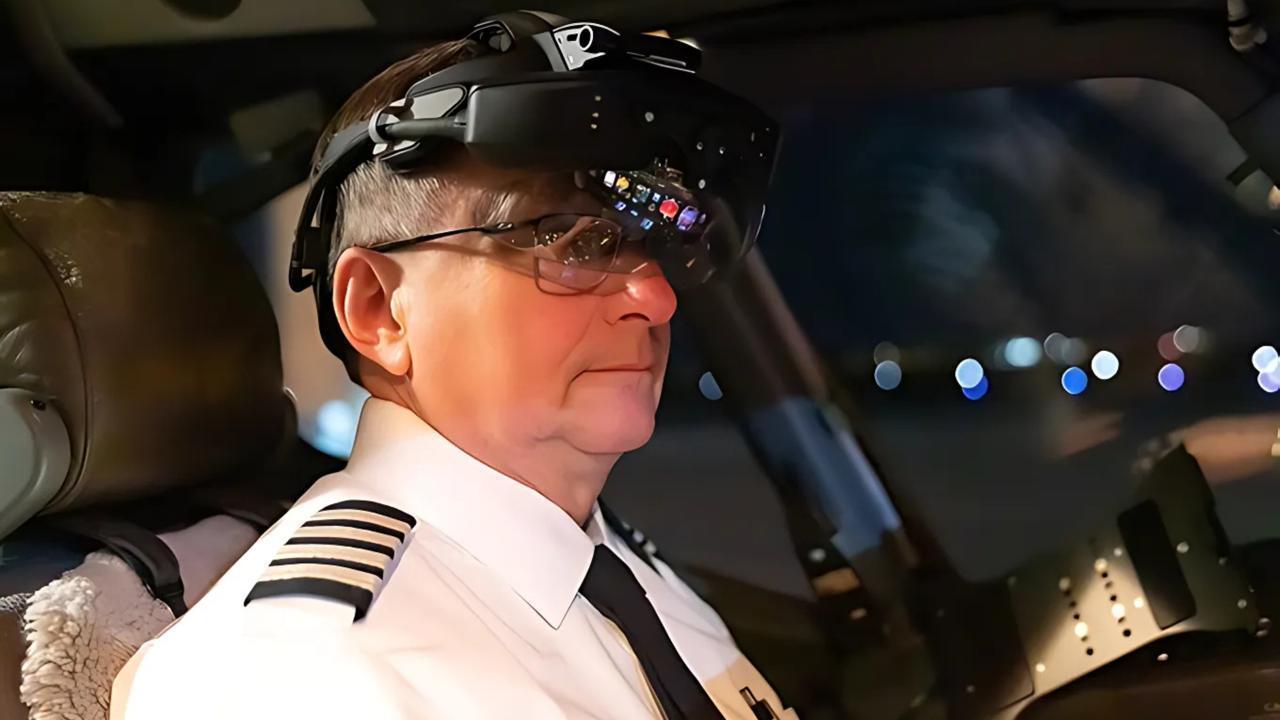
Photo : X / Aviation International News
A Major Safety Upgrade for Canadian Skies
Transport Canada has granted full certification to AerSale’s AeroAware Enhanced Flight Vision System (EFVS)—a next-generation solution designed to drastically enhance pilot visibility, navigation, and situational awareness during low-visibility and high-risk flight conditions.
This approval comes as the latest validation of the EFVS platform, which had already received approval from the Federal Aviation Administration (FAA) in the United States. The Transport Canada endorsement now positions AeroAware as a fully sanctioned, bi-national system that meets rigorous North American regulatory standards—making it a top candidate for widespread adoption across Canadian commercial, cargo, and charter fleets.
More than just another avionics upgrade, AeroAware is a response to one of the industry’s most pressing challenges: how to give pilots superior vision and awareness during weather conditions, terrain scenarios, and airport operations where natural vision falls short. In a country as geographically diverse and weather-affected as Canada, the timing and impact of this certification could not be more significant.
Meeting the Demands of Challenging Terrain and Weather
From snow-blown northern runways to rain-soaked coastal approaches, Canada’s terrain and seasonal unpredictability create a perfect storm for visual navigation challenges. In remote regions, airports may lack advanced Instrument Landing Systems (ILS), and pilots often rely solely on onboard instrumentation. This makes landings during night, snow, or fog even more difficult and risky.
Transport Canada’s approval of AeroAware directly addresses this challenge by allowing operators to retrofit their fleets with technology that gives pilots an augmented, real-time view of their surroundings—even when traditional visibility is virtually nonexistent.
As AerSale emphasized in its announcement, AeroAware introduces “a new layer of precision and protection for pilots,” enabling aircraft to safely complete landings and approaches that would otherwise be aborted, diverted, or delayed. It’s not just a safety measure; it’s an operational asset.
What Makes AeroAware Different?
AeroAware is not a single sensor or feature—it’s a comprehensive EFVS suite combining multiple high-performance subsystems to deliver live, augmented situational awareness. Among its core technologies:
The system is compatible with various commercial aircraft types, including narrow-body, regional jets, and older platforms—making it highly adaptable to both legacy and next-gen fleets.
AeroAware is designed for the kinds of critical flight phases—like Category II and III approaches—where visibility is poor, runway awareness is limited, and every second of reaction time can make a difference. By giving pilots more information earlier, it improves both reaction time and landing accuracy.
A Strategic Safety Milestone for Canada
Canada becomes only the second country to formally certify AeroAware, underscoring its growing global relevance. The Transport Canada approval was the result of exhaustive performance evaluations, including simulated and in-flight testing under challenging conditions, as well as technical compliance with the Canadian Aviation Regulations (CARs) and ICAO (International Civil Aviation Organization) protocols.
The importance of this approval cannot be overstated. It gives Canadian operators the ability to upgrade safety performance without the cost and downtime of acquiring new aircraft. And for AerSale, it opens the doors to one of the most logistically demanding airspaces in the world.
In Canada, where diversions due to low visibility can disrupt both passenger flights and essential supply chains, AeroAware offers a concrete solution. Airlines, medical transport providers, and remote logistics operators alike stand to benefit from this leap forward in operational resilience.
Enhancing Pilot Decision-Making in Real Time
While traditional avionics display data through gauges and instruments, AeroAware gives pilots something fundamentally different: a live, panoramic perspective. This visual clarity not only improves runway identification but also dramatically reduces the risk of Controlled Flight Into Terrain (CFIT)—one of the most fatal accident types in modern aviation.
By fusing live video with topographical overlays, the system minimizes disorientation and enhances spatial judgment. It allows pilots to “see” runways, mountains, and even buildings well before those hazards are physically visible.
This advantage is particularly critical when landing at non-towered or minimally equipped airfields, which are common across Canada’s rural regions. Here, AeroAware gives pilots an unprecedented level of confidence and control.
A Retrofit Solution with Broad Appeal
One of AeroAware’s strongest selling points is that it does not require a new aircraft purchase. The system is designed to be modular and retrofit-friendly, allowing operators to integrate it during scheduled maintenance or alongside other cockpit upgrades.
It supports a wide range of aircraft models and is especially appealing to carriers with aging fleets that want to extend service life while keeping pace with modern safety requirements. This retrofit capability significantly lowers the entry barrier for safety upgrades and aligns with sustainability trends by maximizing asset use rather than accelerating fleet turnover.
Industry Reaction and Future Deployment
AerSale has already reported strong interest from Canadian operators, including regional airlines and MRO (Maintenance, Repair & Overhaul) centers. Negotiations are underway for the initial wave of installations, targeted for early 2026.
Operators considering AeroAware for their fleets have cited its low operational disruption, relatively quick installation time, and immediate risk reduction as compelling reasons for adoption. With Transport Canada’s nod, insurers and aviation safety boards may also begin considering AeroAware-equipped aircraft as lower-risk assets—potentially affecting premiums and compliance ratings.
AerSale has indicated it will expand compatibility with wide-body aircraft in the near future and introduce AI-enhanced object recognition, predictive alerting, and cloud-based maintenance logs as part of its roadmap. These additions will further elevate AeroAware from an EFVS tool to a full situational intelligence system.
A Win for Passengers, Pilots, and the Aviation Ecosystem
For passengers, the implications of AeroAware’s rollout are clear: fewer weather-related diversions, improved schedule reliability, and higher confidence in regional route connectivity, especially in winter.
For pilots, the system reduces cognitive load in critical moments, provides intuitive situational feedback, and supports safer decision-making—particularly during time-pressured approaches in poor visibility.
For airline operators, it enables fleet modernization without replacement, enhances compliance posture, and boosts operational integrity in weather-prone regions. It’s a rare example of technology that benefits every stakeholder in the flight chain.
Safer Skies Through Smart Vision
The certification of AeroAware by Transport Canada is more than just regulatory housekeeping—it’s a signal that the future of flight safety lies in augmentation, not replacement.
Rather than automate away human judgment, AeroAware complements it. By giving pilots better tools—not just more tools—it reinforces the role of humans in modern aviation while acknowledging their limits in sensory perception.
As more civil aviation authorities begin to recognize the value of enhanced vision systems, AerSale is likely to continue leading the charge. With a proven product, regulatory backing, and a roadmap for future innovation, AeroAware is well positioned to become a standard safety feature across international fleets.
Canada’s skies are vast, variable, and often unforgiving. With AeroAware now fully approved, pilots can fly with better vision, more confidence, and heightened safety—even in the most inhospitable environments.
As winter approaches and low-visibility operations ramp up across the country, AeroAware's arrival couldn’t be more timely. It’s not just a system upgrade—it’s a transformation in how aviation safety is perceived, delivered, and executed.
In an industry where every second counts and every landing matters, AeroAware ensures those seconds are used wisely, and those landings are safer than ever before.
Aviation, Canada, AeroAware System



Advances in Aerospace Technology and Commercial Aviation Recovery
Insights into breakthrough aerospace technologies and commercial aviation’s recovery amid 2025 chall

Defense Modernization and Strategic Spending Trends
Explore key trends in global defense modernization and strategic military spending shaping 2025 secu

Tens of Thousands Protest in Serbia on Anniversary of Deadly Roof Collapse
Tens of thousands in Novi Sad mark a year since a deadly station roof collapse that killed 16, prote

Canada PM Carney Apologizes to Trump Over Controversial Reagan Anti-Tariff Ad
Canadian PM Mark Carney apologized to President Trump over an Ontario anti-tariff ad quoting Reagan,

The ad that stirred a hornets nest, and made Canadian PM Carney say sorry to Trump
Canadian PM Mark Carney apologizes to US President Trump after a tariff-related ad causes diplomatic

Bengaluru-Mumbai Superfast Train Approved After 30-Year Wait
Railways approves new superfast train connecting Bengaluru and Mumbai, ending a 30-year demand, easi




