Post by : Amit
Photo : X / David Fishman
A Landmark in Clean Energy Transformation Through Desert Innovation
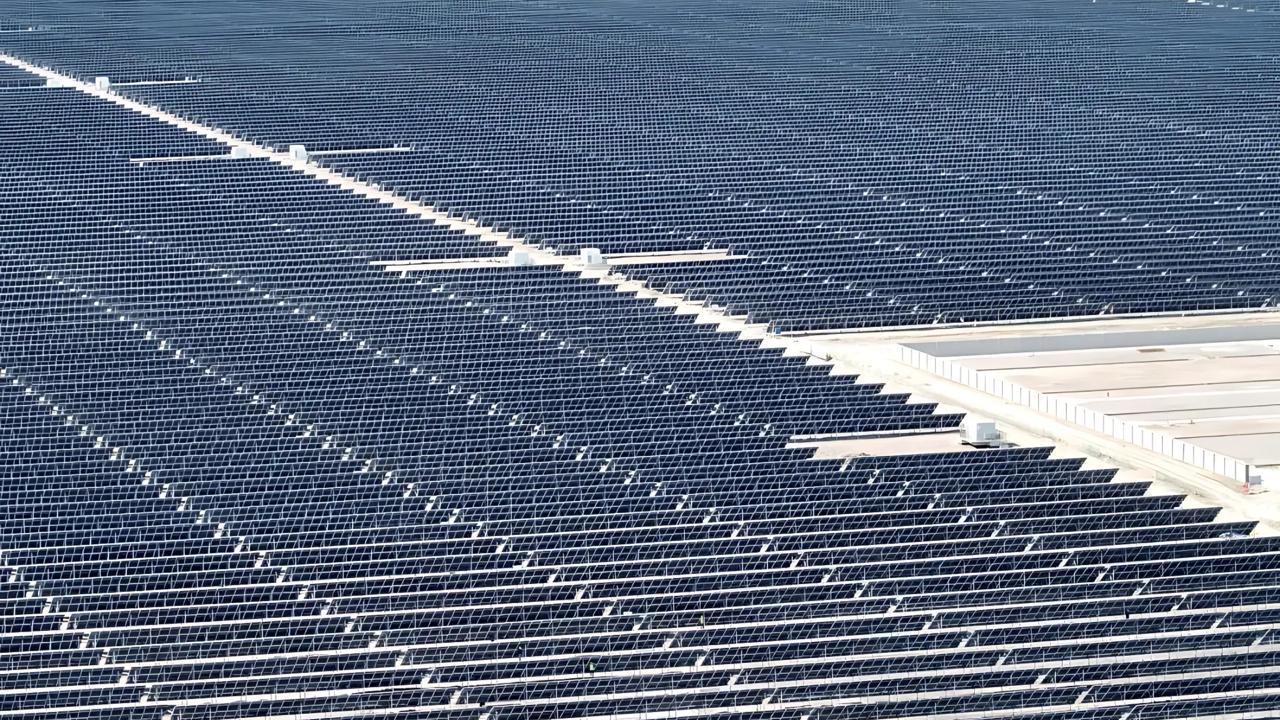
Trina Solar has supplied its cutting-edge Vertex photovoltaic modules for a 500-megawatt (MW) utility-scale solar power project set deep within the vast expanses of China’s Gobi Desert. This landmark project isn’t just another milestone for the company—it’s a reflection of China’s sweeping vision to transform its sun-drenched but sparsely inhabited western deserts into globally significant clean energy corridors.
For Trina Solar, a global leader in solar PV and smart energy solutions, the delivery marks a significant contribution to China's Desert Renewable Energy Mega-Base initiative, an aggressive national campaign to use barren, sun-drenched land for sustainable energy generation on an unprecedented scale. At the center of this transformation is the Vertex series—Trina’s flagship range of ultra-high-efficiency solar modules, designed to thrive in even the harshest climates.
Engineering Power and Resilience: Why Vertex Modules Fit the Desert
The Vertex modules, renowned for their technological sophistication and consistent real-world performance, are purpose-built for environments like the Gobi Desert—where wide temperature swings, abrasive sandstorms, and relentless UV radiation pose serious challenges to long-term solar infrastructure. These modules deliver up to 670 watts per panel, achieving conversion efficiencies well over 21%, made possible through innovations such as 210 mm large-format wafers, multi-busbar architecture, and non-destructive laser cutting.
Such features are not just incremental upgrades—they are foundational to ensuring the reliability and longevity of solar farms in extreme conditions. The robust mechanical load resistance, anti-soiling coatings, and enhanced thermal stability of Vertex modules make them the right fit for the Gobi’s intense operational demands. Even with seasonal sand drifts and high-wind events, these modules are engineered to deliver uninterrupted power output for over 25 years, reducing maintenance requirements and maximizing yield.
Powering the Future: Integrating Clean Energy Into National Grids
This 500 MW solar project, located in Gansu Province, feeds directly into China’s ultra-high-voltage (UHV) transmission network, a key pillar in the country’s plan to distribute renewable energy from the western deserts to densely populated industrial zones in the east. The sheer scale of this power plant makes it one of the flagship contributors to the first phase of the Desert Renewable Energy Mega-Base, a program that aims to add 450 GW of new solar and wind capacity in desert regions by 2030.
This isn’t just about solar panels—it's about grid-scale impact. The electricity generated from this single installation will power hundreds of thousands of homes and commercial facilities, with Trina estimating an annual CO₂ reduction of over 800,000 metric tons. That’s equivalent to removing nearly 175,000 cars from the road every year.
Aligning with National Climate Goals
China has laid out clear climate ambitions: reaching peak carbon emissions by 2030 and achieving carbon neutrality by 2060. The Gobi Desert project reflects the strategic role desert solar power will play in achieving these targets. Beyond grid integration, it supports the decarbonization of hard-to-abate sectors, especially in western China, where industries like mining, heavy manufacturing, and energy production still rely heavily on fossil fuels.
By providing clean, stable power in these remote locations, Trina’s solar modules are also helping enable the green electrification of off-grid industrial sites, such as rare earth mines and critical mineral processing centers, which are crucial for the global energy transition. These operations, previously powered by diesel or coal, can now tap into a sustainable and economically viable alternative.
A Scalable Model for Other Arid Regions
The Gobi Desert is just one example of what’s possible. As the global climate crisis intensifies and energy demands soar, other countries with large desert areas are now eyeing similar solar megaprojects. From the Thar Desert in India to the Negev in Israel, and from Saudi Arabia’s Red Sea coast to Australia’s Outback, the model demonstrated by China and Trina Solar has the potential to be adapted and replicated across continents.
Trina’s ability to provide modular, easily scalable, and high-output panels makes such transitions easier for global developers and national governments. The company’s experience in logistics, desert-site engineering, and long-term O&M (operations and maintenance) support is equally critical, ensuring that similar mega-solar ventures can be deployed swiftly and sustainably.
A Record-Breaking Year for Trina Solar
This project also underscores Trina Solar’s sustained leadership in the global solar industry. In 2023 alone, the company shipped over 65 gigawatts (GW) of solar modules—an impressive feat in a supply-constrained global market. A growing portion of these shipments includes the Vertex series, which has become a preferred choice for large-scale developers looking for high-yield performance with cost efficiency.
The company’s ongoing commitment to vertical integration—from wafer to module, combined with continuous R&D investment, has kept it at the forefront of technological innovation. Trina’s strategic expansion into energy storage systems, smart trackers, and utility-scale project solutions makes it a holistic player in the energy transformation space.
Desert Megabases and Asia’s Renewable Renaissance
Beyond China’s borders, the implications of this project reverberate throughout Asia’s clean energy landscape. Nations such as India, Pakistan, Mongolia, and Central Asian republics are watching closely as China leverages its deserts not only to decarbonize but also to secure energy independence. The Gobi project, and others like it, are part of China’s attempt to “solarize” the Belt and Road Initiative, positioning renewable energy as a tool of economic diplomacy and low-carbon regional development.
As other nations assess their vast tracts of underutilized land, Trina Solar’s involvement provides an essential proof-of-concept—desert land, once dismissed as barren and economically unviable, can now become an asset in the fight against climate change.
Beyond Panels: Building a Future-Proof Solar Ecosystem
Trina’s contribution to the Gobi Desert isn’t limited to the physical delivery of modules. It represents a broader commitment to building ecosystem partnerships with project developers, EPCs (Engineering, Procurement, and Construction contractors), and grid operators. From pre-project design consultation to post-installation performance analytics, Trina supports the full lifecycle of the solar farm.
Moreover, the company’s innovations in digital energy platforms, smart trackers, and energy storage integration are expected to play a bigger role in upcoming phases of China’s desert energy initiatives. The next step: optimizing the timing, distribution, and storage of solar energy so it matches demand curves and supports grid stability.
Turning Wastelands Into Powerhouses
What was once regarded as desolate wasteland—the Gobi Desert—is fast becoming a beacon of climate innovation. Trina Solar’s supply of 500 MW of Vertex modules to this landmark project isn’t just another corporate deal—it’s a demonstration of what technology, vision, and policy alignment can achieve when they come together to tackle one of the planet’s biggest challenges.
As governments worldwide weigh their options for meeting aggressive climate targets, the blueprint laid out by China—with Trina Solar at the technical forefront—offers an inspiring and scalable model. It also reinforces the notion that solving the climate crisis will require not just cleaner technology, but the bold reimagining of land, resources, and ambition.
In this new energy era, deserts are no longer voids on the map—they are the new frontiers of sustainable power. And Trina Solar, with its high-performance Vertex technology, is helping the world take a giant leap forward—one sun-drenched panel at a time.
China, Trina, Solar Energy



Advances in Aerospace Technology and Commercial Aviation Recovery
Insights into breakthrough aerospace technologies and commercial aviation’s recovery amid 2025 chall

Defense Modernization and Strategic Spending Trends
Explore key trends in global defense modernization and strategic military spending shaping 2025 secu

Tens of Thousands Protest in Serbia on Anniversary of Deadly Roof Collapse
Tens of thousands in Novi Sad mark a year since a deadly station roof collapse that killed 16, prote

Canada PM Carney Apologizes to Trump Over Controversial Reagan Anti-Tariff Ad
Canadian PM Mark Carney apologized to President Trump over an Ontario anti-tariff ad quoting Reagan,

The ad that stirred a hornets nest, and made Canadian PM Carney say sorry to Trump
Canadian PM Mark Carney apologizes to US President Trump after a tariff-related ad causes diplomatic

Bengaluru-Mumbai Superfast Train Approved After 30-Year Wait
Railways approves new superfast train connecting Bengaluru and Mumbai, ending a 30-year demand, easi




