Post by : Saif
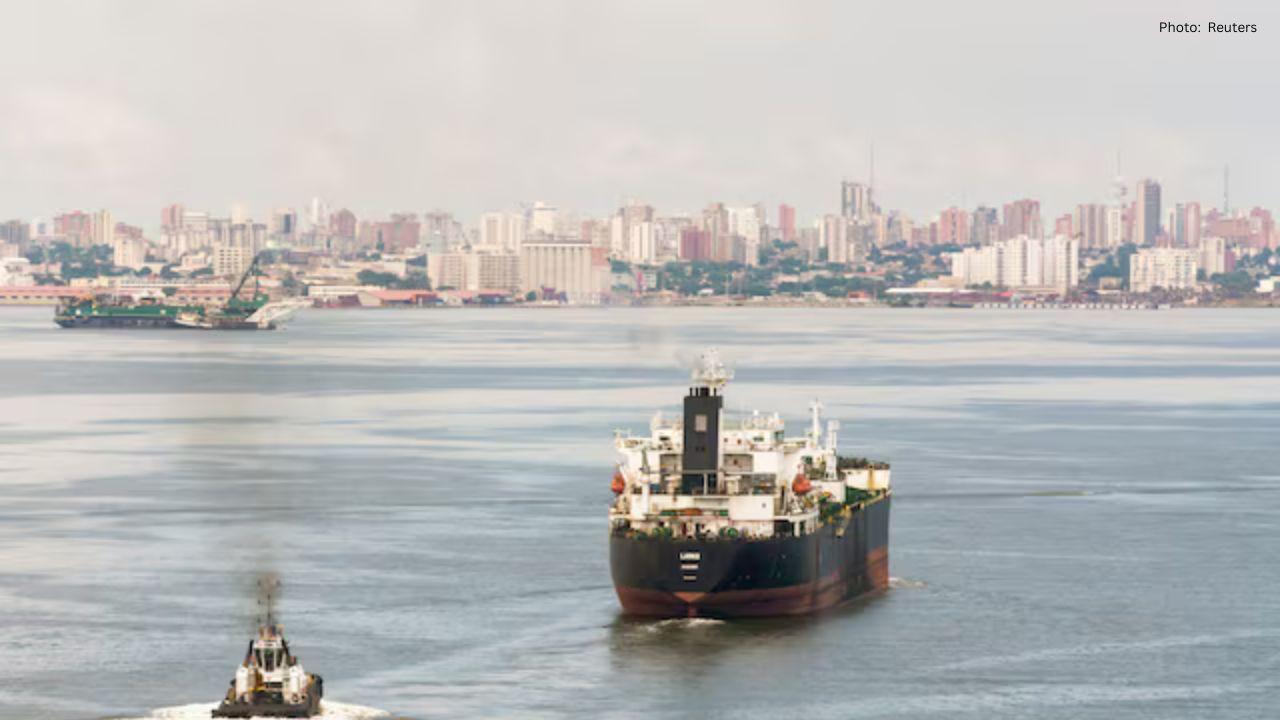
U.S. President Donald Trump has ordered what he calls a “total and complete blockade” of sanctioned oil tankers entering and leaving Venezuela. The move is part of Washington’s latest effort to increase pressure on President Nicolas Maduro’s government by targeting the country’s main source of income — oil.
The announcement has already sent shockwaves through global energy markets. Oil prices rose by more than 1% shortly after Trump’s statement, as traders reacted to fears that Venezuelan oil supplies could be cut off from the global market.
In a post on social media, Trump accused Venezuela’s leadership of crimes including terrorism, drug smuggling, and human trafficking. He said the Venezuelan government has now been labeled a foreign terrorist organization, which he used to justify the blockade order.
Venezuela strongly rejected the announcement. Government officials called it a “grotesque threat” and accused the United States of trying to control the country’s vast oil wealth. President Maduro claimed the U.S. military buildup in the region is aimed at removing him from power and taking over Venezuela’s natural resources.
While Trump’s words were clear, how the blockade will actually be enforced remains uncertain. U.S. officials have not explained whether the Navy or Coast Guard will stop ships at sea. However, the United States has already moved thousands of troops and several warships, including an aircraft carrier, closer to the region in recent weeks.
Last week, the U.S. seized a sanctioned oil tanker near Venezuela. Since then, many oil ships loaded with crude have stayed in Venezuelan waters, afraid of being stopped or taken. This has already caused Venezuelan oil exports to drop sharply.
Adding to the problem, Venezuela’s state oil company, PDVSA, was hit by a cyberattack that disrupted its systems. Together, these events have badly hurt the country’s ability to sell oil.
Oil market experts say prices are rising mainly due to fear and uncertainty. Traders are watching closely to see whether the blockade will affect only sanctioned vessels or also ships that are not under sanctions. Some companies, including U.S.-based Chevron, still transport Venezuelan oil under special permissions.
China is currently the largest buyer of Venezuelan oil, which makes up about 4% of its imports. If Venezuelan exports fall by close to one million barrels per day and are not replaced by other producers, oil prices could rise sharply. Some experts warn prices could jump by five to eight dollars per barrel.
Legal experts have also raised serious concerns. Blockades are usually considered acts of war under international law. While U.S. presidents have broad powers, scholars say Trump’s order raises difficult legal questions, both under U.S. law and international rules.
A U.S. lawmaker called the blockade an “act of war” that was never approved by Congress and is not supported by the American people. This criticism highlights growing concern inside the United States about how far the conflict with Venezuela could go.
The situation is made more dangerous by Trump’s recent comments suggesting that U.S. land strikes on Venezuela could begin soon. His administration has already carried out multiple attacks on vessels near Venezuelan waters, resulting in many deaths, according to reports.
Beyond oil prices and politics, experts warn of serious human consequences. If Venezuela’s economy collapses further, inflation could rise sharply and millions more people may flee the country, increasing pressure on neighboring nations.
For now, the world is watching closely. The blockade order marks a major escalation in tensions between the United States and Venezuela. Whether it leads to negotiations, deeper conflict, or wider economic damage remains unclear. What is certain is that this decision has raised the stakes for global markets, international law, and regional stability.
#trending #latest #VenezuelaCrisis #OilBlockade #TrumpPolicy #GlobalOil #USForeignPolicy #EnergyMarkets



Advances in Aerospace Technology and Commercial Aviation Recovery
Insights into breakthrough aerospace technologies and commercial aviation’s recovery amid 2025 chall

Defense Modernization and Strategic Spending Trends
Explore key trends in global defense modernization and strategic military spending shaping 2025 secu

Tens of Thousands Protest in Serbia on Anniversary of Deadly Roof Collapse
Tens of thousands in Novi Sad mark a year since a deadly station roof collapse that killed 16, prote

Canada PM Carney Apologizes to Trump Over Controversial Reagan Anti-Tariff Ad
Canadian PM Mark Carney apologized to President Trump over an Ontario anti-tariff ad quoting Reagan,

The ad that stirred a hornets nest, and made Canadian PM Carney say sorry to Trump
Canadian PM Mark Carney apologizes to US President Trump after a tariff-related ad causes diplomatic

Bengaluru-Mumbai Superfast Train Approved After 30-Year Wait
Railways approves new superfast train connecting Bengaluru and Mumbai, ending a 30-year demand, easi




