Post by : Sameer Saifi
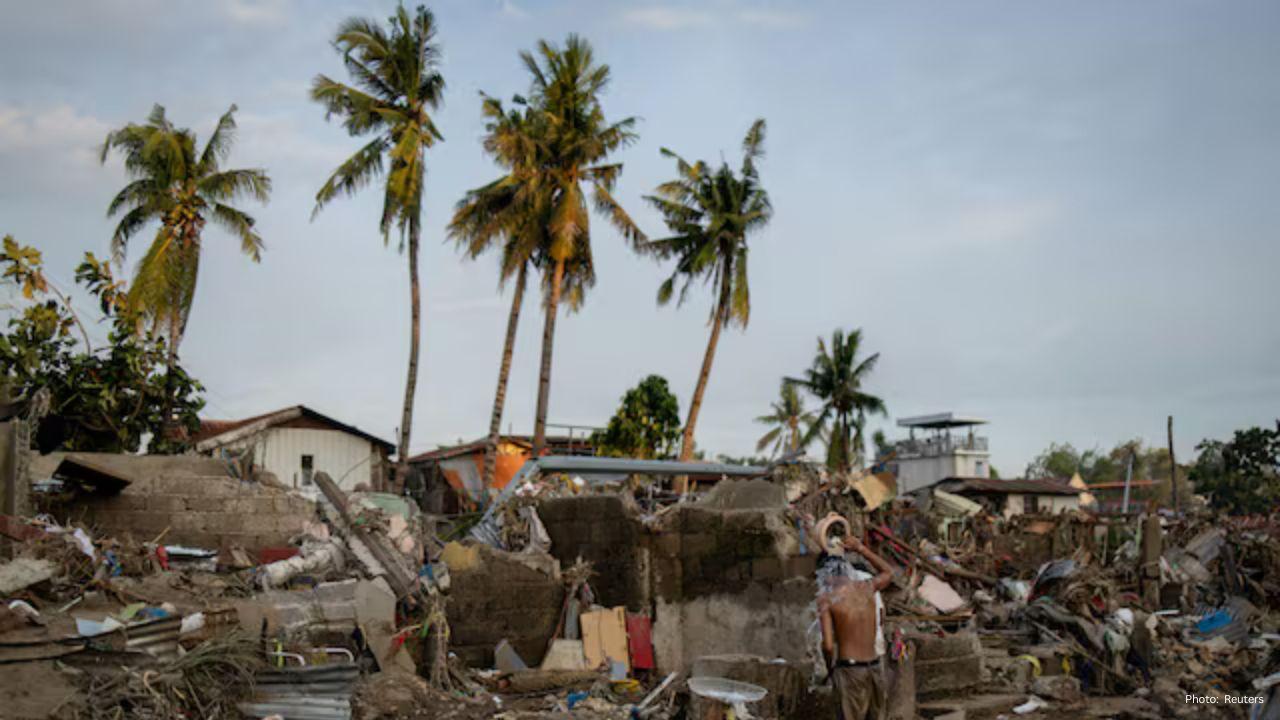
Typhoon Kalmaegi has brought heavy destruction to Southeast Asia, first striking the Philippines and then moving into Vietnam. The storm has caused great loss and damage, and many experts are warning that such powerful storms may become more common because the world is getting warmer. In the Philippines, at least 188 people have lost their lives, and many communities have been ruined. Homes, farms, and roads have been destroyed, leaving families with nowhere to go. After crossing the sea, the storm hit central Vietnam, where houses were damaged, trees were uprooted, and power lines were cut. Thousands of people are now without electricity, and rescue teams are trying to help those affected.
Scientists say that the main reason storms like Kalmaegi are becoming stronger is because ocean temperatures are rising. When the sea is warmer, more water evaporates into the air, and this gives storms more energy. Ben Clarke, a researcher from the Grantham Institute in London, explained that the waters in the western Pacific and South China Sea are unusually warm this year. He said this extra heat made Kalmaegi stronger and brought more rain than usual.
Another scientist, Gianmarco Mengaldo from Singapore, said that climate change increases the amount of moisture in the air and warms the sea surface. This does not mean that every storm will be stronger, but it makes it more likely for storms to grow into very powerful typhoons. Some storms may not increase in number, but the ones that do form can bring heavier rainfall, stronger winds, and more damage.
Researchers are also noticing that storms are happening closer together in time. In some years, the Philippines has been hit by several typhoons within just a month. When storms come one after another, the land does not have time to recover. Soil becomes soaked, rivers fill up, and buildings are weakened. So when another storm arrives, even if it is not the strongest, it can still cause great destruction. A researcher named Feng Xiangbo said that this “back-to-back” pattern can create more damage than a single strong storm alone.
There are concerns that storms may start forming in new regions and following new paths. Rising sea levels also increase the danger because higher water levels make coastal flooding more severe. Low-lying areas in the Philippines and Vietnam are especially at risk. As storms become more intense, more towns along the coast may face disaster in the future.
The timing of Typhoon Kalmaegi is also important. It comes while more than 190 countries are meeting in Brazil to discuss climate change. Many scientists hope that this disaster will remind leaders to act faster to reduce greenhouse gas emissions and protect vulnerable communities.
The destruction caused by Kalmaegi shows the real human cost of climate change. Families have lost their homes, farmers have lost their crops, and communities are struggling to rebuild. The world is being forced to face how rising temperatures are affecting everyday life. What happens next depends on how quickly countries work together to slow global warming and prepare for natural disasters.
#trending #latest #TyphoonKalmaegi #ClimateChange #SoutheastAsia #Philippines #Vietnam #ExtremeWeather #GlobalWarming #armustnews #WeatherNews #Environment



Advances in Aerospace Technology and Commercial Aviation Recovery
Insights into breakthrough aerospace technologies and commercial aviation’s recovery amid 2025 chall

Defense Modernization and Strategic Spending Trends
Explore key trends in global defense modernization and strategic military spending shaping 2025 secu

Tens of Thousands Protest in Serbia on Anniversary of Deadly Roof Collapse
Tens of thousands in Novi Sad mark a year since a deadly station roof collapse that killed 16, prote

Canada PM Carney Apologizes to Trump Over Controversial Reagan Anti-Tariff Ad
Canadian PM Mark Carney apologized to President Trump over an Ontario anti-tariff ad quoting Reagan,

The ad that stirred a hornets nest, and made Canadian PM Carney say sorry to Trump
Canadian PM Mark Carney apologizes to US President Trump after a tariff-related ad causes diplomatic

Bengaluru-Mumbai Superfast Train Approved After 30-Year Wait
Railways approves new superfast train connecting Bengaluru and Mumbai, ending a 30-year demand, easi




