Post by : Amit
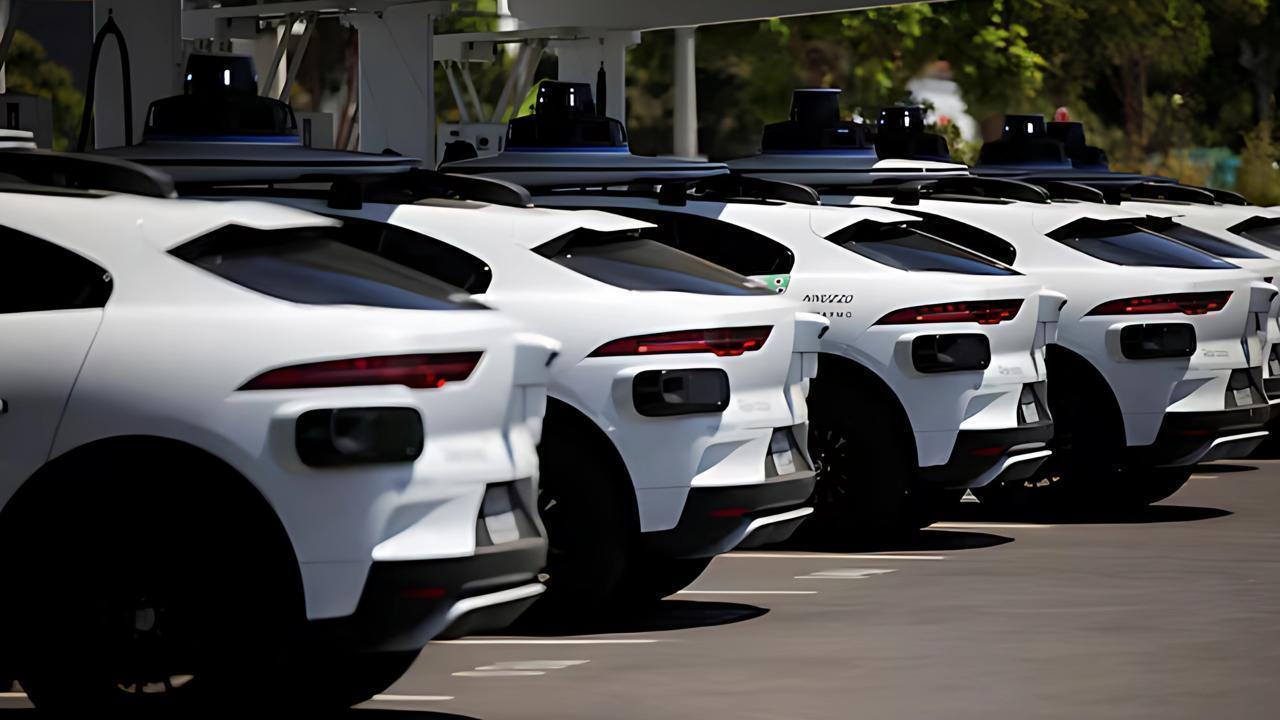
Photo: Reuters
June 24, 2025 | Atlanta — In a bold leap toward the future of urban transportation, Uber and Waymo have officially launched their fully autonomous ride-hailing service in Atlanta, positioning the bustling Southern metropolis as the latest proving ground for driverless technology in the United States. The expansion marks a turning point in the long-evolving narrative of autonomous vehicles (AVs)—a transition from controlled test pilots to real-world commercial deployment at city scale.
This groundbreaking initiative builds on the companies' earlier collaboration in Phoenix, where they successfully introduced a limited AV service. Now, Atlanta’s complex traffic patterns, diverse neighborhoods, and dynamic infrastructure present the ideal next chapter in testing—and scaling—autonomous mobility in real-world conditions. Starting today, Uber users in select Atlanta neighborhoods can hail a fully autonomous Waymo vehicle directly through the Uber app, making self-driving rides as accessible as any other Uber option.
Driverless Technology Hits the Streets of Atlanta
Waymo’s fifth-generation autonomous driving system—widely regarded as one of the most advanced in the world—powers a fleet of all-electric Jaguar I-PACE vehicles, equipped with cutting-edge LiDAR, radar, HD cameras, and neural-network-based AI software. These vehicles are capable of navigating dense urban streets, reacting in real time to complex traffic scenarios, and adapting to unexpected road events, all without human intervention.
Initially, some rides will include onboard safety operators, but the clear trajectory is toward completely driverless service, where no human driver, steering wheel, or pedals are present—a hallmark of true autonomy.
“This is a key milestone in making autonomous mobility an everyday reality for more people,” said Tekedra Mawakana, Co-CEO of Waymo, in a press statement. “We’re proud to bring fully autonomous rides to a dynamic, growing city like Atlanta, and this launch reaffirms our commitment to safe, accessible, and sustainable transportation.”
A Strategic Move for Both Uber and Waymo
For Uber, the partnership represents a major strategic advance in its ambition to become a multi-modal, automation-powered mobility platform. Autonomous rides offer Uber a scalable solution to labor shortages, rising driver costs, and operational inefficiencies—while also serving as a bold differentiator in a highly competitive ride-hailing market.
For Waymo, the Atlanta launch showcases its expanding AV capabilities in diverse geographies and infrastructure ecosystems. The company has now logged millions of driverless miles in cities like San Francisco, Phoenix, and Los Angeles, and its expansion into Atlanta cements its position as a market leader in autonomous safety and reliability.
Together, the Uber-Waymo alliance is taking a unique hybrid approach—blending Waymo’s world-class autonomous driving technology with Uber’s vast ride-hailing network, brand reach, and operational logistics. This allows for a faster, more seamless user adoption curve compared to startups building their own proprietary AV platforms from scratch.
Why Atlanta? The City’s Unique Appeal for AVs
Atlanta wasn’t chosen by chance. As one of the South’s most important business, logistics, and tech hubs, the city offers a varied urban landscape—from dense downtown intersections and multi-lane highways to residential zones and suburban sprawl. This provides Waymo's autonomous systems with rich, high-pressure scenarios to continuously learn from and adapt to.
Moreover, Atlanta’s "Smart City" initiatives, which focus on digital infrastructure, traffic optimization, and sustainability, make it a forward-thinking host for AV experimentation. City officials have expressed support for innovations that can alleviate congestion, reduce emissions, and modernize urban transport—goals that align directly with Waymo and Uber’s missions.
Enhanced Rider Experience and Real-Time Safety
Passengers who opt into autonomous rides via the Uber app will find a ride experience designed with comfort, safety, and futuristic convenience in mind. The vehicles feature automatic door locking, in-ride support via a digital interface, and real-time remote monitoring. Riders can track the vehicle’s route, monitor driving behavior, and even communicate with Waymo’s operations team if needed.
Initial feedback from similar deployments in Phoenix has been overwhelmingly positive. Riders reported smooth handling, precise turns, courteous lane behavior, and overall comfort, with many describing the experience as “surprisingly human-like.”
This deployment is more than a regional expansion—it represents a cultural shift in public perception. As more users experience the safety and convenience of AVs firsthand, the psychological barriers to adoption are starting to fall. In fact, analysts predict that by 2030, autonomous vehicles could account for up to 20–30% of urban fleet traffic, radically transforming not only commuting but also delivery, logistics, and shared mobility services.
The Uber-Waymo rollout in Atlanta could serve as a blueprint for future launches in other tech-forward cities such as Austin, Miami, and New York, where policy discussions and infrastructure preparations for AVs are already underway.
With competitors like Tesla (Full Self-Driving), Cruise (backed by GM), and Zoox (owned by Amazon) pursuing their own strategies, the Uber-Waymo alliance introduces a more scalable and public-facing model. Rather than building entirely new ecosystems, they’re leveraging existing platforms and partnerships to mainstream driverless technology faster and with lower friction.
For Uber, this also reduces long-term dependency on gig drivers—a growing concern amid tightening labor markets and evolving worker protections. For Waymo, it's an opportunity to monetize years of R&D and regulatory groundwork while continuing to expand their AV footprint.
Self-Driving car



Advances in Aerospace Technology and Commercial Aviation Recovery
Insights into breakthrough aerospace technologies and commercial aviation’s recovery amid 2025 chall

Defense Modernization and Strategic Spending Trends
Explore key trends in global defense modernization and strategic military spending shaping 2025 secu

Tens of Thousands Protest in Serbia on Anniversary of Deadly Roof Collapse
Tens of thousands in Novi Sad mark a year since a deadly station roof collapse that killed 16, prote

Canada PM Carney Apologizes to Trump Over Controversial Reagan Anti-Tariff Ad
Canadian PM Mark Carney apologized to President Trump over an Ontario anti-tariff ad quoting Reagan,

The ad that stirred a hornets nest, and made Canadian PM Carney say sorry to Trump
Canadian PM Mark Carney apologizes to US President Trump after a tariff-related ad causes diplomatic

Bengaluru-Mumbai Superfast Train Approved After 30-Year Wait
Railways approves new superfast train connecting Bengaluru and Mumbai, ending a 30-year demand, easi




