Post by : Amit
Photo : X / FlightGlobal
Growing Alarm Over Britain's Fighter Jet Manufacturing Future
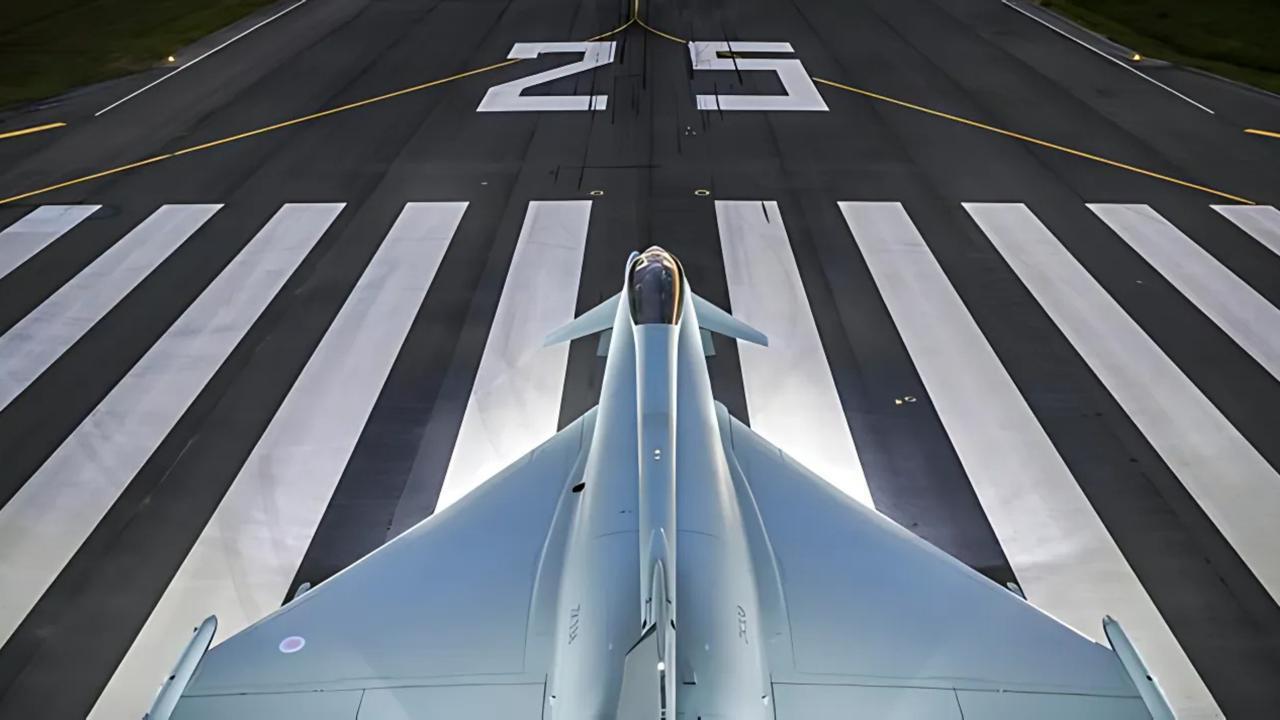
The future of Britain’s fighter jet industry is hanging in the balance as union leaders and defence experts warn that BAE Systems is fast approaching a dangerous production gap in its Eurofighter Typhoon assembly line. With the final Typhoon jets for Qatar moving through the Warton production line, calls are intensifying for the UK government to urgently commission additional aircraft to avoid losing thousands of high-skilled jobs and critical industrial expertise.
The Looming Halt at BAE Systems
BAE Systems, a cornerstone of the UK’s aerospace sector for decades, is reaching the end of its current Typhoon manufacturing commitments. The last of the fighter jets ordered by Qatar are being assembled, leaving no confirmed follow-on work that would keep the production line moving in the coming years.
The Unite union, representing thousands of aerospace workers, is spearheading the call for immediate action. Union leaders stress that without new government orders, the country risks not only economic disruption but the erosion of a defence manufacturing capability that has taken generations to build.
Skilled Jobs and National Security at Risk
The stakes are high. If the Typhoon line slows or stops, BAE Systems could be forced to cut jobs and halt training programs, resulting in the loss of unique skills that are essential to designing, assembling, and maintaining advanced fighter aircraft. Once those capabilities are gone, rebuilding them would take years—time the UK may not have in the face of emerging global threats.
Moreover, the Royal Air Force (RAF) relies on the Typhoon for air defence, reconnaissance, and ground attack missions. While the RAF's current fleet remains formidable, many aircraft will need to be replaced or upgraded over the next decade. Without continuous production, the UK could find itself unable to maintain the readiness of its frontline air combat capabilities.
The Typhoon’s Enduring Importance
The Eurofighter Typhoon has been the backbone of the RAF's air combat strength for more than two decades. Designed for both defensive and offensive missions, the aircraft has served in conflicts and NATO operations across the globe. In addition to the RAF, the Typhoon has been exported to countries including Saudi Arabia, Oman, and Qatar, generating billions in revenue and supporting thousands of British jobs.
Critically, continued Typhoon production would also serve as a stepping stone to the UK's next-generation fighter programme—the Tempest. Ensuring that key skills remain sharp and that industrial capacity is preserved is seen as vital to the success of future air power ambitions.
Balancing Defence Budgets with Industrial Sustainability
The UK Ministry of Defence faces a difficult balancing act. Defence spending is under pressure, and much of the focus has shifted to future technologies such as unmanned systems and sixth-generation fighters. Yet defence analysts warn that letting the Typhoon line falter now could have long-term consequences, not only for Britain’s military readiness but also for its sovereign industrial base.
A modest new order for upgraded Typhoons—equipped with the latest radar systems and missile capabilities—could provide a crucial bridge, keeping the workforce active until Tempest production ramps up in the 2030s.
Export Markets: A Lifeline for Typhoon Production?
One possible solution lies in securing additional Typhoon export contracts. While competition in the global fighter market is fierce, with rivals such as the F-35 and Rafale capturing headlines, the Typhoon remains an attractive option for air forces seeking a proven, versatile platform.
Regions such as the Middle East, Asia-Pacific, and even parts of Europe present potential opportunities for further sales. However, exports can be unpredictable, often dependent on diplomatic relationships and long sales cycles—meaning they cannot be relied upon as the sole solution to the production gap.
The Tempest Programme: The Long View
The UK’s future air combat strategy centres on the Tempest programme, a futuristic stealth fighter being developed with international partners under the Global Combat Air Programme (GCAP). However, Tempest is not expected to enter service before the mid-2030s.
Maintaining Typhoon production in the interim is essential for sustaining the industrial workforce and supply chain that will ultimately be responsible for building and maintaining Tempest. Without this continuity, defence experts caution that Britain could face damaging delays and additional costs when it comes time to bring its next-generation fighter to market.
Industry, Workers, and Communities at Stake
The impact of a production halt would not be limited to factory floors. The Warton plant supports entire communities across Lancashire and beyond, with a vast network of suppliers feeding into the Typhoon programme. The loss of production could devastate local economies, reduce apprenticeship opportunities, and shrink the pool of engineering talent available to the wider UK aerospace sector.
Unite and BAE Systems are united in their message: preserving production is not just about jobs today, but about ensuring the UK remains a world leader in aerospace and defence manufacturing for decades to come.
A Call to Action for Britain’s Defence Leadership
As geopolitical tensions rise globally—from Europe to the Indo-Pacific—the need for robust, sovereign defence capabilities has rarely been clearer. The decision to place additional Typhoon orders is not merely a budgetary question; it is a strategic choice that could shape the UK’s defence landscape for years.
The clock is ticking. With the final Qatar jets moving off the line, Britain must act soon or risk not only losing a key defence asset but also undermining its long-term industrial resilience. Defence analysts, union leaders, and industry voices are all delivering the same message: the time to invest in Britain’s air combat future is now.
UK, Aviation, Fighter jet



Advances in Aerospace Technology and Commercial Aviation Recovery
Insights into breakthrough aerospace technologies and commercial aviation’s recovery amid 2025 chall

Defense Modernization and Strategic Spending Trends
Explore key trends in global defense modernization and strategic military spending shaping 2025 secu

Tens of Thousands Protest in Serbia on Anniversary of Deadly Roof Collapse
Tens of thousands in Novi Sad mark a year since a deadly station roof collapse that killed 16, prote

Canada PM Carney Apologizes to Trump Over Controversial Reagan Anti-Tariff Ad
Canadian PM Mark Carney apologized to President Trump over an Ontario anti-tariff ad quoting Reagan,

The ad that stirred a hornets nest, and made Canadian PM Carney say sorry to Trump
Canadian PM Mark Carney apologizes to US President Trump after a tariff-related ad causes diplomatic

Bengaluru-Mumbai Superfast Train Approved After 30-Year Wait
Railways approves new superfast train connecting Bengaluru and Mumbai, ending a 30-year demand, easi




