Post by : Amit
Photo: Linkdin/Equinor
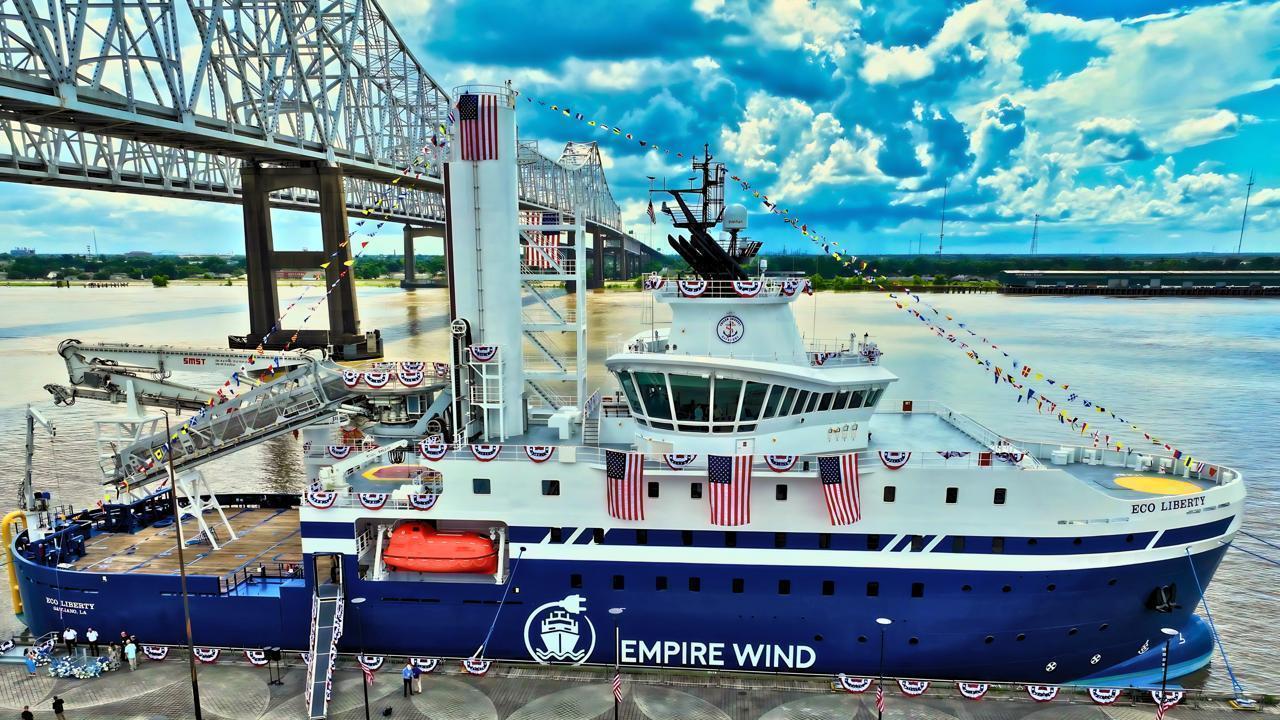
America’s ambitious push into offshore wind energy is not only transforming the nation’s energy landscape but is also sparking a quiet revolution in its maritime sector. With a growing number of offshore wind projects along the U.S. coastlines, there’s been a steady rise in the number of U.S.-flagged vessels built and deployed to support this booming industry.
As new wind farms come online and construction activity accelerates, the demand for specialized vessels to install, maintain, and service offshore turbines is creating new opportunities for American shipbuilders, operators, and maritime workers.
U.S.-Flagged Vessels: Powering Clean Energy at Sea
Offshore wind farms require a complex network of maritime support, from transporting massive turbine components to maintaining floating platforms and subsea cables. Unlike oil and gas offshore operations, the offshore wind sector emphasizes environmental sustainability—and increasingly, it also emphasizes the use of Jones Act-compliant, U.S.-flagged ships.
The Jones Act, a cornerstone of U.S. maritime law, requires vessels transporting goods between U.S. ports to be built, owned, and crewed by Americans. As offshore wind moves from vision to reality, this law is now driving a surge in demand for American-built, American-operated vessels.
Crew transfer vessels (CTVs) purpose-built for ferrying technicians to offshore wind sites.
Service operation vessels (SOVs) that house crews and serve as floating maintenance hubs.
Installation vessels capable of handling the enormous turbines that tower over the ocean surface.
A Lifeline for U.S. Shipyards
The offshore wind sector is emerging as a new lifeline for U.S. shipyards, many of which have faced declining orders in traditional markets. Shipbuilders along the Gulf Coast, East Coast, and Great Lakes are now securing contracts to build wind-support vessels, helping to preserve maritime jobs and revive industrial capacity.
For example, companies like Blount Boats, Senesco Marine, and Edison Chouest Offshore are already at the forefront of this shift, constructing vessels specifically designed for wind farm service. These orders are creating jobs not only in shipyards but across the wider supply chain, including steel fabrication, engineering, and marine equipment manufacturing.
Strategic Importance: Reducing Foreign Dependence
One of the biggest drivers behind the U.S.-flagged fleet expansion is the desire to reduce reliance on foreign-flagged vessels, which currently dominate offshore wind construction globally. By building a domestic fleet, the U.S. ensures greater energy independence, national security, and economic resilience.
The Biden administration’s goal of installing 30 GW of offshore wind capacity by 2030 is further accelerating this shift. That target represents hundreds of turbines, each requiring multiple vessel calls during construction, commissioning, and ongoing operations.This is also pushing investment into port infrastructure upgrades to accommodate the larger vessels and equipment needed for offshore wind logistics.
Despite the positive momentum, challenges remain.
Shipbuilding capacity in the U.S. is still limited, and the construction of highly specialized vessels can be costly and time-consuming.
Supply chain bottlenecks for critical components like propulsion systems and electronics continue to slow progress.
The workforce needs rapid upskilling, as offshore wind vessels require crews trained in both maritime operations and wind farm technology.
Industry experts believe that public-private partnerships, government incentives, and policy certainty will be key to overcoming these obstacles.
A Greener, Stronger U.S. Maritime Industry
The growth of the U.S.-flagged offshore wind fleet is more than just a shipping story—it’s part of a larger transformation toward a cleaner energy future and a revitalized maritime industry.
As wind farms rise off the shores of New York, New Jersey, Massachusetts, and Virginia, the sight of American-built vessels supporting them sends a clear message: offshore wind is not only powering homes and businesses—it’s also powering economic growth, innovation, and American maritime leadership.
Maritime Industry, wind fleet



Advances in Aerospace Technology and Commercial Aviation Recovery
Insights into breakthrough aerospace technologies and commercial aviation’s recovery amid 2025 chall

Defense Modernization and Strategic Spending Trends
Explore key trends in global defense modernization and strategic military spending shaping 2025 secu

Tens of Thousands Protest in Serbia on Anniversary of Deadly Roof Collapse
Tens of thousands in Novi Sad mark a year since a deadly station roof collapse that killed 16, prote

Canada PM Carney Apologizes to Trump Over Controversial Reagan Anti-Tariff Ad
Canadian PM Mark Carney apologized to President Trump over an Ontario anti-tariff ad quoting Reagan,

The ad that stirred a hornets nest, and made Canadian PM Carney say sorry to Trump
Canadian PM Mark Carney apologizes to US President Trump after a tariff-related ad causes diplomatic

Bengaluru-Mumbai Superfast Train Approved After 30-Year Wait
Railways approves new superfast train connecting Bengaluru and Mumbai, ending a 30-year demand, easi




