Post by : Saif
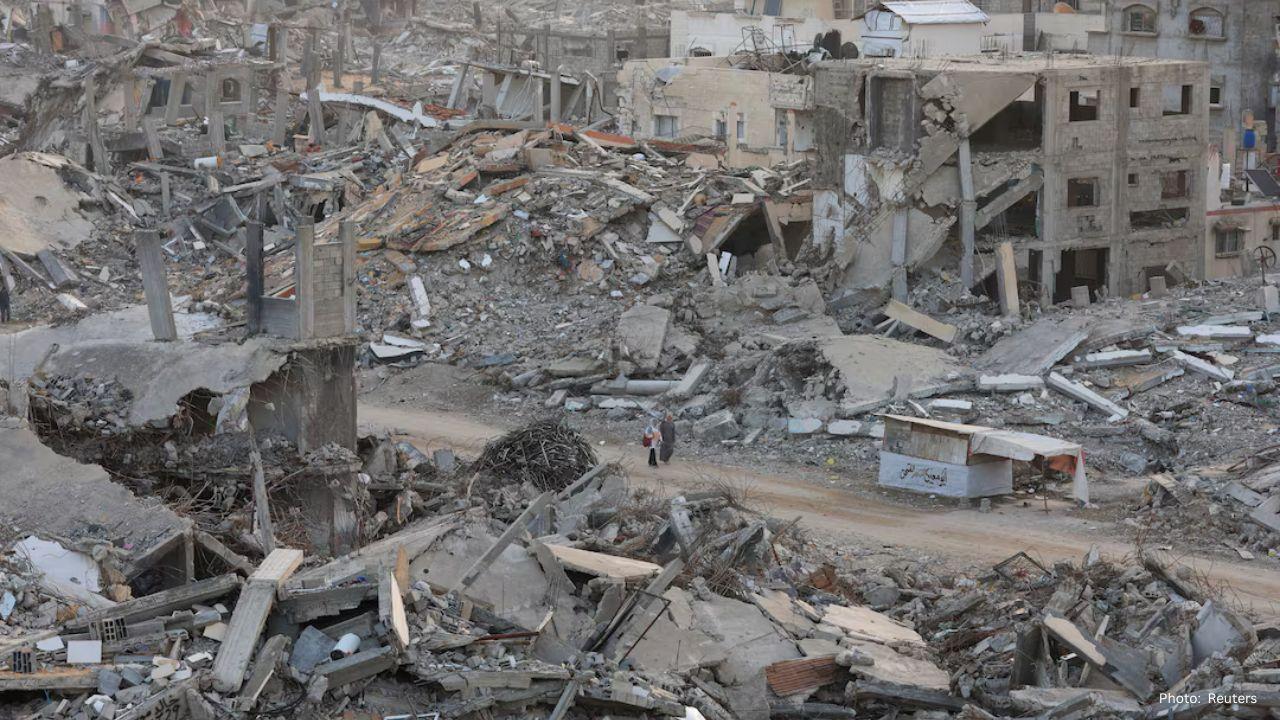
The United States is moving ahead with plans to deploy an international stabilization force in the Gaza Strip as early as next year, according to U.S. officials. The proposal comes at a time when a fragile ceasefire between Israel and Hamas is holding, but deep uncertainty remains about Gaza’s future security and governance.
U.S. officials say the planned International Stabilization Force would operate under United Nations authorization and would be deployed mainly in areas currently controlled by Israel. The force would not directly fight Hamas, according to officials familiar with the plan. Instead, its main role would be to help stabilize Gaza, support security, and assist with the long and difficult process of demilitarization.
Planning for the force is already underway. The U.S. Central Command is expected to host a major meeting in Doha on December 16, bringing together representatives from more than 25 countries. These talks will focus on how large the force should be, which countries will contribute troops, how the troops will be trained and housed, and what rules they will follow while operating in Gaza. A senior U.S. military officer is also being considered to lead the mission, though no final decision has been made.
This international force is a key part of the second phase of U.S. President Donald Trump’s Gaza peace plan. The first phase began in October with a ceasefire after two years of war. Since then, Hamas has released hostages and Israel has freed Palestinian detainees. U.S. officials say quiet discussions are now taking place to ensure the next phase leads to lasting peace rather than another cycle of violence.
Indonesia has already said it is ready to contribute up to 20,000 troops. These forces would focus on health services, rebuilding damaged infrastructure, and construction work rather than combat. Indonesian officials say preparations are still in the early stages, including setting up the structure of the units that could be deployed.
At present, Israel controls more than half of Gaza, while most of the territory’s nearly two million residents live in areas still held by Hamas. Under the proposed plan, the international force would first deploy in Israeli-held areas. As stability improves and certain conditions are met, Israeli troops would gradually withdraw. This withdrawal would be linked to clear steps toward demilitarization, with timelines and benchmarks set by the international body overseeing the process.
In November, the U.N. Security Council approved a resolution allowing the creation of a Board of Peace to guide this effort. The resolution gives the international force authority to work with newly trained Palestinian police and to ensure Gaza is demilitarized. This includes destroying military infrastructure and preventing armed groups from rebuilding their weapons.
However, how this will happen in practice remains unclear. U.S. officials have acknowledged that disarming Hamas is one of the biggest challenges. While the U.N. mandate allows the use of force if needed, each contributing country will decide what its troops are allowed to do. Discussions on rules of engagement are still ongoing.
Hamas has said it has not formally discussed disarmament with mediators and insists it will not give up its weapons unless a Palestinian state is established. Israel, meanwhile, has made it clear that demilitarization is a key goal of the next phase. Prime Minister Benjamin Netanyahu has said Israel welcomes a multinational force but also doubts whether such a force can fully handle the most difficult security tasks.
This plan highlights both hope and risk. On one hand, international involvement could bring stability, aid, and rebuilding to a population exhausted by war. On the other hand, unclear authority, divided responsibilities, and unresolved political issues could weaken the mission before it even begins.
For Gaza’s civilians, the priority is peace, safety, and a return to normal life. Any international force must focus on protecting people, rebuilding trust, and avoiding actions that could restart large-scale fighting. Without clear cooperation from all sides, even the best-planned mission may struggle to succeed.
#trending #latest #GazaCrisis #MiddleEastPeace #UNMission #InternationalForces #IsraelPalestine #GlobalDiplomacy #CeasefireEfforts #HumanitarianAid



Advances in Aerospace Technology and Commercial Aviation Recovery
Insights into breakthrough aerospace technologies and commercial aviation’s recovery amid 2025 chall

Defense Modernization and Strategic Spending Trends
Explore key trends in global defense modernization and strategic military spending shaping 2025 secu

Tens of Thousands Protest in Serbia on Anniversary of Deadly Roof Collapse
Tens of thousands in Novi Sad mark a year since a deadly station roof collapse that killed 16, prote

Canada PM Carney Apologizes to Trump Over Controversial Reagan Anti-Tariff Ad
Canadian PM Mark Carney apologized to President Trump over an Ontario anti-tariff ad quoting Reagan,

The ad that stirred a hornets nest, and made Canadian PM Carney say sorry to Trump
Canadian PM Mark Carney apologizes to US President Trump after a tariff-related ad causes diplomatic

Bengaluru-Mumbai Superfast Train Approved After 30-Year Wait
Railways approves new superfast train connecting Bengaluru and Mumbai, ending a 30-year demand, easi




