Post by : Amit
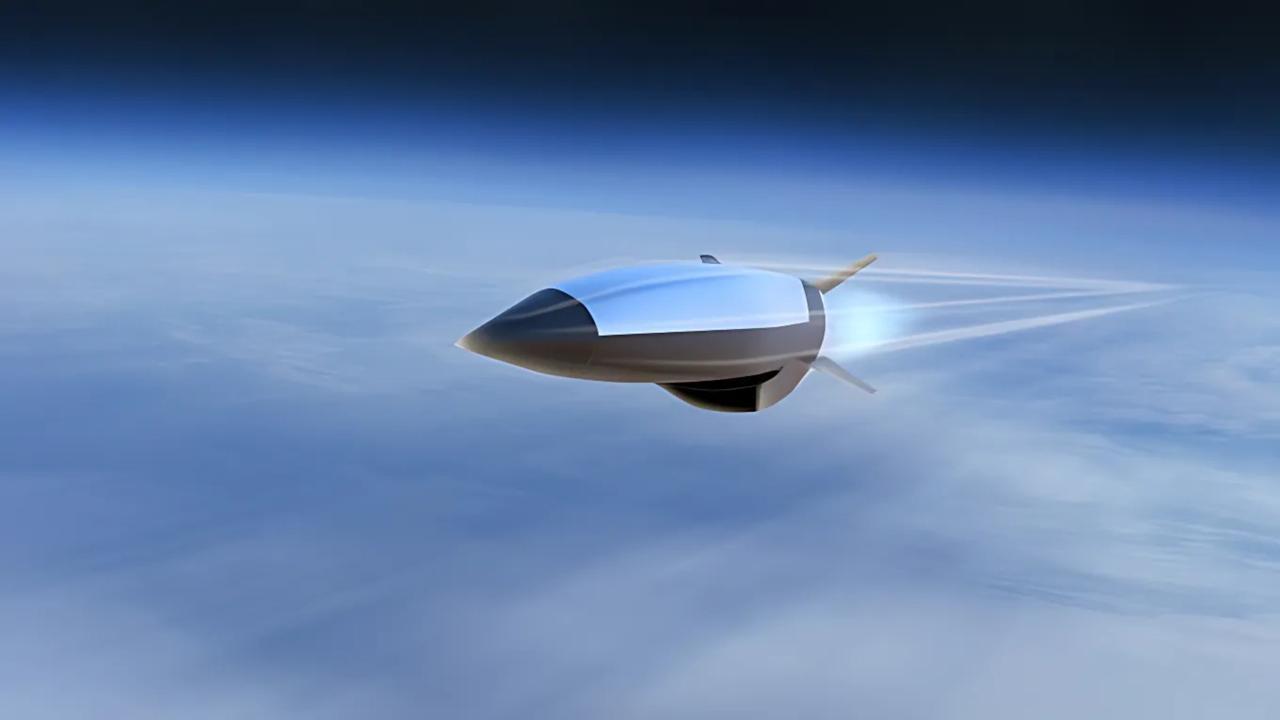
Photo : X / Raytheon Missiles & Defense
A Propulsion Breakthrough That Ignites Imagination
The aerospace world just witnessed a seismic leap. In a historic first, Venus Aerospace—a Houston-based startup—successfully flew a rotating detonation rocket engine (RDRE) under real flight conditions. This experimental engine, once confined to theory and simulations, now roared into life at Spaceport America, igniting a new era in hypersonic flight and promising to transform how we view air travel, defense, and space access.
From Theory to Flight: RDRE Lands Real-World Validation
For decades, researchers theorized about propulsion systems using detonation waves instead of conventional combustion cycles. Yet the gap between lab and launch remained vast—until now. On May 14, 2025, Venus Aerospace’s RDRE flew vertically from a launch pad, possibly marking the world’s first atmospheric flight of this type of engine. Unlike Japan’s previous tests, which occurred via sounding rockets into space, this demonstration worked entirely within Earth’s atmosphere and proved the concept works.
RDRE Unleashed: Simpler, Leaner, More Powerful
The genius behind the engine lies in its simplicity. A rotating detonation rocket engine combusts fuel through continuous supersonic detonation waves rather than relying on turbines or compressors. That means fewer moving parts, smaller engine volume, and—most importantly—a much higher thrust-to-weight ratio. The result is a propulsion system ideally suited for hypersonic speeds and the rugged demands of scalable aerospace applications.
Venus Aerospace Pushes the Envelope
Venus Aerospace's leadership, CEO Sassie Duggleby and CTO Andrew Duggleby, set out a bold agenda. They set up operations in 2020 with the goal of unlocking high-speed, accessible flight. Their RDRE-powered system demonstrated that—not only does the engine run reliably, but it functions in real-world conditions beyond cracked simulations. This breakthrough lays the propulsion foundation for their ambitious Stargazer M4 hypersonic aircraft program.
Stargazer M4: The Hypersonic Dream Takes Off
The test flight is more than an engineering triumph—it’s a preview of what’s to come. Venus envisions Stargazer M4, a Mach 4 airline capable of Mach 9 bursts, cruising at 110,000 feet, and slashing intercontinental travel to just a couple of hours. Imagine flying from Los Angeles to Tokyo in under two hours. Initially driven by RDRE, the aircraft will transition into an air-breathing detonating ramjet, known as the VDR2, to sustain hypersonic cruise.
Efficiency Meets Elegance in High-Speed Propulsion
Beyond speed, this engine may also reshape efficiency. Venus reports that RDRE-powered systems could reduce propellant mass significantly—potentially shrinking it from 90 percent to 67 percent—freeing payload for passengers or cargo. Paired with its compact size and fewer mechanical parts, the design holds promise for both hypersonic vehicles and defense applications.
A Race with Rivals: US Hypersonics in Motion
Venus is not alone in this race. GE Aerospace demonstrated its own rotating detonation-enhanced dual‑mode ramjet last December, achieving a milestone in supersonic flow testing that points the way toward hypersonic propulsion. Other startups like Hermeus, Stratolaunch, and Castelion are advancing rocket-powered hypersonic aircraft. The Pentagon is watching closely, seeking scalable, affordable technologies to maintain U.S. edge in hypersonic domains.
Propelling Defense, Beyond Commercial Flights
For the U.S. Department of Defense, RDRE technologies could offer a leap forward. Hypersonic vehicles evade traditional defense systems through high speed and altitude, demanding propulsion systems with unmatched efficiency. With additive manufacturing and lower production costs, RDREs could make such advanced weapons more viable in scale and cost.
NASA’s Eyes Are Watching
NASA is also investing in RDRE-based systems. In separate testing, RDRE hot‑fire runs spanned four minutes—significantly longer than prior two-second experiments—marking a maturation toward flight readiness for space and hypersonic missions. NASA sees these engines as potentially valuable for lunar missions, orbital logistics, and interplanetary propulsion.
China’s Alternative: Ram‑Rotor Detonation Engines
Meanwhile, Chinese researchers are trailblazing their own version of detonation propulsion. At Tsinghua University, scientists have designed a Ram‑Rotor Detonation Engine (RRDE) that pairs a ramjet-based rotor compressor with a detonation combustion core. Simulations showed stable operation at speeds up to Mach 4.2, with pressure gains of 1.6×. The hybrid design may overcome traditional detonation engine limitations like short thrust or high startup speeds.
Academic Insights: Purdue’s Detonation Innovations
Innovation also comes from academia. Purdue University researchers developed linear detonation combustors that offer flexibility in engine shape and integration with hypersonic vehicle surfaces. Their research suggests detonation-based systems can yield higher power density and efficiency than conventional combustion engines.
The Flight Path Ahead—Challenges Remain
While Venus’s flight marks a turning point, hurdles remain. Sustaining stable detonation, managing extreme thermal loads, and integrating these systems into reliable, reusable airframes pose engineering challenges. RRDEs in particular face metallurgy limits and complexity in rotor designs. Commercialization of hypersonic vehicles is years away, but this breakthrough provides a clear runway forward.
A New Hypersonic Frontier
Today’s RDRE flight is not a distant dream—it’s a living milestone. Venus Aerospace’s flight transforms decades of theorizing into functional propulsion that could redefine global travel, defense, and space launch. While passengers at Mach 9 remain a future promise, the propulsion revolution is underway.
Across the nation, entrepreneurs, engineers, and scientists are aligning behind this propulsion leap. The RDRE has lit a spark—and now the challenge is sustaining the blaze.
Hypersonic, Rotating detonation, RDRE



Advances in Aerospace Technology and Commercial Aviation Recovery
Insights into breakthrough aerospace technologies and commercial aviation’s recovery amid 2025 chall

Defense Modernization and Strategic Spending Trends
Explore key trends in global defense modernization and strategic military spending shaping 2025 secu

Tens of Thousands Protest in Serbia on Anniversary of Deadly Roof Collapse
Tens of thousands in Novi Sad mark a year since a deadly station roof collapse that killed 16, prote

Canada PM Carney Apologizes to Trump Over Controversial Reagan Anti-Tariff Ad
Canadian PM Mark Carney apologized to President Trump over an Ontario anti-tariff ad quoting Reagan,

The ad that stirred a hornets nest, and made Canadian PM Carney say sorry to Trump
Canadian PM Mark Carney apologizes to US President Trump after a tariff-related ad causes diplomatic

Bengaluru-Mumbai Superfast Train Approved After 30-Year Wait
Railways approves new superfast train connecting Bengaluru and Mumbai, ending a 30-year demand, easi




