Post by : Amit
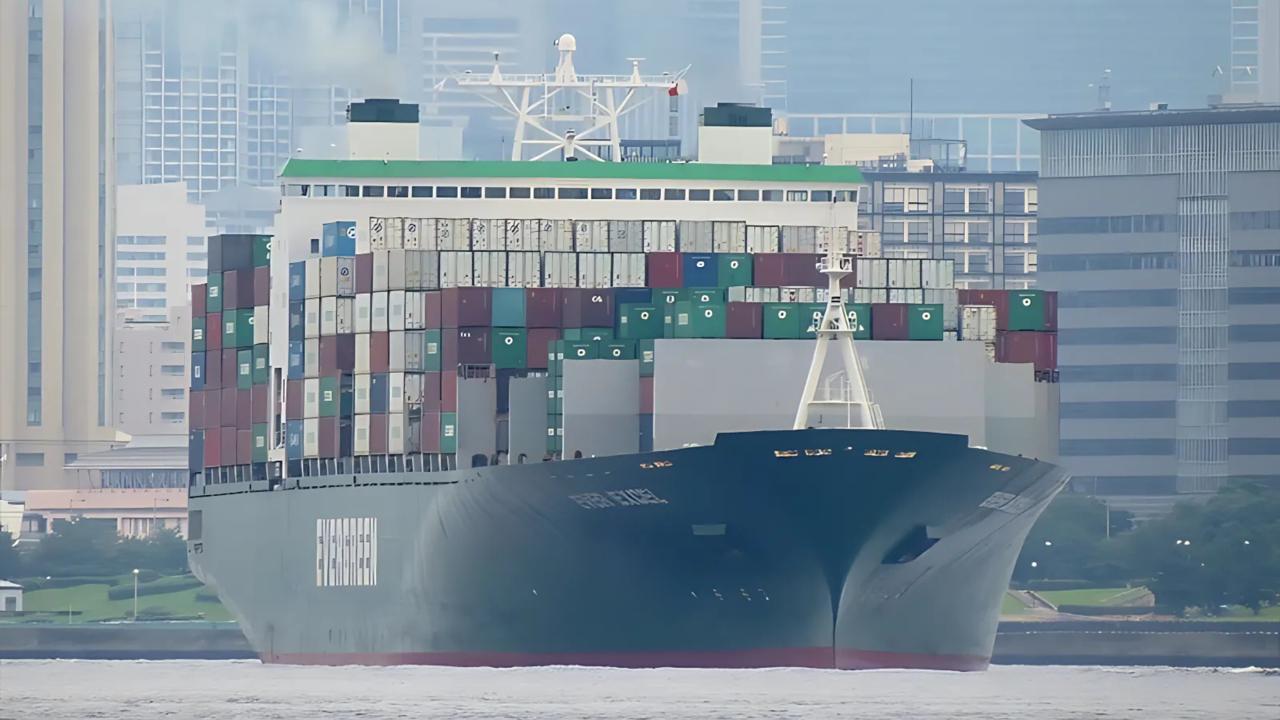
Photo : X / umi_kuma
Tariff Turbulence: US Trade Moves Ignite Shipping Rate Volatility
In a striking shift with global ramifications, new US tariffs on Chinese goods have triggered widespread disruptions across international shipping markets, according to a detailed analysis by Xeneta, a leading ocean freight benchmarking and analytics platform. As the geopolitical chessboard tilts with each economic policy announcement, ocean freight rates are emerging as a frontline casualty—fluctuating wildly and destabilizing pricing across multiple trade lanes.
With over $18 billion worth of goods affected by Washington’s recent tariff measures targeting Chinese-made electric vehicles (EVs), semiconductors, batteries, and critical minerals, the immediate impact has been a surge in rate volatility, particularly across the trans-Pacific and Asia–Europe routes. Xeneta’s July 2025 market intelligence report paints a vivid picture of a container shipping industry caught between policy-driven shocks and chronic supply chain recalibrations.
A Shockwave Through the Supply Chain
Tariffs are nothing new in the arsenal of trade policy, but the latest round of US levies—widely seen as protectionist in nature—arrives at a delicate juncture. Supply chains are still recovering from the pandemic-era logistics crises, the ongoing impact of Red Sea disruptions, and persistent labor shortages at key port facilities. The result? A compound shock that is now playing out in container shipping rates.
According to Xeneta, carriers operating on key East–West trade routes have reported dramatic shifts in short-term contract pricing. The platform’s data shows a steep rise in ocean freight rates following the tariff announcements, with some routes witnessing increases of over 50% week-on-week as importers rushed to secure space and avoid additional cost burdens.
Patrik Berglund, CEO of Xeneta, notes, “Whenever major trade policy decisions are made—especially those involving tariffs—the impact on shipping is immediate and pronounced. The recent spike in rates is not just a reaction to tariffs themselves but a reflection of the uncertainty they create. Shippers are reacting quickly, often preemptively, in a bid to avoid potential cost escalation later.”
Pre-Tariff Surge: Importers Scramble
The volatility is partly driven by what experts call the "pre-tariff surge"—a pattern familiar to those watching past trade disputes, including the 2018–2019 US-China trade war. In anticipation of tariffs taking effect, American importers are front-loading shipments from Chinese suppliers, trying to bring in goods under the existing (lower) duties before new rates are implemented.
This leads to a sudden jump in demand for cargo space, especially on the Asia–US West Coast and Asia–US East Coast routes. Xeneta’s platform registered a sharp climb in spot container rates on both corridors in the weeks following the announcement, exacerbating equipment shortages in Chinese ports and creating a ripple effect across global shipping availability.
Importers are also locking in higher-than-usual short-term contracts, hoping to secure capacity amid growing uncertainty. But this reactive move, while understandable, has only deepened the volatility, as it creates irregular cargo flows and leaves carriers struggling to optimize vessel utilization and routing.
Long-Term Implications: A Return to Regionalism?
Beyond the immediate chaos in pricing and capacity, the broader implications of US tariffs are beginning to emerge. One of the biggest concerns raised by logistics experts is the reactivation of a trend seen during earlier rounds of geopolitical friction—namely, the fragmentation of global supply chains and a shift toward regionalization or “friendshoring.”
Xeneta’s Berglund warns, “If these trade policies persist or escalate, we could be looking at a long-term restructuring of trade flows. Companies will increasingly rethink sourcing strategies, possibly moving production out of China to Southeast Asia, Latin America, or even the US itself to mitigate exposure to tariffs.”
This shift would not only impact shipping volumes but also rewire the global logistics map. Carriers may be forced to rethink service networks, reduce capacity on now-risky lanes, and redeploy ships toward more stable regional routes.
Such a transformation will also drive capital investment toward alternate hubs—ports in Vietnam, Malaysia, India, and Mexico stand to benefit—while pushing ports in China to reinvent themselves with deeper discounts, efficiency upgrades, and value-added logistics services.
Strategic Pressure on Carriers and BCOs
Meanwhile, shipping lines and beneficial cargo owners (BCOs) are being forced into reactive strategies. Carriers are struggling to balance dynamic rate adjustments with service reliability, while BCOs find themselves caught in a high-stakes game of forecasting amid policy unpredictability.
A major US electronics importer quoted anonymously in the report stated, “We’re finding it nearly impossible to plan ahead. The tariffs change our cost base, but the freight rates change just as quickly. Every decision we make—when to ship, from where, at what volume—feels like a gamble.”
Xeneta’s data also shows a widening gap between short-term and long-term contract rates. Long-term contracts signed during calmer market phases now sit far below current spot rates, prompting some carriers to push for mid-contract renegotiations or surcharges. This has further strained shipper–carrier relationships and injected instability into logistics planning cycles.
A Wake-Up Call for Supply Chain Resilience
The renewed tariff-induced turmoil may also serve as a wake-up call for companies that have grown comfortable with post-pandemic normalization. Many shippers had started to dial back resilience measures, such as buffer stocks and alternate sourcing routes, in favor of cost efficiency. The latest market disruptions, however, underscore the fragility of global supply chains and the dangers of over-optimization.
Xeneta’s July report includes interviews with procurement officers and freight forwarders who are now revisiting earlier playbooks—redistributing supplier networks, hedging transport contracts, and investing in supply chain visibility platforms.
“There’s a realization now that geopolitical risk is not an outlier—it’s part of the baseline,” said Berglund. “Shippers that build flexibility into their logistics strategies will fare better not just during tariff upheavals but in the face of climate shocks, cyber threats, and other disruptions.”
A Call for Predictable Policy and Global Dialogue
The current rate swings have once again brought to the forefront calls for more predictable and transparent trade policy. Industry associations on both sides of the Pacific have urged policymakers to consider the downstream economic consequences of sudden tariff impositions—not just on trade partners but on domestic consumers and logistics providers.
The US–China dynamic continues to define much of the uncertainty. Washington’s latest tariff wave—justified on grounds of national security and industrial competitiveness—has been criticized by Beijing as “economic coercion.” This tit-for-tat positioning adds further unpredictability for global commerce, especially with key elections looming in both countries.
While tariffs remain a sovereign right, the international logistics industry is increasingly advocating for structured, time-bound transitions and multilateral consultations to reduce the collateral damage caused by abrupt policy shifts.
Freight Market
Looking forward, the outlook for shipping rates remains highly fluid. Xeneta projects continued volatility in the coming quarters, especially if more tariff measures are introduced or retaliated. Freight rates may not return to pre-announcement levels until demand patterns stabilize and inventory strategies normalize.
Shipping alliances and container equipment pools may provide some cushion, but the volatility is likely to persist in the short term. Shippers are advised to increase scenario planning, work closely with logistics partners, and consider diversified routing options.
Moreover, analysts suggest keeping a close eye on other regulatory developments, including potential tariffs on other industrial sectors and changing customs policies tied to human rights or environmental standards.
Navigating the Storm
The Xeneta report’s findings serve as a critical reminder: trade policies can no longer be seen in isolation from their logistical consequences. In a hyperconnected world, a tariff levied in Washington sends shockwaves through warehouses in Shenzhen, terminals in Rotterdam, and retailers in Chicago.
For global businesses, the imperative is clear—agility and foresight must become core competencies. Navigating the era of tariff-triggered volatility will require more than price negotiation; it demands a rewiring of how global trade is structured, forecasted, and responded to.
As the shipping industry braces for more policy-driven tremors, the question for businesses isn’t if the next disruption will happen, but how prepared they’ll be when it does.
Global Shipping, USA, China, Electric Vehicles



Advances in Aerospace Technology and Commercial Aviation Recovery
Insights into breakthrough aerospace technologies and commercial aviation’s recovery amid 2025 chall

Defense Modernization and Strategic Spending Trends
Explore key trends in global defense modernization and strategic military spending shaping 2025 secu

Tens of Thousands Protest in Serbia on Anniversary of Deadly Roof Collapse
Tens of thousands in Novi Sad mark a year since a deadly station roof collapse that killed 16, prote

Canada PM Carney Apologizes to Trump Over Controversial Reagan Anti-Tariff Ad
Canadian PM Mark Carney apologized to President Trump over an Ontario anti-tariff ad quoting Reagan,

The ad that stirred a hornets nest, and made Canadian PM Carney say sorry to Trump
Canadian PM Mark Carney apologizes to US President Trump after a tariff-related ad causes diplomatic

Bengaluru-Mumbai Superfast Train Approved After 30-Year Wait
Railways approves new superfast train connecting Bengaluru and Mumbai, ending a 30-year demand, easi




