Post by : Amit
A Tactical Renaissance for the Lancer Fleet
The strategic strike capabilities of the United States Air Force, the B-1B Lancer bomber fleet has been equipped with new external weapon pylons, signaling a major leap forward in payload flexibility and mission adaptability. This upgrade marks a significant pivot in the aircraft’s evolution from a Cold War-era platform into a 21st-century launchpad for emerging technologies—including long-range hypersonic weapons.
For years, the B-1B has served as a workhorse in the USAF’s long-range strike arsenal. However, due to previous arms limitation treaties and technical restrictions, the aircraft’s external hardpoints had remained unused since the mid-1990s. With evolving threats and a growing need for rapid response options across the globe, the Air Force is now unlocking those dormant capabilities.
Testing the Waters: First Trials Show Success
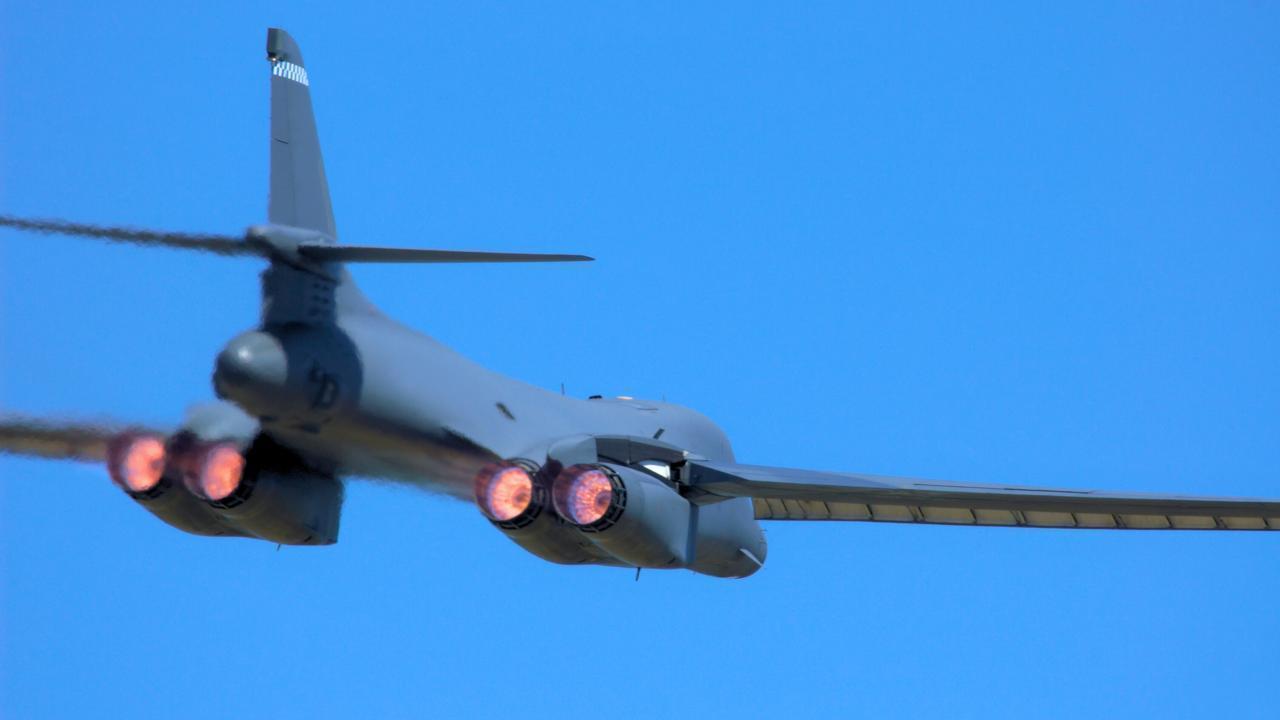
The recent test, conducted at Dyess Air Force Base in Texas, saw a B-1B bomber flying with modified external pylons mounted beneath its fuselage. These pylons are designed to carry large, externally mounted munitions and experimental weapons—specifically future hypersonic systems and oversized smart weapons that do not fit in the internal bomb bay.
Though this was not the first instance of the Air Force evaluating external mounts on the B-1B, it was the most comprehensive test to date. Engineers from the Air Force Global Strike Command (AFGSC), along with aerospace partners, analyzed flight dynamics, structural integrity, and aerodynamic effects of the added hardware. The outcome: a green light to pursue more extensive modifications in preparation for full operational capability.
This successful test demonstrates not just engineering feasibility but also strategic adaptability—offering the bomber an entirely new profile in its twilight years.
Reviving Unused Capacity for Future Conflict
When the B-1B was introduced in the 1980s, it featured six external hardpoints, designed originally to carry nuclear cruise missiles. However, due to arms reduction agreements like the Strategic Arms Reduction Treaty (START), the pylons were deactivated and remained unused for decades. Until now.
By reviving these hardpoints and integrating them with advanced mounting systems, the USAF is giving the Lancer a second life. The B-1B can now support munitions that exceed the dimensions of its internal rotary launcher—enabling it to field the larger, more sophisticated air-launched weapons now under development.
Importantly, this is not about nuclear capability. The B-1B remains a strictly conventional platform, and the pylons will be configured accordingly. Instead, it’s about adapting to a new era of precision-guided, non-nuclear deterrence.
Hypersonic Readiness on the Horizon
A primary motivator behind the pylon integration is the growing emphasis on hypersonic weapons—missiles that travel at speeds exceeding Mach 5 and offer adversaries minimal response time. The USAF has been testing several hypersonic concepts, including the AGM-183A Air-launched Rapid Response Weapon (ARRW) and longer-term systems like the Hypersonic Attack Cruise Missile (HACM).
These next-generation weapons are often too large for traditional bomb bays. By enabling external carriage, the B-1B could serve as a crucial launch platform, bridging the operational gap until platforms like the B-21 Raider reach full deployment. With hypersonics increasingly seen as a game-changer in near-peer competition, particularly with China and Russia, the timing of these modifications couldn’t be more strategic.
While no specific hypersonic missile was tested in this latest pylon trial, the Air Force’s messaging was clear: the B-1B is being readied for what comes next.
Balancing Speed, Stealth, and Payload
One of the B-1B’s enduring advantages is its ability to fly fast and low over long distances. With a top speed exceeding Mach 1.2 and intercontinental range, the Lancer can penetrate contested environments quickly—something no current or planned unmanned platform can do at similar scale.
However, external pylons do come at a cost. They create drag, reduce stealth, and slightly alter the aircraft’s radar profile. The USAF has been careful to note that the pylons will be used in mission-specific scenarios, where payload versatility outweighs the need for radar evasion. In conventional conflicts, especially those that require rapid saturation of targets or launch of stand-off missiles, this trade-off could prove highly beneficial.
The updated configuration will be modular, allowing crews to attach or detach pylons depending on mission needs. This flexibility further enhances the B-1B’s relevance in mixed-theater operations and evolving combat environments.
Engineering Integration and Structural Reinforcement
Integrating external pylons into a high-speed, high-load aircraft like the B-1B is no simple matter. Engineers had to assess how the mounts would affect stress distribution along the fuselage, particularly under G-force conditions during evasive maneuvers. Additionally, they needed to ensure the pylons did not interfere with landing gear operation or cause airflow disruptions that could destabilize the airframe.
To address this, the Air Force worked closely with original equipment manufacturers and structural design experts to implement reinforced mounting frames, aerodynamic fairings, and integrated cabling systems for weapons communication and release. These are not just bolt-on attachments—they are deeply embedded into the aircraft’s systems architecture.
Flight instrumentation used during the test gathered critical real-time data, including vibration analysis, structural stress loads, and thermal impact, ensuring that future test rounds will further refine the design. The goal is to achieve a fully operational, mission-certified configuration without compromising the Lancer’s signature performance.
Strategic Flexibility in the Indo-Pacific and Beyond
The updated B-1B, equipped with external pylons, is expected to play a major role in the Indo-Pacific theater—a region characterized by vast distances, island chains, and a need for persistent long-range strike capability. With growing tensions over Taiwan and increased maritime militarization by China, the USAF sees the Lancer as a ready-made solution to deploy next-gen conventional deterrents in real time.
Moreover, the expanded payload capability enables it to carry more Joint Air-to-Surface Standoff Missiles (JASSMs), long-range anti-ship missiles (LRASMs), and potentially hypersonic glide vehicles. This means fewer sorties, quicker target saturation, and reduced logistical tail—all critical in a high-intensity conflict scenario.
Air Force leaders have stressed the importance of distributed operations in future warfare. The B-1B, with its new pylons, offers just that—a platform capable of rapidly shifting roles based on battlefield demands.
A Bridge to the B-21 Raider
The B-1B fleet is not intended to last forever. With the highly advanced B-21 Raider stealth bomber scheduled for operational deployment later this decade, the Lancer’s role is inherently transitional. But rather than retire the aircraft prematurely, the USAF is opting to invest in strategic upgrades that extend its relevance until the Raider can fully take over.
This bridge strategy not only keeps valuable bomber capacity in play but also buys time for the B-21 to ramp up production and integration without pressure. With only 45 B-1Bs currently in service, every aircraft counts—and upgrading each one with mission-adaptable pylons maximizes that utility.
Extending the Legacy
For an aircraft that was nearly grounded in favor of stealthier bombers two decades ago, the B-1B’s continued relevance is a testament to engineering adaptability and strategic foresight. By turning dormant hardpoints into active launch stations for tomorrow’s weapons, the USAF is proving that legacy platforms can still evolve meaningfully in a rapidly changing defense environment.
As the B-1B flies forward with a new profile and greater purpose, its external pylons are more than just structural extensions—they are a physical embodiment of the Air Force’s commitment to readiness, deterrence, and forward-thinking force projection.
Aviation, B-1B Bombers, Pylons



Advances in Aerospace Technology and Commercial Aviation Recovery
Insights into breakthrough aerospace technologies and commercial aviation’s recovery amid 2025 chall

Defense Modernization and Strategic Spending Trends
Explore key trends in global defense modernization and strategic military spending shaping 2025 secu

Tens of Thousands Protest in Serbia on Anniversary of Deadly Roof Collapse
Tens of thousands in Novi Sad mark a year since a deadly station roof collapse that killed 16, prote

Canada PM Carney Apologizes to Trump Over Controversial Reagan Anti-Tariff Ad
Canadian PM Mark Carney apologized to President Trump over an Ontario anti-tariff ad quoting Reagan,

The ad that stirred a hornets nest, and made Canadian PM Carney say sorry to Trump
Canadian PM Mark Carney apologizes to US President Trump after a tariff-related ad causes diplomatic

Bengaluru-Mumbai Superfast Train Approved After 30-Year Wait
Railways approves new superfast train connecting Bengaluru and Mumbai, ending a 30-year demand, easi




