Post by : Amit
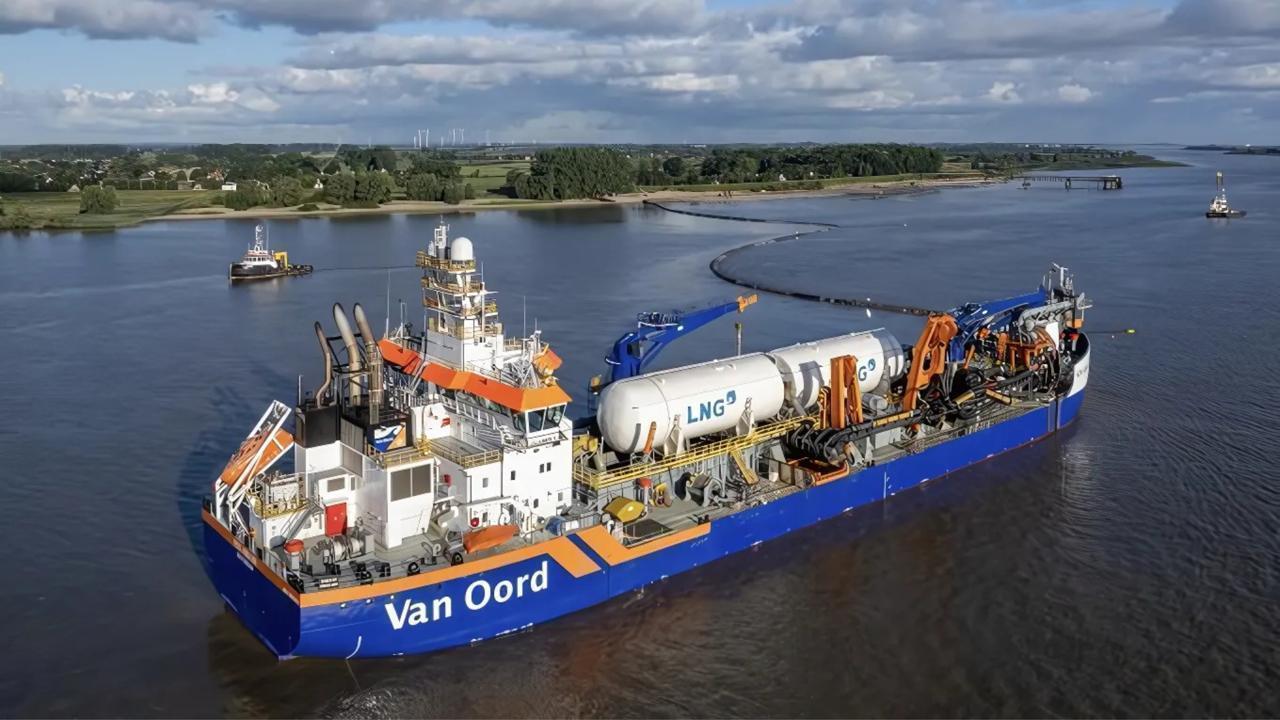
Photo : X / Dredging Today
Van Oord Pioneers Bio-LNG Bunkering in Germany
Van Oord, a global leader in dredging and offshore maritime solutions, has successfully completed Germany’s first bio-LNG bunkering operation, signaling a major step toward greener shipping practices. The event underscores the company’s commitment to decarbonization and innovation in sustainable maritime propulsion, reflecting broader industry trends aimed at reducing greenhouse gas emissions.
Bunkering, the process of refueling ships, is central to maritime operations. Traditional fossil fuels dominate the sector, contributing significantly to CO₂ emissions. By introducing bio-LNG as an alternative fuel, Van Oord is demonstrating the feasibility of renewable energy integration into large-scale shipping logistics, while addressing regulatory and environmental pressures.
A Milestone for Sustainable Maritime Fuel
Bio-LNG, or liquefied biomethane, is produced from organic waste streams and is chemically similar to conventional LNG but with a substantially lower carbon footprint. Its adoption in maritime propulsion offers the potential for immediate reductions in CO₂, methane, and nitrogen oxide emissions, contributing directly to cleaner operations and compliance with stricter environmental regulations.
Van Oord’s pioneering bunkering operation took place at a major German port, with careful planning to ensure operational safety, regulatory compliance, and minimal environmental disruption. The operation included coordination between fuel suppliers, port authorities, and Van Oord’s technical teams to ensure seamless integration with the vessel’s fuel systems.
Operational Advantages of Bio-LNG
Beyond environmental benefits, bio-LNG offers several operational advantages for shipping operators. The fuel is compatible with existing LNG engines, allowing vessels to transition with minimal technical modifications. It also supports long-distance operations due to its high energy density, making it suitable for offshore dredging and construction vessels that require sustained power output.
Industry analysts note that the integration of bio-LNG aligns with the maritime sector’s broader goals for decarbonization. “Bio-LNG provides an immediate reduction in carbon emissions without requiring a complete redesign of vessels,” says renewable energy expert Dr. Karin Müller. “It bridges the gap between current LNG operations and a fully green maritime future.”
Strategic Implications for Van Oord
For Van Oord, this milestone represents more than an experimental operation; it demonstrates leadership in sustainable maritime innovation. The company has been actively exploring renewable fuels, hybrid propulsion systems, and energy-efficient vessel designs to reduce environmental impact across its global fleet.
By adopting bio-LNG, Van Oord not only reduces emissions but also positions itself strategically within an industry facing increasing scrutiny from regulators, clients, and environmental organizations. This initiative may enhance the company’s competitive edge in securing contracts for offshore projects that prioritize sustainability.
Safety and Regulatory Compliance
Bio-LNG bunkering requires stringent safety protocols due to its cryogenic nature and high energy density. Van Oord’s operation followed strict procedures for handling, storage, and transfer of the fuel, ensuring crew safety and preventing leaks or accidents.
Regulatory oversight played a key role in validating the operation. Port authorities and maritime regulators were closely involved, monitoring compliance with international safety standards, environmental protection requirements, and local regulations governing hazardous materials. This level of diligence sets a benchmark for future bio-LNG operations across Europe.
Environmental Impact and Carbon Reduction
The environmental significance of this operation is substantial. Bio-LNG can reduce lifecycle CO₂ emissions by up to 80% compared to conventional marine fuels. In addition, nitrogen oxide and sulfur emissions are significantly lower, improving air quality in port cities and along shipping routes.
Experts emphasize that such pioneering operations are critical for achieving industry-wide climate goals. The International Maritime Organization (IMO) has set ambitious targets for reducing greenhouse gas emissions in shipping by 2050. Early adoption of renewable fuels like bio-LNG demonstrates practical pathways toward meeting these commitments.
Integration with Existing Fleet and Infrastructure
A advantage of bio-LNG is its compatibility with existing LNG-powered vessels. Van Oord’s technical teams ensured that the bunkering process aligned with the ship’s fuel storage, piping, and engine systems, allowing for uninterrupted operations.
The operation also required port infrastructure upgrades, including storage tanks, cryogenic transfer systems, and safety monitoring equipment. Collaborative planning between Van Oord, the port authority, and fuel suppliers ensured that these upgrades were completed efficiently, setting a precedent for scalable renewable fuel operations.
Broader Industry Context
Maritime shipping accounts for approximately 2-3% of global greenhouse gas emissions, with deep-sea vessels contributing disproportionately to CO₂ output due to their high fuel consumption. Industry stakeholders increasingly view renewable fuels as a vital tool for reducing emissions and meeting sustainability targets.
Van Oord’s bio-LNG bunkering aligns with global efforts to decarbonize shipping. Several European operators, including ferry companies and offshore service providers, are now exploring similar initiatives, highlighting a trend toward broader adoption of renewable fuels in commercial maritime operations.
Expert Perspectives on Renewable Fuel Adoption
Industry experts see Van Oord’s milestone as a model for other operators. “Demonstrating operational feasibility is the most important step,” explains Dr. Matthias Kruger, a maritime energy analyst. “Once bunkering procedures, infrastructure, and safety protocols are proven, other companies can scale adoption rapidly.”
Experts also highlight economic benefits. While bio-LNG remains more expensive than conventional fuels, regulatory incentives, carbon pricing, and long-term environmental savings improve its financial viability. Early adoption positions companies to benefit from evolving maritime fuel policies and market demand for green shipping solutions.
Future Outlook for Green Maritime Operations
Van Oord plans to expand bio-LNG adoption across its fleet, integrating it with other energy-efficient technologies such as hybrid-electric propulsion, wind-assisted systems, and optimized hull designs. These combined efforts aim to reduce carbon intensity per ton of cargo or project work, aligning with both corporate sustainability goals and regulatory mandates.
The success of this operation may also encourage other European ports to invest in bio-LNG infrastructure, creating a network of renewable fuel bunkering stations that support industry-wide decarbonization efforts. Such developments will be crucial as shipping companies navigate tighter environmental regulations and increased pressure from investors and clients to demonstrate sustainability.
A Step Toward Sustainable Shipping
The completion of Germany’s first bio-LNG bunkering operation by Van Oord marks a pivotal moment in sustainable maritime innovation. By demonstrating the operational feasibility, environmental benefits, and safety of bio-LNG, the company has set a benchmark for the maritime sector.
As global shipping moves toward decarbonization, pioneering initiatives like this are essential. They provide practical pathways for reducing emissions, improving air quality, and integrating renewable fuels into everyday operations. Van Oord’s milestone not only highlights the company’s leadership in green technology but also reinforces the broader maritime industry’s commitment to a cleaner, more sustainable future.
With ongoing investment in infrastructure, crew training, and renewable fuel adoption, the maritime sector is poised to navigate the transition from conventional fossil fuels to low-carbon alternatives, creating a resilient, environmentally responsible shipping industry for decades to come.
bio-LNG bunkering, Van Oord bio-LNG



Advances in Aerospace Technology and Commercial Aviation Recovery
Insights into breakthrough aerospace technologies and commercial aviation’s recovery amid 2025 chall

Defense Modernization and Strategic Spending Trends
Explore key trends in global defense modernization and strategic military spending shaping 2025 secu

Tens of Thousands Protest in Serbia on Anniversary of Deadly Roof Collapse
Tens of thousands in Novi Sad mark a year since a deadly station roof collapse that killed 16, prote

Canada PM Carney Apologizes to Trump Over Controversial Reagan Anti-Tariff Ad
Canadian PM Mark Carney apologized to President Trump over an Ontario anti-tariff ad quoting Reagan,

The ad that stirred a hornets nest, and made Canadian PM Carney say sorry to Trump
Canadian PM Mark Carney apologizes to US President Trump after a tariff-related ad causes diplomatic

Bengaluru-Mumbai Superfast Train Approved After 30-Year Wait
Railways approves new superfast train connecting Bengaluru and Mumbai, ending a 30-year demand, easi




