Post by : Amit
A Creative Sanitation Solution Rolls Onto Vietnam’s Rural Roads
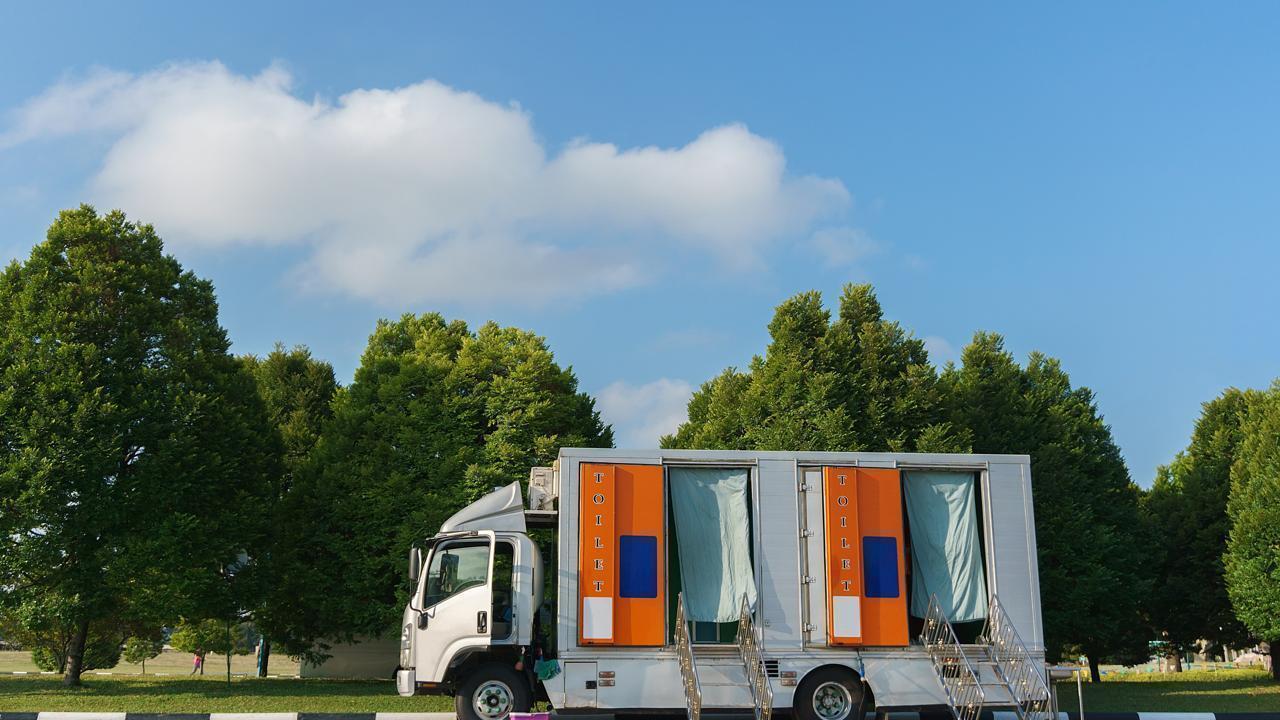
Vietnam has turned to an unorthodox but innovative solution: retired city buses. Rather than letting these vehicles rust in depots or junkyards, the Vietnamese government is refitting hundreds of them into mobile toilet units, aiming to improve hygiene conditions in some of the country’s most underserved rural and mountainous communities.
Announced earlier this month, the initiative is the centerpiece of a broader $10 million rural sanitation program, co-funded by the Vietnamese Ministry of Health, local municipalities, and private sponsors. The project is aligned with the national government’s effort to achieve universal sanitation access by 2030, in line with the United Nations’ Sustainable Development Goals (SDGs). Each retrofitted bus is equipped with bio-toilets, solar panels for power, and onboard water recycling systems—a compact sanitation facility on wheels.
Why Mobile Toilets? A Look at Vietnam’s Sanitation Gap
While Vietnam has made rapid strides in infrastructure and public health since the 1990s, sanitation remains a persistent challenge, particularly in remote provinces such as Dien Bien, Ha Giang, and Quang Nam. Fixed toilet infrastructure projects often stall due to high construction costs, lack of reliable water sources, and logistical difficulties in remote regions. According to Vietnam’s Ministry of Health, around 1 in 5 rural households still rely on open defecation or unsanitary pit latrines, exposing communities to disease outbreaks, contaminated water, and soil pollution.
"Building permanent sanitation infrastructure across Vietnam’s diverse topography is complex and expensive," said Dr. Le Minh Dao, an environmental engineer advising the program. "Mobile toilet buses provide a versatile and scalable bridge solution. They can serve schools, marketplaces, or festivals and can even be repositioned during floods or natural disasters."
The buses not only address hygiene but also serve as tools for public education on sanitation practices, especially in tribal and ethnic minority areas where taboos or lack of awareness often limit latrine usage.
How It Works: The Engineering Behind the Buses
Each converted vehicle undergoes a 3-week retrofitting process at government-approved workshops. The buses are stripped of seating and fitted with a dual-compartment layout: one side for gender-separated toilet stalls, and the other for a small washbasin and hygiene education module. The key technical upgrade is the installation of a bio-digester system, which uses anaerobic bacteria to break down waste into harmless effluent, minimizing smell and the need for frequent tank emptying.
In keeping with Vietnam’s green development agenda, the mobile toilets are also powered by rooftop solar panels, which run the ventilation system, internal lights, and water pumps. Each bus has a 500-liter clean water tank and a 750-liter greywater tank, making it capable of serving up to 500 people daily without resupply.
"These aren’t just portable toilets," said Nguyen Thanh Ha, a senior engineer at GreenLoop, one of the private sector partners. "They are compact hygiene stations, designed with both dignity and efficiency in mind."
Government and Private Sector Join Hands
The program is a textbook case of public-private collaboration. While the Ministry of Health and local authorities manage deployment and community training, over 60% of the funding comes from Vietnamese corporates such as VinFast, Viettel, and Saigon Co.op, alongside foreign donors like the Japan International Cooperation Agency (JICA) and UNICEF Vietnam.
“We saw this not as charity but as investment in our future workforce and public health,” said Doan Thi Lan, CSR head at Saigon Co.op. “Sanitation is foundational to education and economic productivity.”
The program also involves local mechanics and bus repair yards, creating new jobs in vehicle conversion, maintenance, and logistics. In some districts, former bus drivers have been rehired to operate and maintain the new units, providing a dignified second career to workers affected by transport sector automation.
Positive Early Results and Expansion Plans
Since the pilot launch in February 2025, over 85 mobile toilets have been deployed in 12 provinces, covering more than 180,000 residents. Early feedback has been overwhelmingly positive, particularly from rural women and children, who have traditionally borne the brunt of poor sanitation. A survey conducted by the University of Public Health in Hanoi revealed that 93% of users preferred the mobile toilets over existing community latrines, citing better cleanliness, privacy, and accessibility.
Schools without toilets—still common in Vietnam’s upland regions—have been among the biggest beneficiaries. "Girls used to skip class during their periods due to lack of toilets," said Tran Van Duc, headmaster of a school in Lao Cai province. "Now, attendance and performance have improved, especially among adolescent girls."
Encouraged by these outcomes, the Ministry of Health is now planning to expand the program to 200 more buses by mid-2026, with targeted coverage for over 1.5 million additional people. The long-term goal is to build a fleet of 1,000 mobile sanitation units that can be rotated across provinces or mobilized quickly during disasters, droughts, and epidemics.
Vietnam Joins a New Sanitation Trend
Vietnam’s mobile toilet program isn’t just a regional experiment—it is part of a growing international trend toward modular and mobile public sanitation solutions. Similar programs have taken root in India, Kenya, and parts of South America, often driven by urban migration, water scarcity, and public health emergencies.
The United Nations Environment Programme (UNEP) and WHO have both emphasized the need for climate-resilient sanitation models, especially for regions vulnerable to flooding, droughts, and demographic shocks. Vietnam’s model—combining circular sanitation (bio-toilets), renewable energy, and mobility—has drawn attention from development agencies globally.
“Vietnam has redefined the possibilities of rural sanitation through innovation and partnerships,” said Dr. Akiko Tanaka, a WASH (Water, Sanitation and Hygiene) specialist at JICA. “They’re showing that it’s possible to leapfrog traditional models and deliver scalable, sustainable hygiene infrastructure.”
Social Acceptance and Cultural Engagement
A key challenge the project initially faced was social acceptability. In many rural areas, using a bus as a toilet seemed strange or even taboo. That’s why the rollout included intensive community engagement campaigns, led by local women’s unions, youth groups, and village leaders.
Children were taught sanitation awareness through storytelling, songs, and games, while elders were invited for tours and demonstrations. Some buses were even painted with murals by local artists, celebrating clean water and health, turning the units into sources of village pride.
“The transformation in mindset is as important as the infrastructure,” said Mai Thi Hoa, a community coordinator in Quang Ngai. “Now, people feel proud to have these buses. They call them ‘white gold on wheels.’”
Funding, Maintenance, and Scaling
Despite early success, the initiative faces challenges. Maintenance costs are expected to rise as buses age. Refilling water tanks and cleaning the units in remote areas still requires coordination with local water agencies and contractors. Moreover, some remote areas may require off-road-capable buses, which would significantly raise retrofitting costs.
There is also a growing call to complement mobile units with fixed infrastructure, especially in areas where mobile coverage cannot keep up with population density or seasonal surges.
To address long-term viability, the Ministry is exploring pay-per-use models, local ownership frameworks, and even solar-powered add-on modules that could convert ordinary vans into sanitation vehicles.
A Model for Replication?
If Vietnam manages to sustain and expand the program as planned, it could serve as a replicable model for many countries struggling with rural sanitation. The marriage of mobility, clean energy, bio-waste management, and grassroots engagement may offer a pathway out of open defecation and into dignity for millions.
"Access to toilets is not just about health," said Nguyen Thi Thao, a public policy analyst. "It’s about equity, gender rights, education, and climate resilience. Vietnam’s mobile toilets might just be the wheels that move us closer to all of that."
Sanitation on the Move
climate unpredictability, and development imbalances, Vietnam’s mobile toilet buses stand as a powerful symbol—that innovation need not be high-tech to be transformative. Sometimes, it just takes an old bus, some smart retrofitting, and the will to serve those who need it most.
With these rolling hygiene stations, Vietnam is not just solving a sanitation problem. It's demonstrating a bold, human-centered approach to development that turns waste into dignity and mobility into empowerment.
Vietnam, Mobile Toilet Buses



Advances in Aerospace Technology and Commercial Aviation Recovery
Insights into breakthrough aerospace technologies and commercial aviation’s recovery amid 2025 chall

Defense Modernization and Strategic Spending Trends
Explore key trends in global defense modernization and strategic military spending shaping 2025 secu

Tens of Thousands Protest in Serbia on Anniversary of Deadly Roof Collapse
Tens of thousands in Novi Sad mark a year since a deadly station roof collapse that killed 16, prote

Canada PM Carney Apologizes to Trump Over Controversial Reagan Anti-Tariff Ad
Canadian PM Mark Carney apologized to President Trump over an Ontario anti-tariff ad quoting Reagan,

The ad that stirred a hornets nest, and made Canadian PM Carney say sorry to Trump
Canadian PM Mark Carney apologizes to US President Trump after a tariff-related ad causes diplomatic

Bengaluru-Mumbai Superfast Train Approved After 30-Year Wait
Railways approves new superfast train connecting Bengaluru and Mumbai, ending a 30-year demand, easi




