Post by : Amit
Boston, July, 2025 — After years of delays, shifting policies, and hard-earned engineering victories, the Vineyard Wind 1 project off the coast of Massachusetts is on the verge of making history. The project’s developers confirmed that full commercial operations are expected to begin by the end of 2025, positioning it as the first utility-scale offshore wind farm in the United States.
This announcement marks a significant turning point for U.S. clean energy infrastructure. While Europe has long dominated the offshore wind landscape, Vineyard Wind 1 signals the beginning of a new era—one where America no longer lags behind but begins to play catch-up in a sector critical to climate goals and economic development.
Wind in the sails: First turbines already online
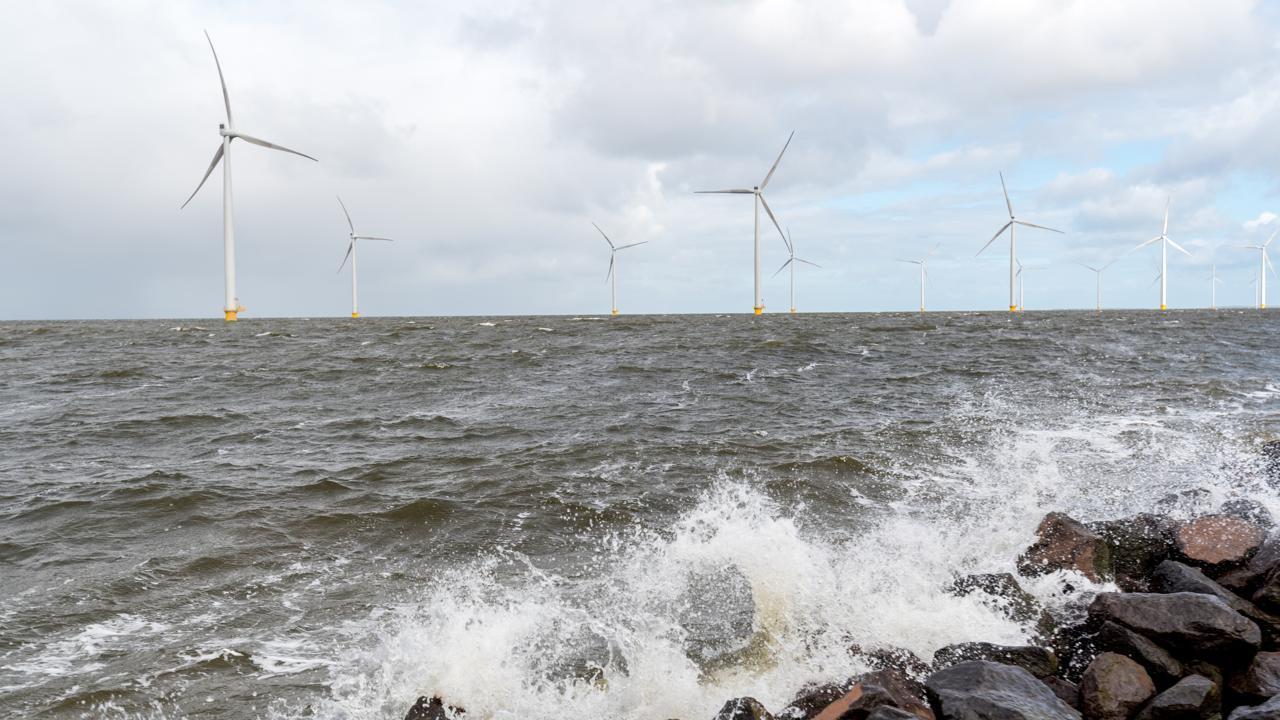
Located 15 miles south of Martha’s Vineyard, the massive wind farm will eventually house 62 General Electric Haliade-X 13 MW turbines, spaced across an 160,000-acre lease area. Once completed, the project will generate approximately 806 megawatts (MW)—enough to power more than 400,000 homes across Massachusetts.
As of July 2025, five turbines are already online, producing electricity and feeding it into the New England grid through a specially constructed undersea cable. According to a project spokesperson, the ramp-up will continue in phases throughout Q3 and Q4, with full-scale generation set to begin by December.
“This is not just a wind farm—it’s the first chapter of America’s offshore wind future,” said Klaus Moeller, CEO of Vineyard Wind.
The project is a 50/50 joint venture between Avangrid Renewables (a subsidiary of Spain’s Iberdrola) and Copenhagen Infrastructure Partners, and it’s the first to reach such an advanced state among the 40+ projects currently in planning or permitting stages along U.S. coasts.
Long road to the ocean: Decade of development
Vineyard Wind 1 was first proposed in 2017 but underwent a rollercoaster of regulatory reviews, environmental concerns, and shifting federal policy. The Trump administration repeatedly delayed permits, citing the need for further environmental assessments. It wasn’t until early 2021 that the Bureau of Ocean Energy Management (BOEM) approved the final construction and operations plan under the Biden administration.
Groundbreaking began in 2023, with onshore preparations in Barnstable and New Bedford acting as logistical staging areas. The underwater cable system, turbine foundations, and electrical substations have been built over the past two years, despite considerable challenges—including adverse weather and labor shortages.
This timeline, while longer than originally projected, has yielded valuable insights into how large-scale offshore projects can be managed in the U.S. market—particularly in coordination with local fishing communities, Indigenous groups, and port authorities.
Jobs and just transition: Local economy benefits
At full scale, Vineyard Wind 1 is expected to create over 3,600 jobs across Massachusetts and neighboring states, including roles in engineering, marine operations, construction, and maintenance. Much of the offshore assembly work was handled at the revitalized New Bedford Marine Commerce Terminal, which is now emerging as a key East Coast logistics hub for wind energy.
Training programs and apprenticeships funded through state and federal grants have also helped transition workers from fossil fuel industries and traditional shipping sectors into offshore wind roles—supporting a broader vision of a just energy transition.
“This is what energy transition should look like—equitable, local, and future-ready,” said Massachusetts Climate Secretary Bethany Tavares during a recent site tour.
Technical milestones: The power of Haliade-X turbines
The core technology enabling Vineyard Wind 1’s scale is the Haliade-X 13 MW turbine, among the most powerful offshore wind units in the world. Standing over 850 feet tall, each turbine has a rotor diameter of 722 feet—longer than two football fields. One full rotation of the blades can power a U.S. home for two days.
The massive turbines are anchored on monopile foundations drilled into the seabed, each requiring heavy-lift installation vessels operating in tight seasonal weather windows. The nacelles (turbine housings) were produced in France and shipped to New Bedford for final outfitting.
GE has indicated that lessons learned from this deployment will influence the next generation of Haliade-X turbines, including even more powerful 18 MW variants currently in prototype stages in Europe.
Grid integration: Delivering energy to Massachusetts
The electricity generated by Vineyard Wind 1 flows via a 220-kV export cable laid along the seafloor, making landfall at Barnstable, where it connects to an onshore substation and the ISO-New England grid. The infrastructure allows dynamic adjustments to power output and grid demand, ensuring reliability even under changing sea and wind conditions.
Massachusetts utilities Eversource and National Grid are contractually obligated to purchase the output at predetermined rates—providing both stable energy prices for consumers and guaranteed revenue for developers.
Moreover, the pricing has set a benchmark for future offshore wind projects in the U.S., offering a framework for power purchase agreements (PPAs) that balance investor confidence with ratepayer protection.
Environmental safeguards and marine coordination
Offshore wind farms often stir debate around their environmental impact, especially with respect to marine ecosystems and fishing rights. Vineyard Wind 1 has implemented several mitigation strategies to protect the North Atlantic right whale, one of the most endangered marine species. Construction has included seasonal restrictions, marine mammal observers, and real-time acoustic monitoring.
The developers have also signed compensation and coordination agreements with several fishing industry associations, committing to shared ocean use and navigational transparency.
So far, NOAA and local environmental watchdogs have reported no major ecological disruptions during installation, though full impact assessments will be ongoing for the next five years.
Vineyard Wind 2 and regional build-out
With Vineyard Wind 1 nearly complete, attention is turning to Vineyard Wind 2, a proposed 1.2 GW expansion planned in adjacent waters. The Biden administration has identified offshore wind as a critical pillar of its climate strategy, targeting 30 GW of offshore capacity by 2030.
Other major projects in the pipeline include South Fork Wind, Empire Wind, and Ocean Wind, which are at various stages of approval and construction from New York to Virginia.
However, not all is smooth sailing. Rising costs, federal permitting bottlenecks, and local opposition continue to challenge timelines. Still, Vineyard Wind 1 offers a tested model for scaling U.S. offshore wind projects—with practical insights and proven technology.
America finally joins the offshore wind race
For decades, the U.S. has watched Europe dominate the offshore wind industry. With Vineyard Wind 1 nearing completion, that narrative is finally shifting.
The project’s success could spark a domino effect, creating a mature domestic offshore wind market with robust supply chains, skilled labor, and long-term investment.
“This is more than a power plant in the ocean,” said Moeller. “It’s proof that America can lead in climate innovation—not just on land, but offshore too.”
As the first full-scale turbines spin off the Massachusetts coast, Vineyard Wind 1 serves as a beacon—not just of renewable energy, but of what’s possible when political will, technical expertise, and long-term vision converge.
Vineyard Wind



Advances in Aerospace Technology and Commercial Aviation Recovery
Insights into breakthrough aerospace technologies and commercial aviation’s recovery amid 2025 chall

Defense Modernization and Strategic Spending Trends
Explore key trends in global defense modernization and strategic military spending shaping 2025 secu

Tens of Thousands Protest in Serbia on Anniversary of Deadly Roof Collapse
Tens of thousands in Novi Sad mark a year since a deadly station roof collapse that killed 16, prote

Canada PM Carney Apologizes to Trump Over Controversial Reagan Anti-Tariff Ad
Canadian PM Mark Carney apologized to President Trump over an Ontario anti-tariff ad quoting Reagan,

The ad that stirred a hornets nest, and made Canadian PM Carney say sorry to Trump
Canadian PM Mark Carney apologizes to US President Trump after a tariff-related ad causes diplomatic

Bengaluru-Mumbai Superfast Train Approved After 30-Year Wait
Railways approves new superfast train connecting Bengaluru and Mumbai, ending a 30-year demand, easi




