Post by : Amit
Photo : X / gCaptain
West Coast Ports Experience Unprecedented Cargo Surge
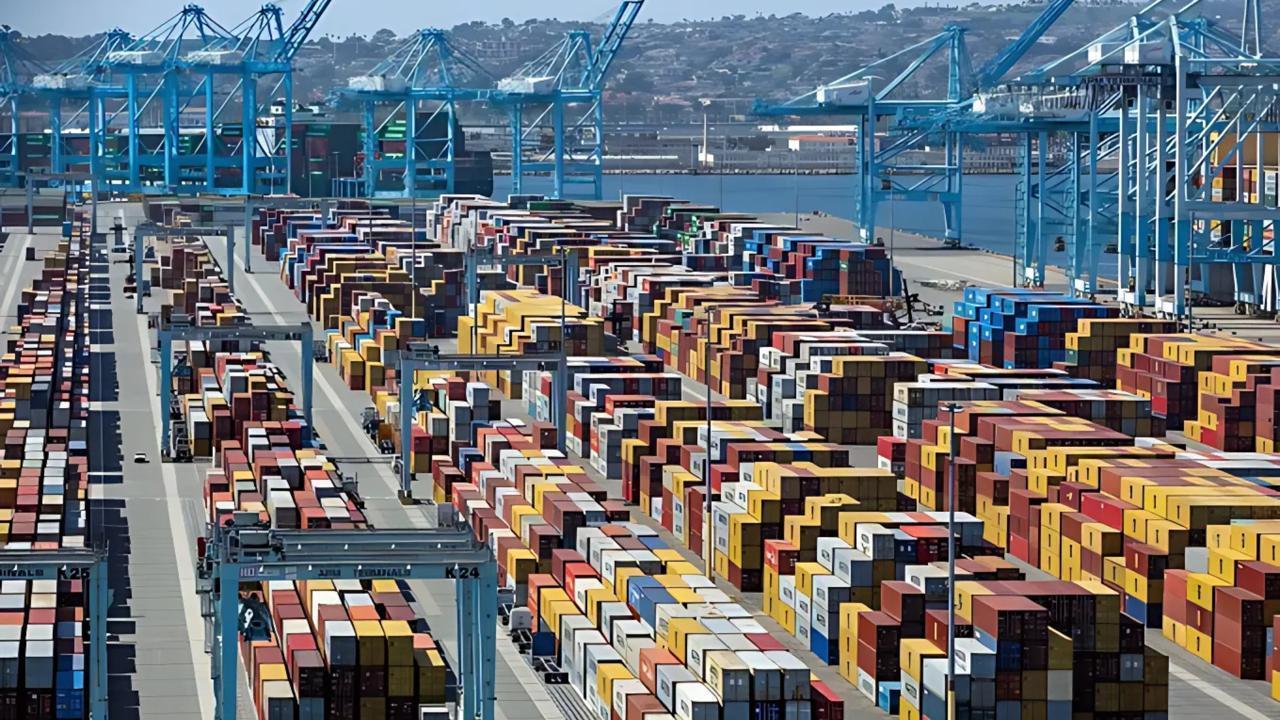
Major West Coast ports in the United States have shattered previous cargo handling records as importers rush to move goods ahead of newly imposed tariffs. This surge reflects a combination of trade policy pressures, seasonal shipping demand, and global supply chain dynamics that have converged to create unprecedented activity at ports from Los Angeles to Seattle.
Industry analysts note that ports are operating at near-full capacity, processing millions of containers at a speed and volume rarely seen outside peak holiday seasons. The rush underscores how trade policy and tariffs directly influence shipping behavior, prompting companies to accelerate deliveries and preempt additional costs.
Impact of Tariff Deadlines on Shipping Volumes
The recent announcement of tariffs on certain imported goods has created a time-sensitive incentive for shippers. Businesses are increasing imports to avoid paying higher duties, leading to congestion at key West Coast terminals. Cargo handling teams are reporting extended operating hours and logistical adjustments to accommodate the surge.
Economists emphasize that such behavior is a predictable response to trade policy uncertainty. “When tariffs are announced or adjusted, companies naturally try to accelerate shipments to minimize costs. Ports experience concentrated peaks in volume, which requires rapid operational flexibility,” says trade analyst Laura Chen.
Port Operations Under Pressure
The surge in container traffic has placed considerable strain on port operations. Terminal operators are deploying additional labor, equipment, and vessel berths to ensure smooth processing. Automated container handling systems, digital tracking, and scheduling software have played a pivotal role in maintaining throughput despite increased congestion.
Despite these measures, some shippers report delays in unloading and delivery, illustrating the limits of current port capacity. Analysts warn that sustained high volumes could exacerbate bottlenecks unless ports continue investing in technology, workforce training, and infrastructure expansion.
Record-Breaking Cargo Statistics
Preliminary figures indicate that ports along the West Coast are handling record volumes of containers per month, surpassing previous peaks set during the global e-commerce boom. Ports such as Los Angeles and Long Beach report container throughput exceeding 10 million TEUs annually, with monthly spikes attributable to the tariff-driven rush.
Experts suggest that these statistics are emblematic of a broader trend in global shipping: high-volume ports are increasingly expected to handle volatile surges in traffic influenced by trade policy, geopolitical factors, and consumer demand.
Economic Implications for the Supply Chain
The spike in West Coast port activity has immediate implications for the broader supply chain. Transportation providers, including trucking and rail networks, are experiencing high demand for container pickup and delivery services. Delays in these segments can ripple across national and international supply chains, affecting inventory management, production schedules, and retail availability.
In addition, the congestion increases operational costs for shippers and port operators alike. Storage fees, demurrage charges, and additional labor expenditures contribute to rising overall logistics expenses, which can be passed down to consumers.
Automation and Digital Solutions in Cargo Handling
Automated systems and digital management tools have been critical in mitigating congestion. Ports have increasingly invested in AI-driven scheduling, automated container cranes, and real-time tracking platforms to enhance efficiency. These technologies allow operators to predict bottlenecks, allocate resources more effectively, and maintain continuous flow despite surging volumes.
Analysts note that while automation provides a significant advantage, it cannot fully compensate for physical capacity constraints. Infrastructure expansion and strategic workforce deployment remain essential for managing record-breaking traffic levels.
Trade Policy and Strategic Shipping Decisions
The tariff-driven surge underscores how trade policies can influence operational decisions in shipping. Importers are strategically advancing shipments to avoid increased duties, illustrating a direct connection between government policy and private-sector logistics strategies.
“This surge is a textbook example of policy-driven shipping behavior,” explains economist Dr. Victor Ruiz. “Companies react to tariff deadlines by accelerating imports, which affects port congestion, logistics planning, and overall supply chain flow.”
Environmental Considerations Amid Increased Activity
High-volume port operations inevitably carry environmental implications. Increased vessel traffic, extended terminal operating hours, and additional heavy-duty truck movements contribute to emissions and air quality concerns in port-adjacent communities.
Port authorities are implementing measures to reduce environmental impact, including using low-emission equipment, optimizing vessel berthing schedules, and exploring alternative fuels for cargo handling equipment. These initiatives aim to balance operational efficiency with sustainability goals, an increasingly critical consideration in port planning.
Stakeholder Perspectives
Port operators, shipping lines, and logistics providers have highlighted both challenges and successes in managing the surge. Operators commend the effectiveness of automated systems and digital monitoring, while emphasizing the need for expanded infrastructure to accommodate future high-volume peaks.
Shippers acknowledge the pressures caused by tariffs but note that proactive planning and collaboration with port authorities helped minimize delays. Industry stakeholders emphasize that coordination across maritime, trucking, and rail sectors is essential for maintaining reliability during sudden surges.
Lessons for Future Port Management
The West Coast surge illustrates the importance of flexible, resilient port operations. Investments in technology, workforce readiness, and predictive logistics are crucial for managing unexpected spikes in cargo volume. Ports are increasingly adopting data-driven decision-making to optimize scheduling, resource allocation, and terminal throughput.
Maritime experts argue that ports must also anticipate policy-driven surges as a recurring operational factor, integrating scenario planning into long-term strategic planning. This proactive approach ensures that ports can maintain efficiency, safety, and service reliability in the face of volatile trade conditions.
Global Shipping and Trade Implications
The surge at U.S. West Coast ports has global ramifications. Congestion and delays can affect international supply chains, with container vessels facing rerouting, scheduling changes, or extended waiting periods at berths. Exporters, importers, and shipping lines worldwide must remain agile to respond to these operational pressures.
Moreover, tariff-driven rushes illustrate the interconnectedness of trade policies and global logistics networks. Shippers must continuously monitor international regulations, pricing structures, and operational conditions to optimize timing and minimize costs.
Navigating Port Pressures
The record-breaking surge at West Coast ports demonstrates the direct impact of trade policy on shipping operations, cargo handling, and supply chain efficiency. Ports are responding with a combination of automation, digital management, extended operations, and workforce mobilization, yet structural capacity constraints remain a challenge.
As trade volumes continue to fluctuate due to tariffs, consumer demand, and geopolitical factors, ports must maintain flexibility and invest in both technology and infrastructure. The lessons from this surge highlight the need for resilient, sustainable, and data-driven port operations capable of handling future policy-driven and seasonal spikes without compromising service or efficiency.
Through coordinated action between port authorities, shipping lines, and logistics providers, the maritime sector can continue to meet growing global trade demands while adapting to the challenges of an increasingly complex and dynamic shipping environment.
West Coast Ports, Shipping



Advances in Aerospace Technology and Commercial Aviation Recovery
Insights into breakthrough aerospace technologies and commercial aviation’s recovery amid 2025 chall

Defense Modernization and Strategic Spending Trends
Explore key trends in global defense modernization and strategic military spending shaping 2025 secu

Tens of Thousands Protest in Serbia on Anniversary of Deadly Roof Collapse
Tens of thousands in Novi Sad mark a year since a deadly station roof collapse that killed 16, prote

Canada PM Carney Apologizes to Trump Over Controversial Reagan Anti-Tariff Ad
Canadian PM Mark Carney apologized to President Trump over an Ontario anti-tariff ad quoting Reagan,

The ad that stirred a hornets nest, and made Canadian PM Carney say sorry to Trump
Canadian PM Mark Carney apologizes to US President Trump after a tariff-related ad causes diplomatic

Bengaluru-Mumbai Superfast Train Approved After 30-Year Wait
Railways approves new superfast train connecting Bengaluru and Mumbai, ending a 30-year demand, easi




