Post by : Saif
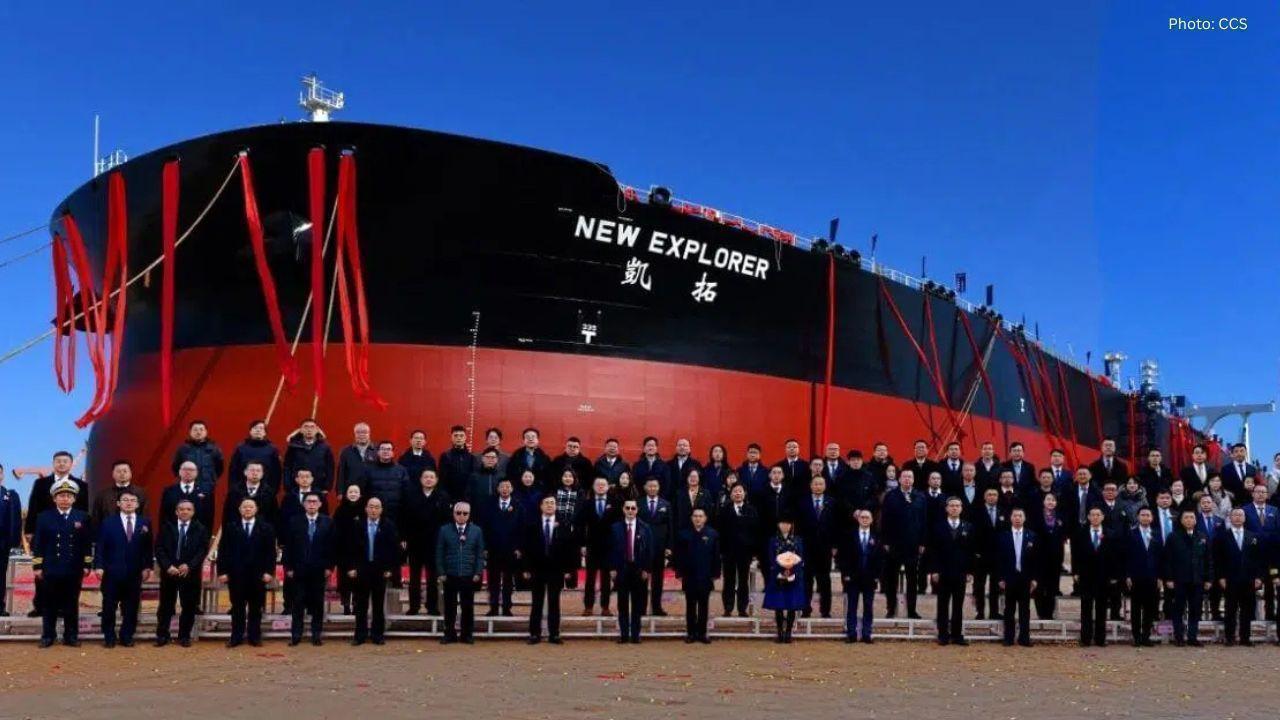
The shipping industry has taken a major step toward cleaner and more sustainable operations with the launch of the world’s first methanol dual-fuel Very Large Crude Carrier (VLCC), named “New Explorer.” The vessel has officially entered service, showcasing the potential for large ships to reduce emissions while transporting crude oil across the globe.
The New Explorer is designed to run on either methanol or conventional marine fuel. Methanol, a cleaner-burning fuel, produces fewer sulfur and nitrogen emissions compared to traditional heavy fuel oil. By using methanol, the vessel aims to lower its environmental impact while meeting strict global maritime regulations. This innovation comes at a time when the shipping industry is under increasing pressure to reduce greenhouse gas emissions and support global climate goals.
The introduction of the New Explorer demonstrates how technology and environmental responsibility can go hand in hand. The vessel combines advanced engineering with operational flexibility. It can switch between methanol and conventional fuel depending on availability and voyage requirements. This dual-fuel capability ensures that the ship remains efficient and practical for long-distance oil transport while minimizing environmental harm.
Industry experts see the New Explorer as a significant milestone. VLCCs are among the largest oil tankers in the world, and their fuel consumption is substantial. Transitioning even one VLCC to a cleaner fuel like methanol can have a noticeable impact on emissions. If adopted widely, this technology could help the shipping sector reduce its contribution to air pollution and climate change.
The vessel also highlights collaboration between shipbuilders, fuel suppliers, and operators. Developing a methanol dual-fuel engine for a VLCC required innovative design, rigorous safety testing, and extensive planning. Successful operation of the New Explorer will provide valuable data for future projects and encourage other companies to explore alternative fuels.
Methanol as a marine fuel is gaining attention because it can be produced from renewable sources, including biomass and captured carbon. This means that in the future, ships like the New Explorer could run on truly renewable methanol, further reducing the shipping industry’s carbon footprint. For now, the combination of methanol and conventional fuel provides a practical path toward cleaner shipping.
As the New Explorer begins its voyages, it symbolizes a turning point for the oil transportation sector. The vessel proves that it is possible to combine commercial efficiency with environmental responsibility. With growing demand for cleaner shipping solutions, the launch of the New Explorer may inspire further innovation and investment in sustainable maritime technology.
The success of the New Explorer will be closely watched by shipping companies, environmental groups, and global regulators. Its operation could pave the way for a new generation of VLCCs and other large vessels that prioritize lower emissions without compromising performance or reliability.
#trending #latest #NewExplorer #MethanolFuel #DualFuelVLCC #SustainableShipping #CleanEnergy #MaritimeInnovation #GreenShipping



Advances in Aerospace Technology and Commercial Aviation Recovery
Insights into breakthrough aerospace technologies and commercial aviation’s recovery amid 2025 chall

Defense Modernization and Strategic Spending Trends
Explore key trends in global defense modernization and strategic military spending shaping 2025 secu

Tens of Thousands Protest in Serbia on Anniversary of Deadly Roof Collapse
Tens of thousands in Novi Sad mark a year since a deadly station roof collapse that killed 16, prote

Canada PM Carney Apologizes to Trump Over Controversial Reagan Anti-Tariff Ad
Canadian PM Mark Carney apologized to President Trump over an Ontario anti-tariff ad quoting Reagan,

The ad that stirred a hornets nest, and made Canadian PM Carney say sorry to Trump
Canadian PM Mark Carney apologizes to US President Trump after a tariff-related ad causes diplomatic

Bengaluru-Mumbai Superfast Train Approved After 30-Year Wait
Railways approves new superfast train connecting Bengaluru and Mumbai, ending a 30-year demand, easi




