Post by : Saif
The recent U.S. attack on a suspected drug-smuggling boat from Venezuela has opened a new debate in Washington and around the world. What began as a military operation at sea has now turned into a difficult test of law, ethics, and political leadership. As more details come out, questions grow louder about whether the United States acted within the rules of war and whether this conflict is quietly expanding into something much bigger.
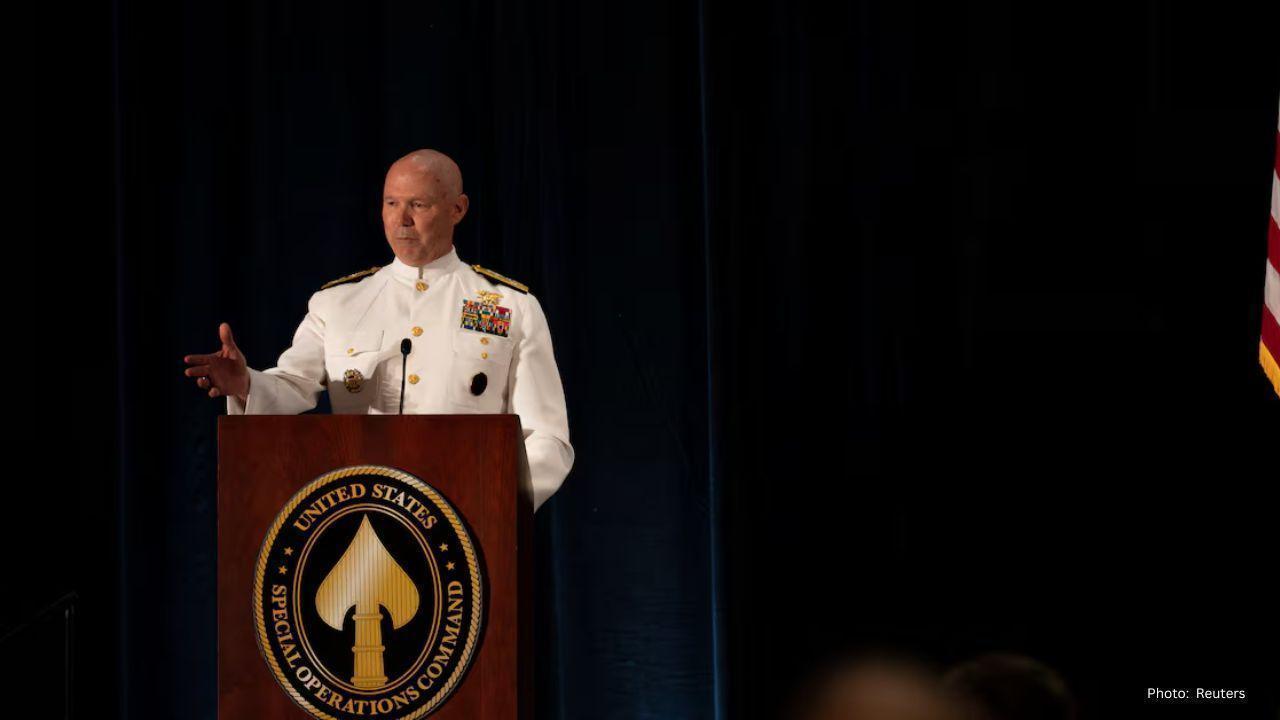
The White House has strongly defended the actions taken by Admiral Frank “Mitch” Bradley during the September 2 strike. According to the administration, Defense Secretary Pete Hegseth gave him full authority to destroy the Venezuelan vessel, which the U.S. says was being used by narcotics traffickers. The government also stressed that the mission took place in international waters and was carried out in what they call “self-defense.”
But the controversy began when The Washington Post reported that a second strike was ordered after the first explosion, aimed at killing the two survivors still on the boat. Reports suggested the order may have been motivated by instructions that “no one should survive.” This is the part of the story that has shocked many legal experts and lawmakers.
President Donald Trump himself said he would not have approved a second strike on survivors. Meanwhile, Hegseth denied ever giving an order to kill everyone on board. Despite this, the White House said clearly that Hegseth authorized Bradley’s actions and that the admiral acted “within the law.”
Since September, the U.S. military has launched at least 19 strikes against suspected drug boats in the Caribbean and Pacific regions, killing at least 76 people. Critics from both political parties worry that the rules for these missions are unclear, and some fear that the U.S. may be slipping into an undeclared conflict.
International humanitarian law is very clear on one point: people who are shipwrecked, injured, or otherwise unable to fight cannot be targeted. They must be rescued and given medical care unless they show new signs of hostility. Several legal scholars say this case does not meet the standards of war, and therefore any killing beyond direct self-defense would be illegal.
Laura Dickinson, a respected law professor at George Washington University, explained it in simple terms. She said most experts do not see these boat missions as part of an armed conflict. That means lethal force is allowed only if there is an immediate and serious danger that cannot be avoided. Killing survivors, she warned, “would likely be a war crime,” even in wartime.
A group of former military lawyers known as the JAGs Working Group went further. They called the alleged shoot-to-kill order “patently illegal,” saying that service members are required to disobey unlawful commands. They also said anyone who knowingly followed such an order should face prosecution.
Despite the criticism, Hegseth posted on X that Admiral Bradley is an “American hero.” He said he supports Bradley “100%” and stands by all the admiral’s decisions on the September 2 mission and others like it.
This dispute is unfolding at a time when President Trump is considering tougher action against Venezuela. U.S. officials say they believe President Nicolas Maduro is allowing drug cartels to operate with freedom and that these drugs are harming American communities. Maduro denies this and says the U.S. is using drug accusations to justify military pressure.
Over the weekend, Trump said Venezuela’s airspace should be considered “closed,” but he did not explain what that means. His remarks caused confusion in Caracas and stirred fears that the U.S. may be preparing for a larger military role.
On top of that, Trump confirmed that he recently spoke with Maduro, though he refused to share details of the conversation. Behind the scenes, U.S. security officials have been discussing several options, including an operation to remove Maduro from power. There has also been a major buildup of U.S. military assets in the Caribbean, which suggests that preparations for a bigger mission could already be underway.
Furthermore, Reuters reported that Trump has authorized covert CIA operations inside Venezuela. This means intelligence officers may already be carrying out secret missions to weaken Maduro’s government or target illegal networks.
All these actions raise serious concerns about where U.S. policy toward Venezuela is heading. If the strikes continue and the legal framework remains unclear, more incidents like the September attack may occur. Each one will bring new questions about military conduct, accountability, and respect for international law.
This situation calls for transparency. If the United States truly wants to stop drug trafficking and protect its citizens, it must do so in a way that respects human rights and global rules. The fight against illegal drugs cannot become a doorway to actions that resemble war without a declaration or public debate.
For now, Congress has promised to investigate the incident and the broader military campaign. That is a necessary step. The American people deserve to know whether deadly force is being used properly and whether the country is being drawn into a conflict without clear limits.
At the same time, Maduro’s government must also answer for the serious allegations of corruption and drug links. The suffering of Venezuelan citizens, many of whom face deep poverty and political repression, should not be ignored.
This episode shows how complex and dangerous global security challenges can be. A single decision at sea can trigger arguments about morality, legality, and the future direction of U.S. foreign policy. Washington must act carefully, and so must those who command America’s military forces. The world will be watching what happens next.
#trending #latest #USVenezuelaCrisis #BoatStrikeDebate #InternationalLaw #USForeignPolicy #WashingtonEditorial #GlobalSecurity



Advances in Aerospace Technology and Commercial Aviation Recovery
Insights into breakthrough aerospace technologies and commercial aviation’s recovery amid 2025 chall

Defense Modernization and Strategic Spending Trends
Explore key trends in global defense modernization and strategic military spending shaping 2025 secu

Tens of Thousands Protest in Serbia on Anniversary of Deadly Roof Collapse
Tens of thousands in Novi Sad mark a year since a deadly station roof collapse that killed 16, prote

Canada PM Carney Apologizes to Trump Over Controversial Reagan Anti-Tariff Ad
Canadian PM Mark Carney apologized to President Trump over an Ontario anti-tariff ad quoting Reagan,

The ad that stirred a hornets nest, and made Canadian PM Carney say sorry to Trump
Canadian PM Mark Carney apologizes to US President Trump after a tariff-related ad causes diplomatic

Bengaluru-Mumbai Superfast Train Approved After 30-Year Wait
Railways approves new superfast train connecting Bengaluru and Mumbai, ending a 30-year demand, easi




