Post by : Amit
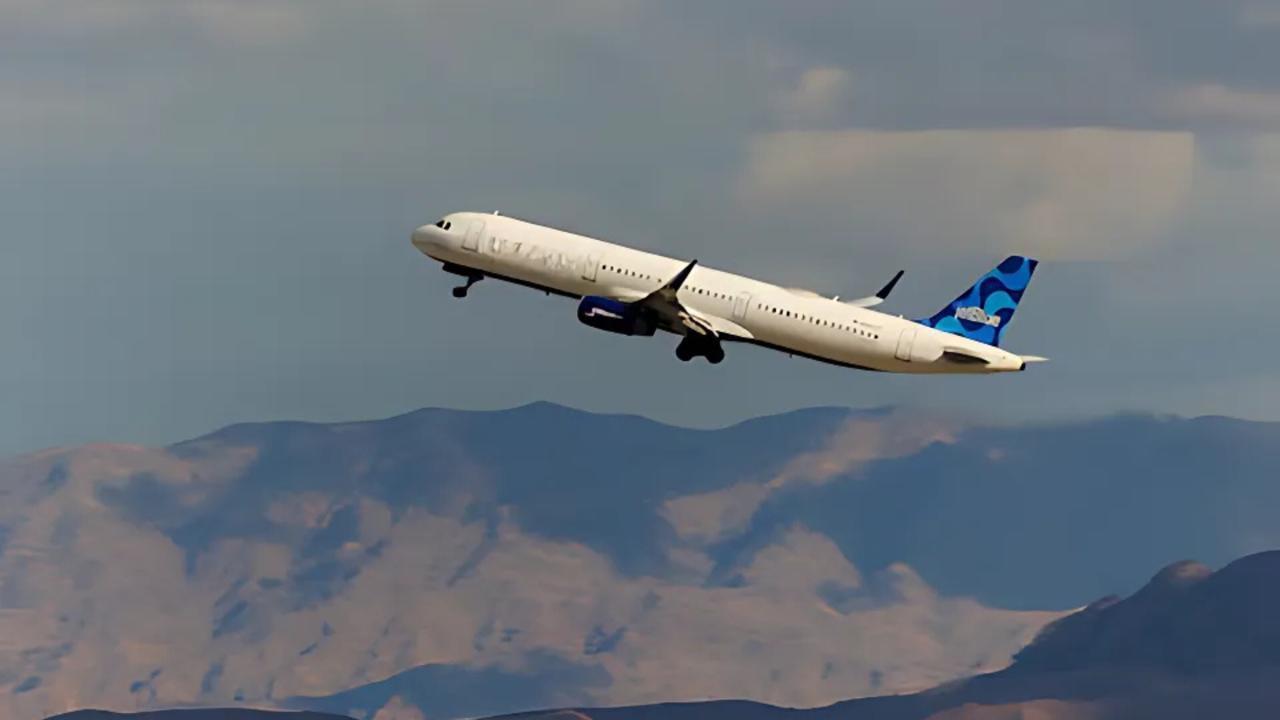
Photo : Reuters
Steady Momentum in Aircraft Deliveries
In a clear sign of the aviation sector’s continuing recovery and growth, European aerospace giant Airbus announced the delivery of 63 commercial aircraft in June 2024, bringing its total deliveries for the first half of the year to an impressive 323 units. The figures highlight the company’s robust performance and its ability to meet growing global demand despite ongoing supply chain challenges.
The latest data positions Airbus well on track to achieve or even exceed its ambitious delivery targets for 2024, with demand for new-generation, fuel-efficient aircraft remaining strong across airlines worldwide.
Airbus Surpasses 300 Deliveries Mark
The delivery of 63 aircraft in a single month reflects not only operational efficiency but also the resilience of Airbus’s production lines. The total of 323 deliveries so far this year underscores the company's leadership in the commercial aviation sector as global air travel continues its post-pandemic rebound.
This performance is especially noteworthy given the ongoing pressures in the aerospace supply chain, including shortages of critical components, labor challenges, and geopolitical uncertainties. Airbus’s ability to maintain a steady pace of deliveries amid these headwinds demonstrates the company’s strong industrial base and strategic planning.
Strong Demand for the A320neo Family
The bulk of Airbus’s deliveries continues to be driven by its highly successful A320neo Family, which remains the backbone of short and medium-haul fleets globally. Airlines are increasingly opting for the A320neo due to its superior fuel efficiency, reduced carbon emissions, and lower operating costs compared to previous generation aircraft.
As environmental regulations tighten and fuel prices fluctuate, airlines are modernizing their fleets to incorporate more sustainable aircraft, making the A320neo and A321neo models particularly attractive.
Widebody Market Also Shows Signs of Recovery
In addition to the dominance of the single-aisle segment, Airbus has also seen positive momentum in its widebody programs. Deliveries of the A330neo and A350 families are gradually picking up as international travel demand strengthens.
Key long-haul operators are renewing their widebody fleets to capitalize on improved passenger demand, especially on transcontinental and premium routes. The A350, with its advanced aerodynamics and long-range capabilities, continues to be a key player in the market for airlines seeking both efficiency and comfort.
A Global Customer Base Driving Growth
Airbus’s strong delivery numbers are supported by a geographically diverse customer base. Airlines across Asia-Pacific, Europe, the Middle East, and North America are placing new orders and receiving deliveries as travel demand surges.
Emerging markets in Southeast Asia and India are particularly fueling growth, as rising middle-class populations and economic expansion translate into increased air travel. Similarly, major carriers in Europe and North America are upgrading fleets to meet both environmental targets and customer expectations for modern cabins.
Order Book Remains Robust
Airbus’s ability to sustain high delivery levels is underpinned by its exceptionally strong order backlog. The company has consistently recorded high order intakes, with airlines and leasing companies eager to secure slots for new aircraft amid constrained production capacities.
The long-term demand for efficient, next-generation aircraft remains solid, with the aviation industry projected to double over the next two decades. This bodes well for Airbus’s future pipeline and reinforces its dominant market position alongside its key competitor, Boeing.
Supply Chain and Production Challenges Persist
Despite the positive delivery momentum, Airbus continues to face industry-wide challenges in its supply chain. Shortages of engines, raw materials, and skilled labor have posed constraints on the ramp-up of production rates.
Airbus CEO Guillaume Faury has previously acknowledged these challenges but remains confident in the company’s ability to gradually scale up output while maintaining quality and safety standards. The company is also investing in digital manufacturing, supplier partnerships, and sustainability initiatives to future-proof its operations.
Sustainability Remains at the Core
With environmental sustainability now a central pillar of aviation strategy, Airbus continues to lead the charge in green aviation. The A320neo family, featuring new-generation engines and Sharklet wingtip devices, delivers fuel savings of up to 20%, while the A350 offers long-haul operators significant efficiency gains.
Airbus is also investing heavily in hydrogen-powered aircraft and sustainable aviation fuels (SAF), aiming to position itself at the forefront of zero-emission flight by the 2030s.
Market Outlook: Positive Signs Ahead
The strong delivery performance in the first half of 2024 reflects broader positive trends in the aviation industry. Passenger demand has rebounded to near pre-pandemic levels in many regions, airlines are posting improved financial results, and fleet modernization programs are accelerating.
Industry analysts forecast that both single-aisle and widebody segments will continue to grow, with Airbus well-positioned to capture significant market share thanks to its diverse product portfolio, sustainability leadership, and global presence.
Airbus Solidifies Leadership with Robust Deliveries
Airbus’s delivery of 63 commercial aircraft in June, pushing its year-to-date total beyond 300 units, reaffirms its leadership in the global aerospace industry. The company’s ability to navigate supply chain headwinds, meet rising demand, and continue innovating in sustainability sets it apart as aviation enters a new era of growth and transformation.
As airlines worldwide look to the future of flight, Airbus’s expanding footprint ensures it remains at the heart of aviation’s recovery and evolution.
Aviation, Airbus



Advances in Aerospace Technology and Commercial Aviation Recovery
Insights into breakthrough aerospace technologies and commercial aviation’s recovery amid 2025 chall

Defense Modernization and Strategic Spending Trends
Explore key trends in global defense modernization and strategic military spending shaping 2025 secu

Tens of Thousands Protest in Serbia on Anniversary of Deadly Roof Collapse
Tens of thousands in Novi Sad mark a year since a deadly station roof collapse that killed 16, prote

Canada PM Carney Apologizes to Trump Over Controversial Reagan Anti-Tariff Ad
Canadian PM Mark Carney apologized to President Trump over an Ontario anti-tariff ad quoting Reagan,

The ad that stirred a hornets nest, and made Canadian PM Carney say sorry to Trump
Canadian PM Mark Carney apologizes to US President Trump after a tariff-related ad causes diplomatic

Bengaluru-Mumbai Superfast Train Approved After 30-Year Wait
Railways approves new superfast train connecting Bengaluru and Mumbai, ending a 30-year demand, easi




