Post by : Amit
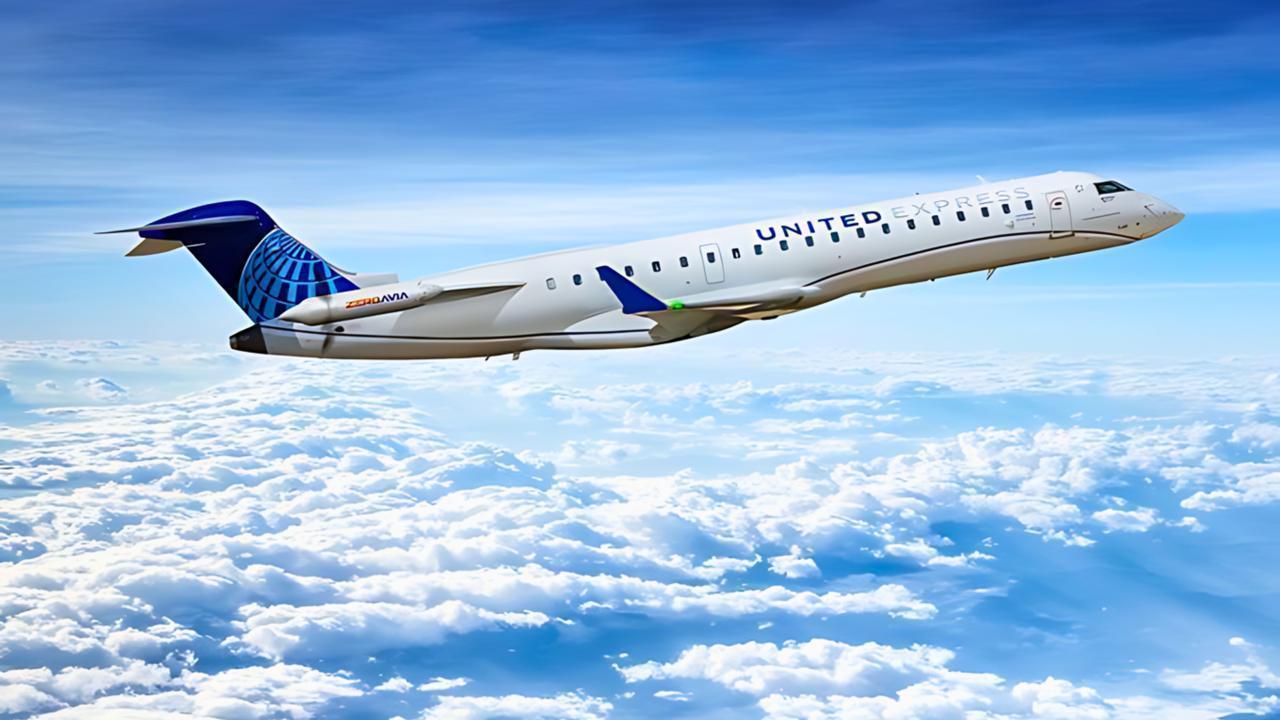
Photo : X / United Airlines
American Airlines Invests Big in Hydrogen Aviation
American Airlines has made a bold commitment to hydrogen propulsion by investing in ZeroAvia, a U.S.-UK-based startup pioneering zero-emission aviation technologies. The airline has also signed a conditional purchase agreement for up to 100 hydrogen-electric engines, eyeing retrofitting options for its regional fleet by the end of this decade.
The announcement signals more than just technological interest—it represents a strategic shift from conventional aviation fuel to next-generation hydrogen systems that offer the potential for truly emission-free flight. As airlines face increasing pressure to decarbonize, this move by one of the world’s largest carriers carries industry-shaking implications.
Why Hydrogen, and Why Now?
While much of the industry’s focus has recently been on sustainable aviation fuels (SAF) and electric propulsion, hydrogen is rapidly gaining ground as a viable alternative. Unlike SAF, which still emits carbon—albeit at lower levels—hydrogen fuel cells produce only water as a byproduct, enabling true zero-emission flight.
Hydrogen’s appeal also lies in its energy density, which is far superior to current battery technology. This makes it particularly attractive for short-to-medium haul flights, a segment that comprises the vast majority of global aviation activity. Regional jets, turboprops, and smaller aircraft used for commuter routes stand to benefit first—and that’s where American Airlines appears to be focusing its attention.
As of now, American Airlines is planning to explore the installation of ZeroAvia’s ZA2000-RJ engine on its regional jets, which would significantly reduce the airline’s emissions footprint. This engine is being developed specifically for 50–80 seat aircraft, with a range of up to 1,000 nautical miles—ideal for regional and intrastate travel in the U.S.
Meet ZeroAvia: The Hydrogen Trailblazer
Founded in 2017, ZeroAvia has become a standout player in the race toward zero-emission flight. The company operates out of facilities in both California and the UK and has already completed successful test flights of smaller aircraft powered by its hydrogen-electric engine technology.
ZeroAvia’s powertrain works by combining compressed hydrogen fuel cells with electric motors, effectively replacing the need for jet fuel and traditional combustion engines. The startup's earlier demonstrator—a 19-seat Dornier 228—completed multiple flights in the UK, marking one of the industry’s most high-profile validations of hydrogen propulsion technology to date.
The company has already attracted investments from Amazon’s Climate Pledge Fund, Shell Ventures, and now American Airlines, placing it at the epicenter of the aviation decarbonization movement. The involvement of such major players is accelerating the maturation of hydrogen propulsion technology, pushing it from research labs into mainstream commercial consideration.
Why This Move Matters for the Industry
The timing of American Airlines’ investment is significant. Global regulators and climate accords are applying intense pressure on aviation to reduce its carbon emissions, which currently represent around 2.5% of global CO₂ output. As of 2024, both the European Union and the United States have introduced stronger emissions monitoring frameworks, with long-term targets for net-zero aviation by 2050.
American’s investment in ZeroAvia sends a strong message—not just about its own environmental commitments, but about where the next wave of propulsion innovation is heading. Airlines across the board are being forced to re-evaluate their long-term fleet strategies, and hydrogen technology is no longer a far-fetched option. It’s becoming a serious, scalable alternative.
This is particularly important as battery-electric aviation faces limitations, especially with regard to range and weight. While ideal for short-hop aircraft or urban air mobility (UAM) vehicles, battery technology remains too heavy and energy-constrained for longer flights.
Hydrogen sidesteps many of these limitations. When compressed or liquefied, it offers high energy density and fast refueling—two key factors needed for operational viability in airline service. Moreover, hydrogen combustion emits zero carbon, presenting a cleaner lifecycle than even bio-based SAF options.
Engine Orders: Not Just Talk
It’s one thing for a large airline to issue a press release about sustainability goals. It’s another thing entirely to place engine orders backed by capital investments, which is exactly what American Airlines has done.
The conditional agreement for up to 100 hydrogen-electric engines means American isn’t just observing the market—it’s shaping it. These orders suggest a level of confidence in ZeroAvia’s timeline, engineering maturity, and certification pathway. It also signals to suppliers, investors, and regulators that hydrogen isn’t just a speculative technology—it’s a viable part of the airline's future roadmap.
According to ZeroAvia’s own projections, certification for the ZA2000 engine is expected around 2027, and the company is already working closely with global regulators including the FAA and the UK’s Civil Aviation Authority. If these engines pass regulatory muster, American Airlines could be operating zero-emission regional flights within five years.
Logistics and Infrastructure: The Next Hurdle
Of course, the technology is only one part of the equation. A hydrogen-powered future also depends on building out the necessary infrastructure—from production and storage to airport-based refueling systems. Hydrogen must be produced cleanly, ideally through electrolysis powered by renewable energy, to ensure that the entire fuel lifecycle is genuinely sustainable.
To that end, ZeroAvia is already in discussions with airport operators to build on-site hydrogen production and distribution systems. Some hubs in California, the UK, and Germany have begun developing these capabilities, but widespread adoption will require massive coordination between governments, utilities, and private firms.
American Airlines’ move may also encourage broader public-private partnerships to establish the hydrogen ecosystem aviation needs. As one of the industry’s largest carriers, American can wield influence with policymakers and infrastructure players alike, nudging them toward investments that align with its propulsion strategy.
What Other Airlines Are Doing
American Airlines is not the only major carrier exploring hydrogen, but it is among the first to back it with tangible investment and engine orders. Fellow U.S. airline United has previously invested in ZeroAvia, while European carriers like Lufthansa and Air France-KLM have explored partnerships with Airbus and other clean-tech providers.
Airbus, in particular, has been vocal about its ambition to launch a hydrogen-powered commercial aircraft by 2035. The aircraft manufacturer has also initiated multiple demonstrator programs, including cryogenic hydrogen tanks and hybrid propulsion configurations.
Meanwhile, Boeing has taken a more cautious approach, focusing on SAF and electrification while cautiously observing hydrogen’s progress. The divergence in strategy among aerospace giants reveals a fundamental uncertainty: which technology will dominate the skies of tomorrow?
With its recent move, American Airlines appears to be hedging its bets in favor of hydrogen.
Economic and Environmental Impacts
Beyond environmental benefits, hydrogen-powered aircraft could eventually offer operational cost savings. Fuel accounts for up to 30% of airline operating costs. If hydrogen production can be scaled efficiently—and subsidies or carbon pricing schemes favor green fuel sources—airlines may find hydrogen not only cleaner but also more economical.
Environmentally, the benefits are clear. Hydrogen-electric propulsion produces no carbon emissions, no particulate matter, and significantly less noise, which could dramatically reduce the environmental footprint of regional aviation. This aligns well with both consumer expectations and future regulatory frameworks expected to penalize high-carbon operations.
What Comes Next
The next few years will be critical in proving whether hydrogen aviation can transition from potential to practice. Milestones to watch include:
If American Airlines’ bet on hydrogen pays off, it won’t just improve its ESG score—it may redefine the very nature of regional air travel for decades to come.
The Stakes Are Sky High
In the face of climate urgency, the aviation industry has a high-altitude challenge ahead: decarbonize without compromising reliability, performance, or safety. American Airlines’ investment in ZeroAvia’s hydrogen technology is a declaration of intent, signaling a new era in how the world’s largest carriers are preparing to meet that challenge.
This isn’t about greenwashing. It’s about rewriting the blueprint of aviation itself—fuel by fuel, engine by engine, flight by flight.
And while the runway may be long, the takeoff into hydrogen-powered skies has officially begun.
American Airlines, Hydrogen Aviation



Advances in Aerospace Technology and Commercial Aviation Recovery
Insights into breakthrough aerospace technologies and commercial aviation’s recovery amid 2025 chall

Defense Modernization and Strategic Spending Trends
Explore key trends in global defense modernization and strategic military spending shaping 2025 secu

Tens of Thousands Protest in Serbia on Anniversary of Deadly Roof Collapse
Tens of thousands in Novi Sad mark a year since a deadly station roof collapse that killed 16, prote

Canada PM Carney Apologizes to Trump Over Controversial Reagan Anti-Tariff Ad
Canadian PM Mark Carney apologized to President Trump over an Ontario anti-tariff ad quoting Reagan,

The ad that stirred a hornets nest, and made Canadian PM Carney say sorry to Trump
Canadian PM Mark Carney apologizes to US President Trump after a tariff-related ad causes diplomatic

Bengaluru-Mumbai Superfast Train Approved After 30-Year Wait
Railways approves new superfast train connecting Bengaluru and Mumbai, ending a 30-year demand, easi




