Post by : Saif
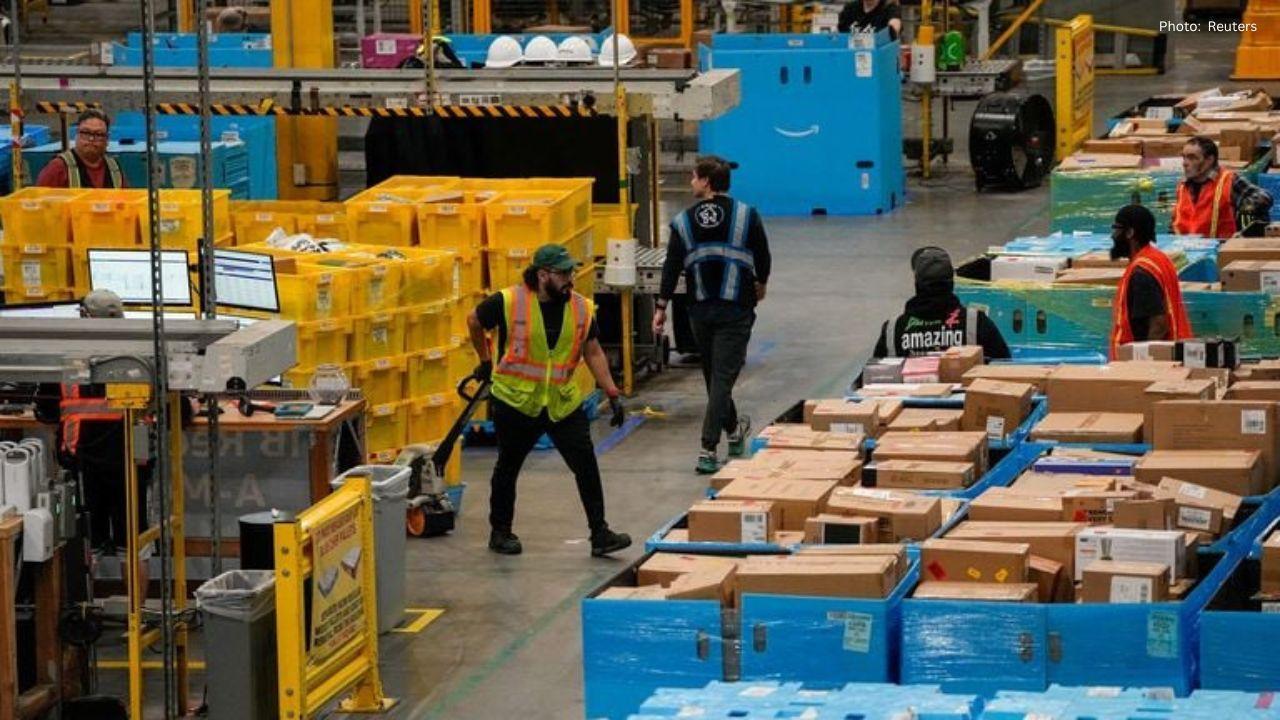
Americans started the holiday season with a major burst of online shopping, proving once again that the year-end sales period remains strong even when people feel unsure about the economy. Over the three-day period after Thanksgiving, U.S. shoppers spent $23.6 billion online, beating expert predictions and lifting hopes for retailers.
Adobe Analytics reported that online spending on Cyber Monday reached $9.1 billion by early evening and was expected to end between $13.9 billion and $14.2 billion. If this estimate holds, the five-day shopping period from Thanksgiving to Cyber Monday would reach nearly $43.7 billion.
Many economists expected weak numbers because of high inflation, mixed consumer confidence, and the effects of recent tariffs. But shoppers—especially wealthy ones—still opened their wallets. Many others, even those with tight budgets, managed to save money for gifts and took advantage of big discounts.
Retail analysts noted that Americans spent more online this year than last year’s Cyber Monday, with an expected increase of up to 6.3%. Mark Mathews, chief economist at the National Retail Federation, said that people were focused on the deals, not their economic fears. He pointed out that even though the U.S. government had recently gone through a shutdown, wages remain strong and many families are still spending.
Black Friday online shopping also broke records, reaching $11.8 billion. Yet not all signs were positive. Surveys showed that people bought fewer items on impulse and were more careful about reading discount signs. Stores like Walmart and Target used clearer and more detailed messaging to avoid disappointing customers. This change reflects growing worries among shoppers about misleading offers.
Some retailers offered bigger discounts than usual. Amazon cut prices on a wide range of products—from tech gadgets to everyday items—making the holiday deals even more appealing. Experts said this showed that even wealthier shoppers are becoming cautious, looking for the best prices instead of buying without thinking.
Another trend that stood out was the increase in Buy Now, Pay Later services such as Affirm and Klarna. Around 38% of shoppers used these plans during the weekend, with most being younger and lower-income consumers. Adobe reported that BNPL spending grew 9% on Black Friday and was expected to pass $1 billion on Cyber Monday.
Technology also played a major role this year. Many people used AI tools and chatbots to compare prices and find the best deals. Adobe said AI-driven traffic to online stores rose sharply compared to last year, mainly because new tools like Amazon’s Rufus and Walmart’s Sparky have made shopping faster and easier. CivicScience found that 40% of holiday shoppers used some form of AI assistance over the weekend, especially younger buyers.
This year’s holiday shopping shows a mixed but hopeful picture. Americans are still feeling pressure from high prices, but they remain eager to buy gifts and take advantage of discounts. Retailers may face challenges, but the strong online turnout suggests that consumers are adapting, watching prices more carefully, and using digital tools to make smarter choices. As the season continues, both shoppers and sellers will be watching closely to see if the momentum lasts.
#trending #latest #HolidayShopping #CyberMonday #BlackFriday #USRetail #OnlineShopping #Economy #ConsumerTrends #AIShopping #RetailNews #armustnews



Advances in Aerospace Technology and Commercial Aviation Recovery
Insights into breakthrough aerospace technologies and commercial aviation’s recovery amid 2025 chall

Defense Modernization and Strategic Spending Trends
Explore key trends in global defense modernization and strategic military spending shaping 2025 secu

Tens of Thousands Protest in Serbia on Anniversary of Deadly Roof Collapse
Tens of thousands in Novi Sad mark a year since a deadly station roof collapse that killed 16, prote

Canada PM Carney Apologizes to Trump Over Controversial Reagan Anti-Tariff Ad
Canadian PM Mark Carney apologized to President Trump over an Ontario anti-tariff ad quoting Reagan,

The ad that stirred a hornets nest, and made Canadian PM Carney say sorry to Trump
Canadian PM Mark Carney apologizes to US President Trump after a tariff-related ad causes diplomatic

Bengaluru-Mumbai Superfast Train Approved After 30-Year Wait
Railways approves new superfast train connecting Bengaluru and Mumbai, ending a 30-year demand, easi




