Post by : Saif
Boeing’s plan to buy back major parts of Spirit AeroSystems has reached an important turning point. The U.S. Federal Trade Commission (FTC) has said the deal can go ahead, but only if Boeing follows strict rules to protect fair competition. This move has sparked new discussions about how large companies should grow, how supply chains should function, and how government should ensure fairness in global aviation.
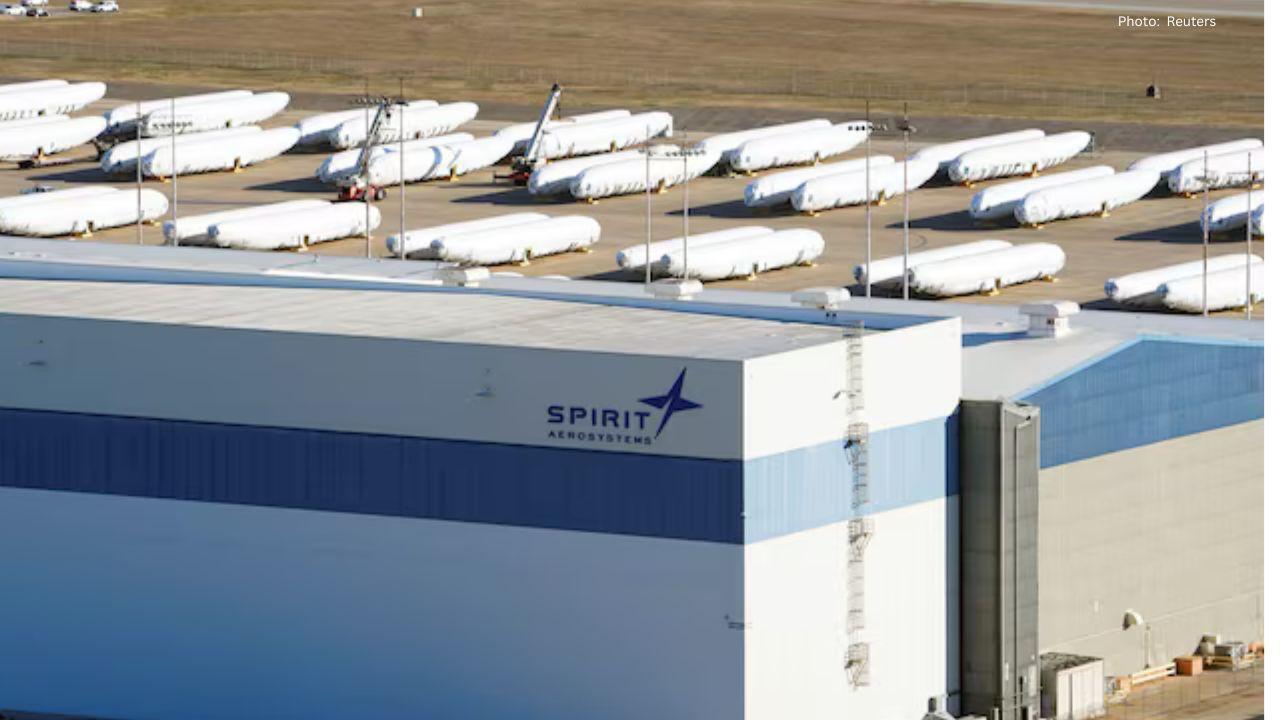
Boeing first owned Spirit AeroSystems until 2005, when the company was separated. For years, Spirit has built major aircraft parts like wings and fuselages for both Boeing and Airbus. But Spirit has faced financial problems, delays, and quality issues. These issues have also slowed down aircraft programs for both major plane makers. Boeing now wants to bring back the bulk of Spirit’s operations to stabilize production and reduce ongoing problems with the 737 program.
The transaction is valued at about $8.3 billion when Airbus’s share of the deal is included. Boeing will take over most Spirit factories, while Airbus will gain control of Spirit’s sites in North Carolina and Belfast, Northern Ireland. The Belfast plant, once part of the historic Short Brothers company, has been deeply troubled. It lost nearly $670 million in 2024 and warned earlier this year that it needed new funds to stay operational. Through this deal, Airbus will directly manage these facilities, hoping to steady their performance.
The FTC, however, has raised concerns that Boeing’s takeover might give it too much control over the aviation supply chain, especially parts that Airbus depends on. To prevent Boeing from gaining an unfair advantage, the FTC has ordered several divestitures. These include the sale of Spirit’s operations in Subang, Malaysia, which supply both Boeing and Airbus. A buyer for this site—Composites Technology Research Malaysia—has already been identified.
Another major rule from the FTC is that Spirit must continue providing parts to Boeing’s competitors in future U.S. military aircraft programs. Boeing recently won the contract for the country’s first sixth-generation fighter, the F-47, and is competing for another major Navy program. With so much at stake, regulators want to ensure that smaller competitors are not pushed out or left without access to critical parts.
To make sure everything is done fairly, the FTC will appoint two monitors. One will act on behalf of the agency, and another will represent the U.S. Department of Defense. Their job is to watch over the merger process and ensure Boeing follows all the rules.
Financial markets reacted quickly to the announcement. Boeing shares dropped about 3%, likely because investors were nervous about the conditions attached to the merger. Meanwhile, Spirit AeroSystems’ shares rose 3.5%, showing that investors believe this deal could help Spirit escape its financial troubles.
Even with the required sell-offs, Boeing says it expects the deal to close by the end of December. Spirit’s leadership agrees. Boeing believes bringing Spirit operations back under its control will help fix manufacturing issues that have shaken confidence in the 737 Max production line for years.
While Boeing appears confident, the larger message of this story is about balance. Regulators want to support business growth, but they also want to keep the industry fair. Airbus must be able to compete without depending too heavily on Boeing-controlled factories. Smaller defense companies must have a chance in future aircraft projects. Workers at troubled plants, especially in Belfast, need stability. And airlines around the world need reliable planes delivered on time.
This merger, with all its conditions, shows how complex the global aviation market has become. It also highlights how closely government must watch over industries that impact national security, international travel, and millions of jobs.
#trending #latest #Boeing #SpiritAeroSystems #AviationNews #FTC #Airbus #DefenseIndustry #AerospaceBusiness #EditorialNews



Advances in Aerospace Technology and Commercial Aviation Recovery
Insights into breakthrough aerospace technologies and commercial aviation’s recovery amid 2025 chall

Defense Modernization and Strategic Spending Trends
Explore key trends in global defense modernization and strategic military spending shaping 2025 secu

Tens of Thousands Protest in Serbia on Anniversary of Deadly Roof Collapse
Tens of thousands in Novi Sad mark a year since a deadly station roof collapse that killed 16, prote

Canada PM Carney Apologizes to Trump Over Controversial Reagan Anti-Tariff Ad
Canadian PM Mark Carney apologized to President Trump over an Ontario anti-tariff ad quoting Reagan,

The ad that stirred a hornets nest, and made Canadian PM Carney say sorry to Trump
Canadian PM Mark Carney apologizes to US President Trump after a tariff-related ad causes diplomatic

Bengaluru-Mumbai Superfast Train Approved After 30-Year Wait
Railways approves new superfast train connecting Bengaluru and Mumbai, ending a 30-year demand, easi




