Post by : Saif
Chile’s presidential election has entered a tense and important phase after the first-round vote on Sunday. The country will now face a runoff on December 14 between two candidates from opposite ends of the political spectrum: far-right Jose Antonio Kast and leftist Jeannette Jara. The results reflect deep divisions among Chileans and growing concerns about crime, migration, and the country’s future direction.
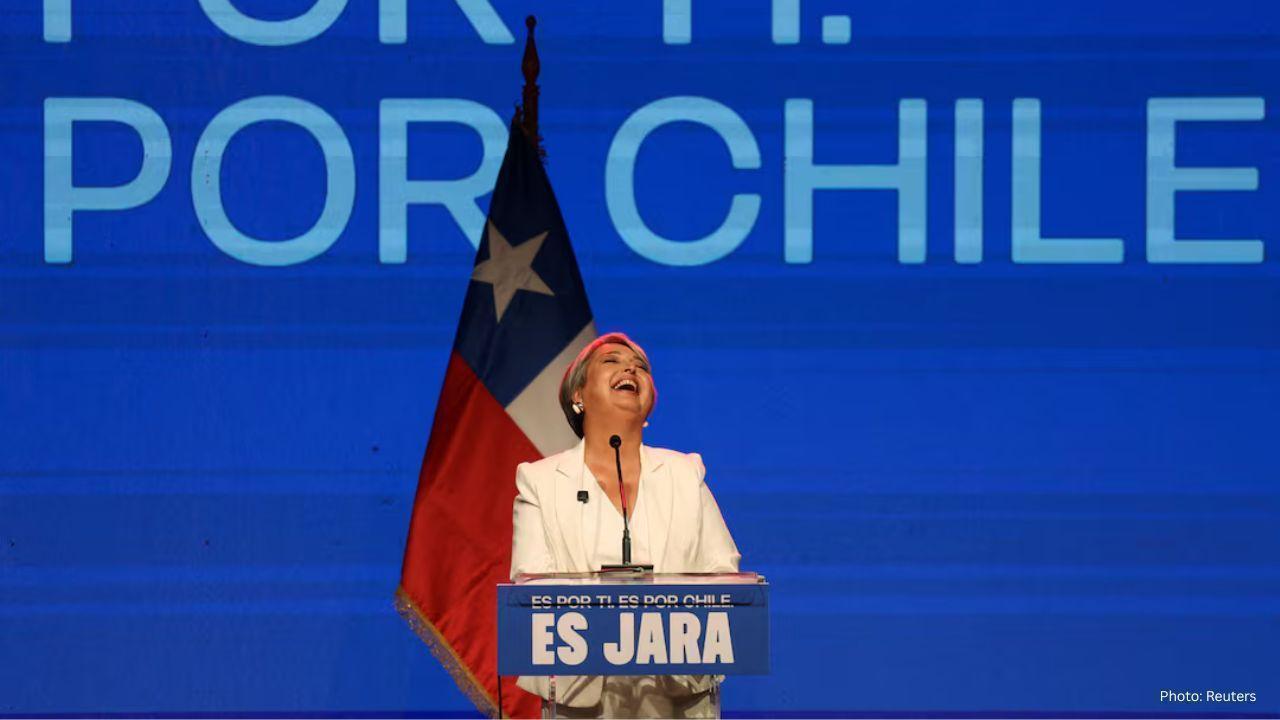
With most votes counted, Jara held a narrow lead of 27%, while Kast followed closely with 24%. Jara, from the governing coalition, is the first-ever Communist Party candidate to make it to the final round of a Chilean presidential race. Kast, known for his strict views on law and order, is expected by many analysts to have a strong chance of winning the runoff despite coming in second.
Both candidates represent sharply different ideas. Jara supports progressive reforms, while Kast promises tougher action on crime, stronger border control, and a more conservative approach to government. Kast told his supporters that real victory would come when the country defeats organized crime, stops illegal immigration, and improves Chile’s struggling healthcare system.
Many voters say their top concerns are rising crime rates and increasing migration. These issues shaped the election more than social reforms or economic changes. Chile, like other parts of Latin America, is facing a shift towards the right. Recent elections in several countries have shown strong support for conservative candidates, especially where security fears are high.
Kast’s potential victory would make his government the most right-leaning since the years of the Pinochet dictatorship. His win could also strengthen connections with the Trump administration in the United States, which has been building ties with right-led governments in Argentina, Ecuador, and El Salvador.
The first round also brought a surprise. Franco Parisi, from the centre-right Party of the People, came in third place, performing better than expected. Parisi had suggested placing landmines along Chile’s northern border to stop migrants. His support came mostly from working-class men in the country’s mining regions, many of whom feel left out by traditional politics. Experts say these voters will likely support Kast in the next round, which could give him a clear boost.
Political scientists in Chile say the election reflects frustration with old political parties and rising fears about safety and jobs. Many Chileans feel the country needs strong leadership to face these problems, even if it means choosing a candidate with tough and controversial ideas.
As Chile prepares for the December runoff, the country stands at a major crossroads. The final vote will decide whether Chile moves sharply to the right under Kast or continues with a left-leaning vision under Jara. What is clear is that the nation is deeply divided, and the decision voters make next month will shape Chile’s political future for years to come.
#trending #latest #ChileElection #JoseAntonioKast #JeannetteJara #ChilePolitics #LatinAmerica #armustnews



Advances in Aerospace Technology and Commercial Aviation Recovery
Insights into breakthrough aerospace technologies and commercial aviation’s recovery amid 2025 chall

Defense Modernization and Strategic Spending Trends
Explore key trends in global defense modernization and strategic military spending shaping 2025 secu

Tens of Thousands Protest in Serbia on Anniversary of Deadly Roof Collapse
Tens of thousands in Novi Sad mark a year since a deadly station roof collapse that killed 16, prote

Canada PM Carney Apologizes to Trump Over Controversial Reagan Anti-Tariff Ad
Canadian PM Mark Carney apologized to President Trump over an Ontario anti-tariff ad quoting Reagan,

The ad that stirred a hornets nest, and made Canadian PM Carney say sorry to Trump
Canadian PM Mark Carney apologizes to US President Trump after a tariff-related ad causes diplomatic

Bengaluru-Mumbai Superfast Train Approved After 30-Year Wait
Railways approves new superfast train connecting Bengaluru and Mumbai, ending a 30-year demand, easi




