Post by : Saif
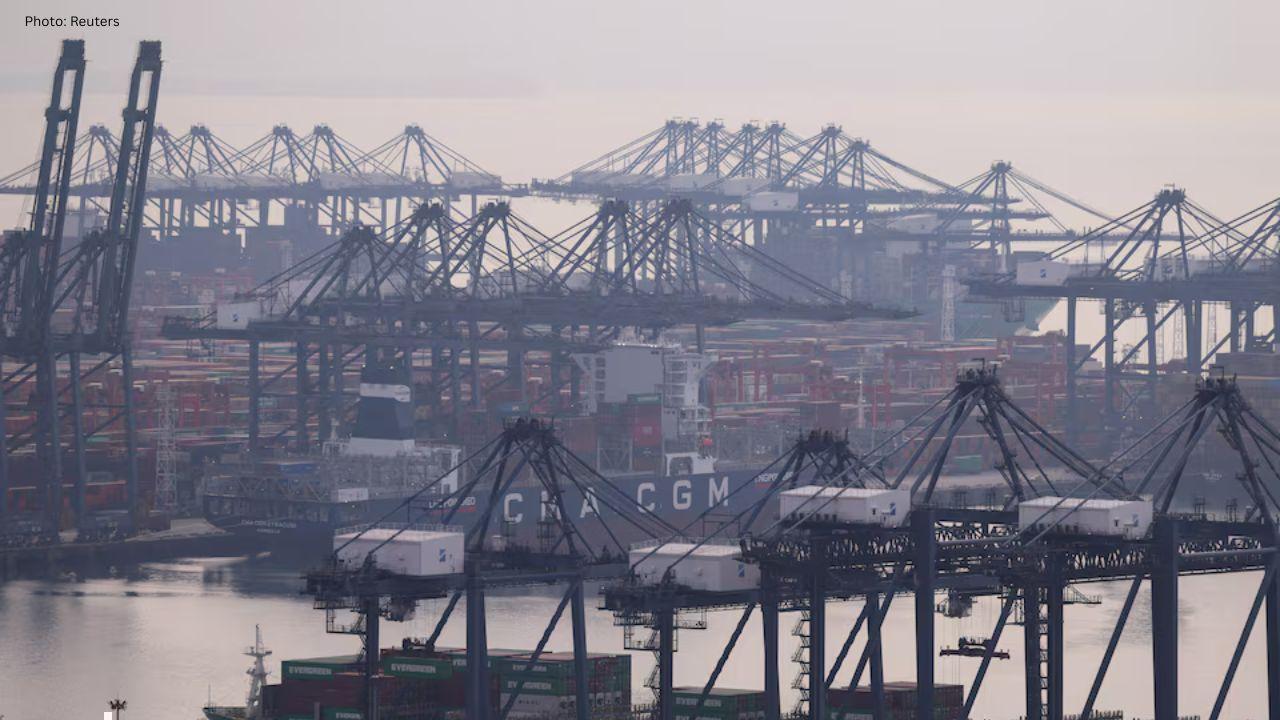
China has surprised global markets after its exports grew faster than expected in November. This growth did not come from the United States which used to be one of its biggest buyers. Instead it came from stronger trade with Europe Southeast Asia and other regions. This shift shows how China is changing its trade strategy in response to high United States tariffs.
Official data showed that China exports grew by nearly six percent compared to last year. This was much higher than what most experts had predicted. At the same time imports grew more slowly than expected. This difference between exports and imports pushed the trade surplus to one of its highest levels this year.
The main reason for this change is the heavy tariffs imposed by the United States. Chinese goods entering the United States now face very high taxes. These tariffs have made it difficult for Chinese companies to earn profits in the American market. As a result shipments to the United States dropped sharply in November.
To survive China has started building stronger trade ties with other regions. Exports to the European Union grew strongly. Shipments to Australia also jumped sharply. Trade with Southeast Asian countries increased as well. These growing markets helped China make up for the losses in the United States.
This strategy is called trade diversification. It means a country does not depend on one market for its business. Instead it sells goods to many different countries. In this way if one market becomes difficult other markets can keep the economy stable. China has been moving in this direction for more than a year.
Even though export numbers look strong there are warning signs. Factories in China still report low new orders. Many businesses are struggling to find steady demand. Surveys show that factory activity has been shrinking for several months. This means that the strong export growth may not last forever.
Domestic demand inside China also remains weak. The real estate sector has been in trouble for a long time. Construction has slowed down. Because of this imports of raw materials like copper have fallen. This shows that building and manufacturing inside the country are not growing as fast as hoped.
Chinese leaders have promised to focus more on boosting domestic demand. This means encouraging Chinese consumers to spend more and businesses to invest more inside the country. High level government meetings are expected to discuss new policies to support the economy.
The trade numbers also show how global supply chains are changing. Chinese companies are setting up factories and hubs in other countries to avoid high tariffs. They are finding new routes to sell their products. This is helping China maintain its role in global trade even during political tensions.
China export success is positive for its economy but it also shows deeper challenges. Depending only on exports is risky. If global demand slows down China will feel the impact. A healthy economy needs strong domestic demand strong innovation and balanced growth.
For now China has shown that it can adapt. It has found new markets and protected its export industry. But the road ahead will not be easy. The world economy is uncertain and trade tensions are still high.
The next few months will be important. China must move carefully. It must support its factories. It must encourage its people to spend. And it must continue building fair and stable trade relations with the world.
#trending #latest #ChinaExports #GlobalTrade #EconomicGrowth #TradeDiversification #AsiaEconomy #WorldMarkets



Advances in Aerospace Technology and Commercial Aviation Recovery
Insights into breakthrough aerospace technologies and commercial aviation’s recovery amid 2025 chall

Defense Modernization and Strategic Spending Trends
Explore key trends in global defense modernization and strategic military spending shaping 2025 secu

Tens of Thousands Protest in Serbia on Anniversary of Deadly Roof Collapse
Tens of thousands in Novi Sad mark a year since a deadly station roof collapse that killed 16, prote

Canada PM Carney Apologizes to Trump Over Controversial Reagan Anti-Tariff Ad
Canadian PM Mark Carney apologized to President Trump over an Ontario anti-tariff ad quoting Reagan,

The ad that stirred a hornets nest, and made Canadian PM Carney say sorry to Trump
Canadian PM Mark Carney apologizes to US President Trump after a tariff-related ad causes diplomatic

Bengaluru-Mumbai Superfast Train Approved After 30-Year Wait
Railways approves new superfast train connecting Bengaluru and Mumbai, ending a 30-year demand, easi




