Post by : Amit
Photo : X / Diário da CPTM
São Paulo Welcomes First Train for Line 6-Orange, Advancing Latin America’s Largest Metro Expansion
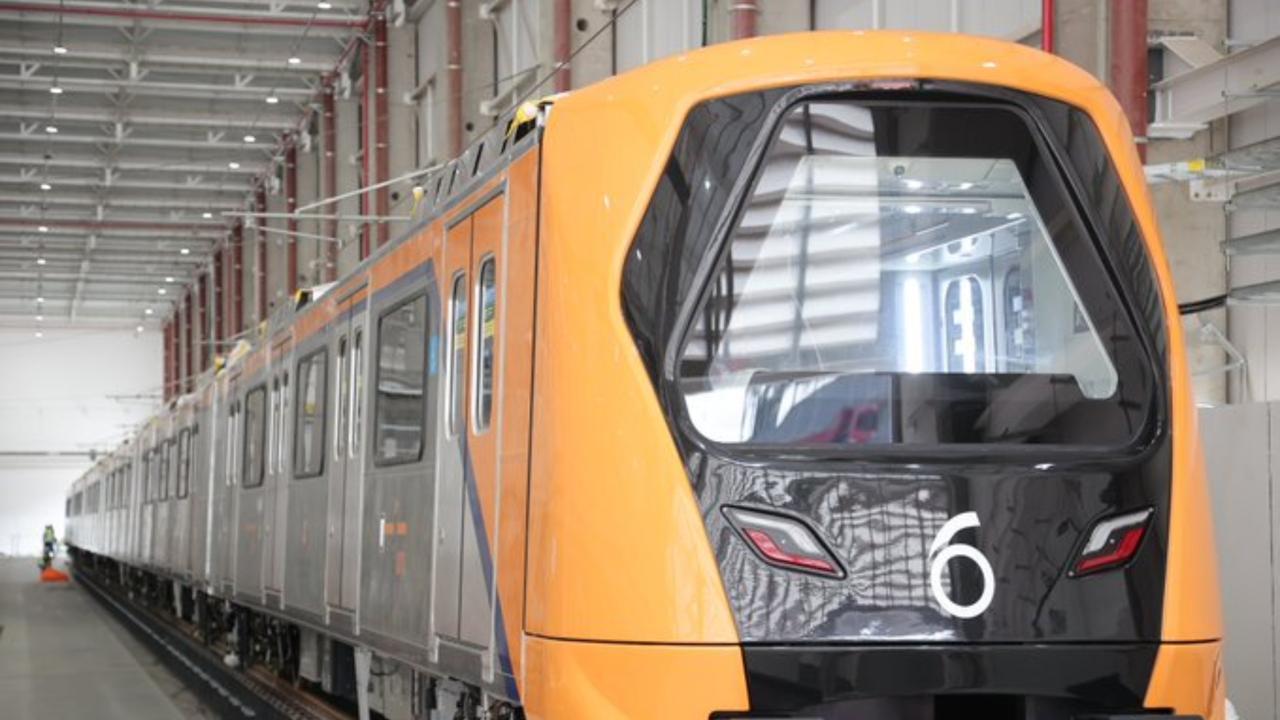
In a major milestone for urban mobility in Brazil, São Paulo has officially received the first train for its upcoming Metro Line 6-Orange, a critical infrastructure project aimed at transforming public transportation in the sprawling megacity. This delivery signals significant progress in what is set to become Latin America’s largest urban rail expansion, designed to alleviate congestion, reduce emissions, and provide faster, more efficient mobility for millions.
The first train, manufactured by Alstom, arrived ahead of schedule, underscoring the city’s commitment to modernizing its transit systems and meeting growing demand for sustainable urban mobility.
Line 6-Orange: A Game-Changer for São Paulo’s Transit Network
The new Line 6-Orange, also known as the Linha Laranja, is a vital addition to São Paulo’s metro system, one of the most heavily used urban transit networks in the world. Stretching over 15.3 kilometers and featuring 15 new stations, the line will connect the northern Brasilândia district to São Joaquim station in the city center, vastly improving accessibility for commuters across the metropolis.
Once completed, Line 6 is expected to serve more than 633,000 passengers daily, offering an eco-friendly alternative to São Paulo’s congested roadways and contributing to the city’s broader environmental goals.
Cutting-Edge Rolling Stock by Alstom
The first trainset delivered for Line 6-Orange was produced by Alstom at its factory in Taubaté, São Paulo State, as part of a contract to supply 22 modern metro trains. These next-generation trains are designed with:
The arrival of this first train marks the start of a phased delivery schedule that will see all units operational ahead of the line’s expected launch in 2026.
Public-Private Partnership Driving Infrastructure Development
Line 6-Orange is being developed through a Public-Private Partnership (PPP) between the State of São Paulo and the private concessionaire Linha Uni, with Acciona leading the construction. This collaboration represents one of the largest transportation infrastructure investments in Latin America, with funding sourced from both government and private stakeholders.
The project not only includes train delivery but also involves:
Enhancing Sustainable Mobility in São Paulo
As traffic congestion and air pollution continue to pose significant challenges in São Paulo, the expansion of the metro network through projects like Line 6-Orange is crucial to reducing car dependency and lowering greenhouse gas emissions.
With the new trains offering energy-efficient solutions and high passenger capacity, the project aligns with global efforts to promote mass transit as a key strategy in climate change mitigation.
The delivery of the first train also demonstrates Brazil’s growing capacity for local rail manufacturing, supporting economic development and technology transfer within the country.
Positive Economic and Social Impact
The Line 6 project is expected to deliver far-reaching benefits beyond transportation, including:
The improved mobility is likely to spur new investments, housing developments, and business opportunities, further enhancing São Paulo’s urban landscape.
Part of São Paulo’s Broader Transit Vision
Line 6-Orange is a cornerstone of São Paulo’s long-term transit master plan, which envisions a fully integrated metro, bus, and commuter rail network that offers efficient and sustainable options to meet the city’s rapid urban growth.
The city continues to invest in smart transit solutions, including real-time information systems, ticketing innovations, and multimodal connectivity, aiming to position itself as a model for urban mobility in the Global South.
A Milestone for São Paulo’s Green Mobility Future
The delivery of the first train for São Paulo’s Line 6-Orange marks a historic step in reshaping the city’s urban mobility landscape. With cutting-edge technology, environmental sustainability, and passenger comfort at its core, this project will play a key role in making São Paulo’s transportation system faster, cleaner, and more accessible for its growing population.
As the city continues to push forward with infrastructure innovation, Line 6-Orange stands as a symbol of São Paulo’s commitment to greener, smarter public transit that meets the demands of the 21st century.
Alstom, São Paulo, Latin America’s Largest Metro



Advances in Aerospace Technology and Commercial Aviation Recovery
Insights into breakthrough aerospace technologies and commercial aviation’s recovery amid 2025 chall

Defense Modernization and Strategic Spending Trends
Explore key trends in global defense modernization and strategic military spending shaping 2025 secu

Tens of Thousands Protest in Serbia on Anniversary of Deadly Roof Collapse
Tens of thousands in Novi Sad mark a year since a deadly station roof collapse that killed 16, prote

Canada PM Carney Apologizes to Trump Over Controversial Reagan Anti-Tariff Ad
Canadian PM Mark Carney apologized to President Trump over an Ontario anti-tariff ad quoting Reagan,

The ad that stirred a hornets nest, and made Canadian PM Carney say sorry to Trump
Canadian PM Mark Carney apologizes to US President Trump after a tariff-related ad causes diplomatic

Bengaluru-Mumbai Superfast Train Approved After 30-Year Wait
Railways approves new superfast train connecting Bengaluru and Mumbai, ending a 30-year demand, easi




