Post by : Saif
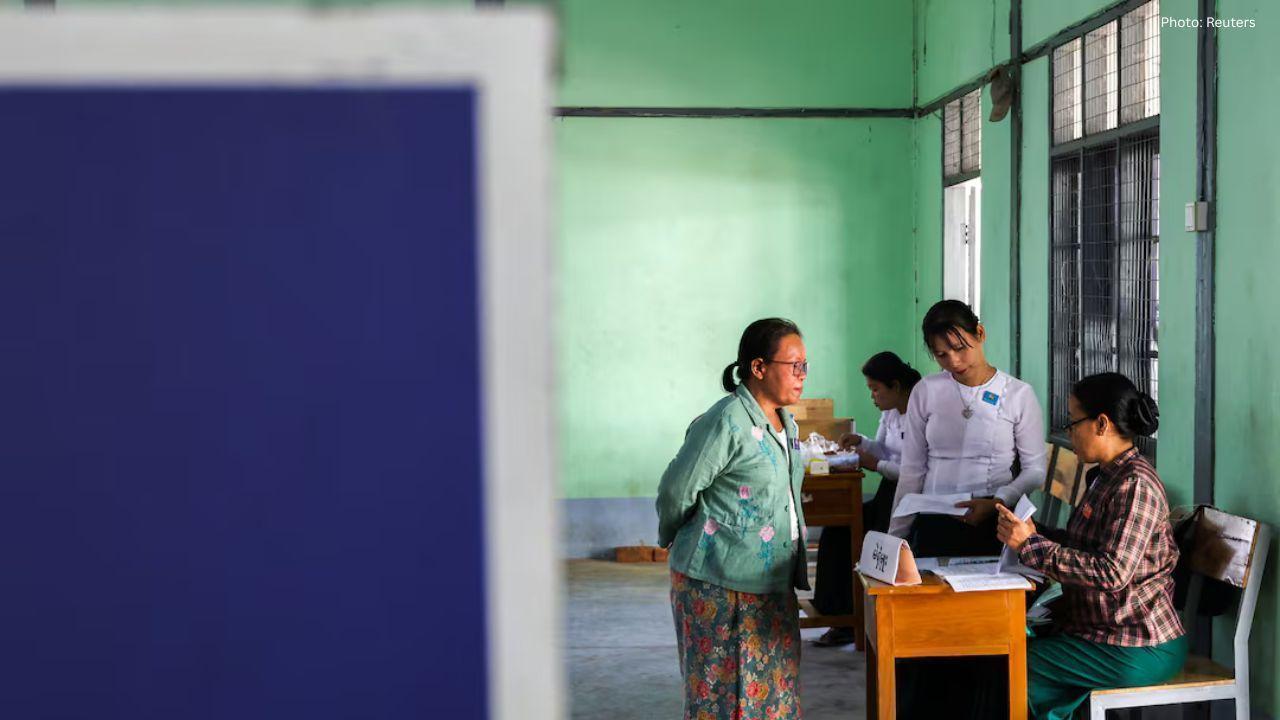
Myanmar held national elections on Sunday while the country struggles with a civil war and one of Asia’s most severe humanitarian crises. The ongoing conflict, which began after a 2021 military coup ousted the elected government of Nobel Peace Prize winner Aung San Suu Kyi, has left the nation in turmoil.
The humanitarian situation in Myanmar is dire. The civil war, combined with repeated natural disasters, including a major earthquake earlier this year, has forced millions from their homes. According to United Nations estimates, more than 3.6 million people are displaced, and over 6,800 civilians have been killed since the coup. Rising violence and instability have also pushed about half the country’s population below the poverty line.
Food insecurity is a major concern. Over 16 million people across Myanmar are considered acutely food insecure, meaning their access to food is dangerously limited. The World Food Programme (WFP) warns that more than 12 million people will face severe hunger next year, with around 1 million requiring urgent lifesaving support. Children are particularly vulnerable, with over 540,000 expected to suffer from acute malnutrition this year—a 26% increase from last year—and one in three children under five already showing stunted growth.
Humanitarian aid is severely underfunded. Only 12% of the required funds have been received, leaving millions without essential food, medical care, and other support. Cuts to U.S. aid have worsened the crisis, according to the U.N. special rapporteur on human rights in Myanmar.
Myanmar’s economy has also suffered. Once seen as one of Southeast Asia’s fastest-growing nations, the country now faces high inflation, a plunging currency, and frequent blackouts. Despite these challenges, the World Bank predicts a slight economic rebound, with GDP growth estimated at 3% next fiscal year. Reconstruction after the earthquake and targeted assistance in the hardest-hit areas are expected to support this modest recovery. Meanwhile, households and businesses are increasingly adopting solar energy to cope with unreliable electricity.
The military government has strengthened ties with Russia, signing an investment agreement in June that could allow Russian energy companies to operate in the country. These partnerships may bring limited economic relief, but the overall situation remains fragile.
As Myanmar goes to the polls, voters face the dual challenges of ongoing violence and deepening humanitarian need. The election comes at a critical moment for a country seeking stability, yet struggling with conflict, hunger, and economic uncertainty.
#trending #latest #MyanmarElection #CivilWar #HumanitarianCrisis #FoodInsecurity #Displacement #AungSanSuuKyi #GlobalNews #AsiaNews #WorldHumanitarianCrisis



Advances in Aerospace Technology and Commercial Aviation Recovery
Insights into breakthrough aerospace technologies and commercial aviation’s recovery amid 2025 chall

Defense Modernization and Strategic Spending Trends
Explore key trends in global defense modernization and strategic military spending shaping 2025 secu

Tens of Thousands Protest in Serbia on Anniversary of Deadly Roof Collapse
Tens of thousands in Novi Sad mark a year since a deadly station roof collapse that killed 16, prote

Canada PM Carney Apologizes to Trump Over Controversial Reagan Anti-Tariff Ad
Canadian PM Mark Carney apologized to President Trump over an Ontario anti-tariff ad quoting Reagan,

The ad that stirred a hornets nest, and made Canadian PM Carney say sorry to Trump
Canadian PM Mark Carney apologizes to US President Trump after a tariff-related ad causes diplomatic

Bengaluru-Mumbai Superfast Train Approved After 30-Year Wait
Railways approves new superfast train connecting Bengaluru and Mumbai, ending a 30-year demand, easi




