Post by : Saif
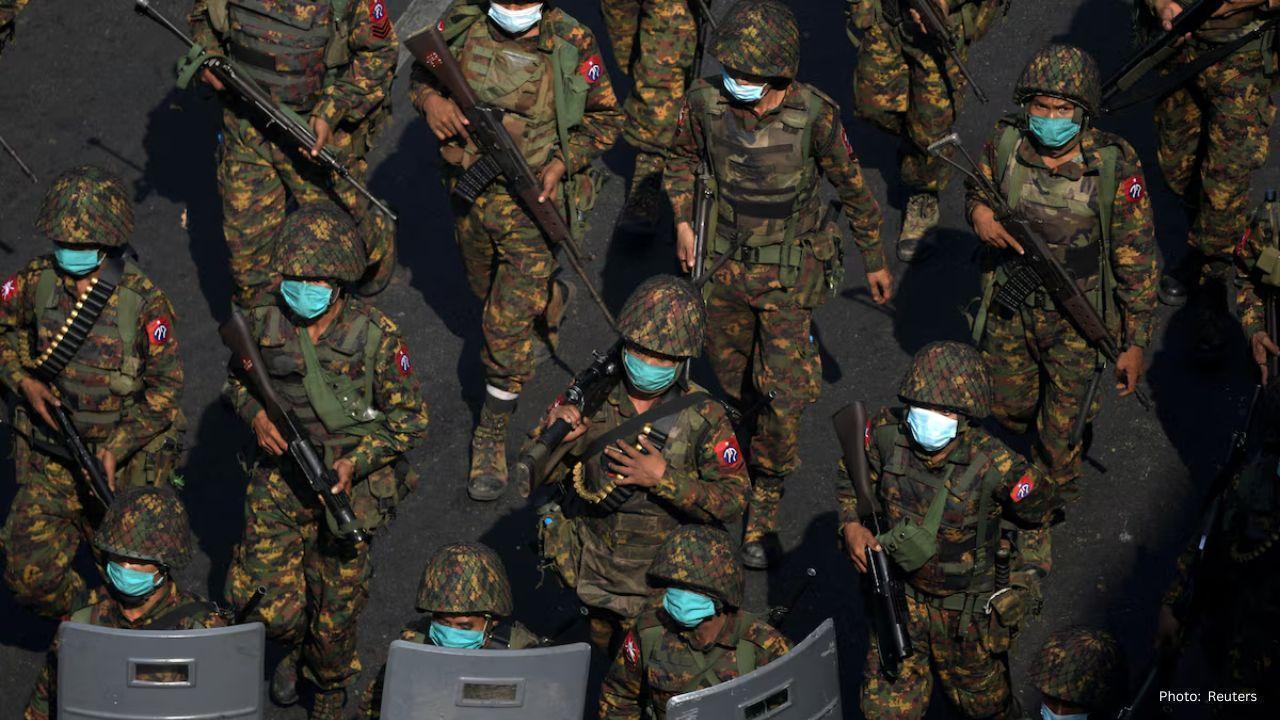
Myanmar’s military rulers have changed their way of fighting as the civil war in the country grows more intense. After facing major losses and long stalemates against rebel forces, the junta is now using tougher and more aggressive tactics. These include forced conscription of young people, expanded use of drones, and large infantry assaults where soldiers are sent forward in waves, even at high risk.
Rebel fighters who took part in recent battles in central Myanmar described extremely heavy fighting. For several days, the military attacked their positions using artillery fire and drone strikes. These air and ground attacks were followed by repeated waves of infantry soldiers. According to fighters on the ground, the intensity of the fighting was unlike anything they had seen before in earlier years of the conflict. After days of pressure and mounting losses, some rebel units were forced to retreat.
Since the military coup in 2021, Myanmar has been divided by war. Armed resistance groups control many border areas and large parts of the countryside. In late 2023, a major rebel offensive caused serious damage to the military and led to the loss of many bases. At that time, the junta appeared weak and disorganised. However, recent events suggest that the military has adjusted its strategy and regained some confidence.
One of the biggest changes is the introduction of mandatory military service. In early 2024, the junta ordered young people to join the armed forces. Since then, tens of thousands of new recruits have been sent to training camps and later deployed to the front lines. Analysts and defectors say many of these recruits are poorly trained and unwilling to fight, but their numbers allow the military to keep launching attacks despite heavy losses.
The army has also reorganised its leadership. After earlier defeats, senior commanders replaced inexperienced officers with those who have more battlefield experience. Units are now given more rest time between deployments, which has improved their ability to fight for longer periods. These changes have helped the military conduct more organised and sustained operations.
Another major factor is the growing use of drones. The military now operates a large fleet of unmanned aerial vehicles used for surveillance, targeting, and direct attacks. These drones help the army locate rebel positions and guide airstrikes more accurately. As a result, attacks from the air have become more precise and more dangerous. Resistance groups also use drones, but they lack advanced technology such as jamming systems or air defences, making them vulnerable.
The military has also allowed lower-level commanders to request air support more quickly, without waiting for approval from top officials. This has made attacks faster and more coordinated, often softening rebel defences before ground troops move in.
China’s role has also become more important. Beijing has long-standing economic and political interests in Myanmar and prefers stability along its border. While China has connections with some ethnic armed groups, it continues to see the military as a key power holder. Chinese pressure has pushed some resistance groups into ceasefires and restricted the flow of weapons and money to others. In several areas, rebel operations have slowed or stopped because of shortages of supplies.
These factors together have helped the junta make limited gains in certain regions. However, experts say the military does not control the country as a whole. The front lines stretch across hundreds of kilometres, and many rebel groups remain strong and active. No single side dominates the conflict, and fighting continues on multiple fronts.
The military’s renewed push comes as it prepares for a general election scheduled for late December. The United Nations and international rights groups have warned that the vote will not be free or fair. Key opposition leaders remain in prison, and many political groups have said they will boycott the election. For many citizens, the election offers little hope while violence continues.
Myanmar’s conflict is far from over. The military’s new tactics may help it survive for now, but they have also increased the human cost of the war. Forced conscription, heavy drone attacks, and foreign pressure have made life even harder for civilians caught between both sides. Without a political solution, the country is likely to face continued fighting and instability for years to come.
#trending #latest #Myanmar #CivilWar #MilitaryCoup #DroneWarfare #ForcedConscription #SoutheastAsia #HumanRights



Advances in Aerospace Technology and Commercial Aviation Recovery
Insights into breakthrough aerospace technologies and commercial aviation’s recovery amid 2025 chall

Defense Modernization and Strategic Spending Trends
Explore key trends in global defense modernization and strategic military spending shaping 2025 secu

Tens of Thousands Protest in Serbia on Anniversary of Deadly Roof Collapse
Tens of thousands in Novi Sad mark a year since a deadly station roof collapse that killed 16, prote

Canada PM Carney Apologizes to Trump Over Controversial Reagan Anti-Tariff Ad
Canadian PM Mark Carney apologized to President Trump over an Ontario anti-tariff ad quoting Reagan,

The ad that stirred a hornets nest, and made Canadian PM Carney say sorry to Trump
Canadian PM Mark Carney apologizes to US President Trump after a tariff-related ad causes diplomatic

Bengaluru-Mumbai Superfast Train Approved After 30-Year Wait
Railways approves new superfast train connecting Bengaluru and Mumbai, ending a 30-year demand, easi




