Post by : Meena Rani
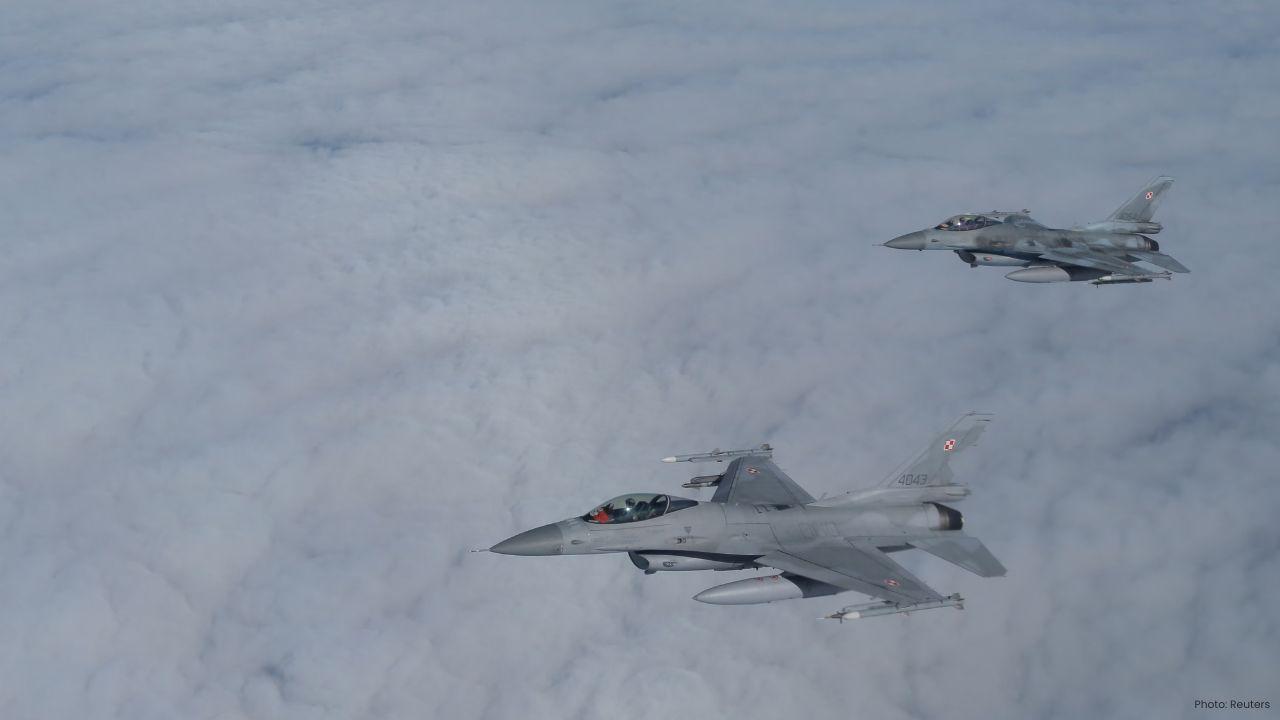
Russia continues to deny reports that its military aircraft have violated NATO airspace, calling them fabricated or the result of navigational errors caused by jamming. However, NATO members on the eastern flank are increasingly alarmed. Poland has already shot down Russian drones it said were deliberately sent into its territory. Romania has scrambled F-16s to shadow intruders until they left, while Estonia and the Baltic states have voiced concern over repeated violations.
The rising number of incidents has pushed NATO countries to consider more assertive responses. Some governments argue that if Russia’s military planes are not challenged decisively, it will embolden Moscow to escalate further. Others warn that shooting down Russian jets risks sparking a confrontation with a nuclear power.
Trump Calls Russia a “Paper Tiger”
On 23 September, former U.S. President Donald Trump publicly backed tougher action, saying NATO should shoot down Russian aircraft violating allied airspace. In a Truth Social post, Trump called Russia a “paper tiger” and argued that a real military power would have subdued Ukraine in days, not years. Asked directly whether NATO should down intruding jets, he replied: “Yes, I do.”
European Commission President Ursula von der Leyen also said the option of shooting down Russian jets was “on the table,” stressing that every square centimetre of NATO territory must be defended.
Polish Foreign Affairs Minister Radosław Sikorski reinforced this hard line at the UN Security Council. With visible sarcasm, he warned Russia not to claim its incursions were a “mistake,” and later endorsed Trump’s statement with a blunt “Roger that.”
A Divided NATO Response
Despite strong voices calling for firm action, NATO remains divided. Countries closer to Russia’s borders, such as Poland, Lithuania, Latvia, and Estonia, favour a tough stance, viewing incursions as deliberate pressure tactics.
Poland – Already shooting down drones, urging NATO to adopt firmer measures.
Baltic States – Push for deterrence and view violations as calculated tests.
Romania – Shadows intruding aircraft but avoids direct engagement.
Sweden & Finland – New NATO members prepared to defend sovereignty, relying on intercepts so far.
Germany, France, UK – Advocate restraint, warning that one miscalculation could trigger escalation.
United States – Trump backs shootdowns, but Pentagon policy stresses de-escalation unless directly threatened.
This divide reflects geography. Frontline states feel the immediate threat, while Western European powers prioritise avoiding a spiral into direct conflict with Russia.
Legal Grounds for Shooting Down Aircraft
Under international law, states have complete sovereignty over their airspace. The Chicago Convention explicitly forbids foreign state aircraft from entering without permission. Article 51 of the UN Charter provides nations with the right to self-defence.
The legal tests are necessity and proportionality:
If an aircraft is armed, ignores repeated warnings, or threatens civilians, the use of force can be justified.
If an aircraft strays briefly without hostile intent, best practice is interception and escort.
NATO’s rules of engagement reflect this principle: shootdowns are permitted, but only as a last resort after warnings, visual intercepts, and attempts at communication.
Precedents in Airspace Shootdowns
History offers precedents for NATO states engaging intruding aircraft.
Turkey 2015 – A Turkish F-16 shot down a Russian Su-24 that Ankara said violated its airspace near Syria for 17 seconds. The incident caused diplomatic friction but no military escalation. Russia avoided repeating such incursions afterward.
Greece 1995 – A Greek Mirage 2000 shot down a Turkish F-16 over the Aegean Sea after an airspace violation. This remains the only confirmed instance of an F-16 being destroyed in aerial combat — and it occurred between two NATO members.
These cases highlight both the risks and the deterrent effect of decisive action.
Latest Escalation Near Alaska
As of the latest reports, the U.S. Air Force intercepted two Russian Tu-95 strategic bombers and two Su-35 fighters approaching Alaska. Though the aircraft remained in international airspace, the incident underscores Russia’s continued testing of NATO defences.
Pressure Mounts on NATO Unity
The debate over whether to shoot down Russian jets violating NATO airspace is intensifying. Eastern members argue that deterrence requires decisive military action, while Western powers urge caution to avoid escalation.
The outcome of this debate may shape NATO’s credibility. If intrusions continue without response, critics warn Russia will see weakness. But if NATO acts too aggressively, the risk of miscalculation looms. For now, the alliance balances between deterrence and de-escalation — a precarious stance as the war in Ukraine stretches past three and a half years.
NATO airspace violations, Russian fighter jets, Poland shoots down drones



Advances in Aerospace Technology and Commercial Aviation Recovery
Insights into breakthrough aerospace technologies and commercial aviation’s recovery amid 2025 chall

Defense Modernization and Strategic Spending Trends
Explore key trends in global defense modernization and strategic military spending shaping 2025 secu

Tens of Thousands Protest in Serbia on Anniversary of Deadly Roof Collapse
Tens of thousands in Novi Sad mark a year since a deadly station roof collapse that killed 16, prote

Canada PM Carney Apologizes to Trump Over Controversial Reagan Anti-Tariff Ad
Canadian PM Mark Carney apologized to President Trump over an Ontario anti-tariff ad quoting Reagan,

The ad that stirred a hornets nest, and made Canadian PM Carney say sorry to Trump
Canadian PM Mark Carney apologizes to US President Trump after a tariff-related ad causes diplomatic

Bengaluru-Mumbai Superfast Train Approved After 30-Year Wait
Railways approves new superfast train connecting Bengaluru and Mumbai, ending a 30-year demand, easi




