Post by : Amit
Photo : X / China Focus
Poland's Offshore Energy Gamble Pays Off: Historic Oil Reservoir Discovered
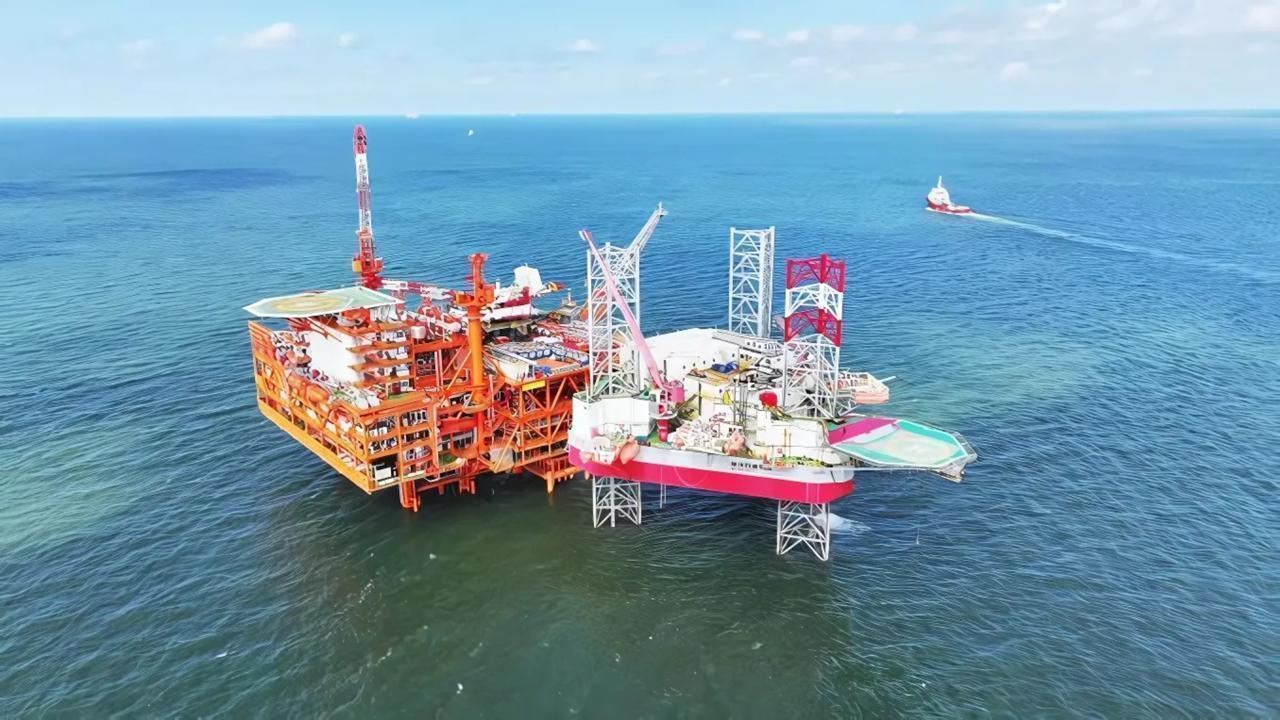
In a surprising development that could reshape Poland's energy outlook, an independent drilling company has uncovered what is believed to be the largest offshore oil reservoir ever discovered in the country's territory. This groundbreaking find, made in the Baltic Sea, positions Poland as a potential energy heavyweight in the region, potentially reducing its reliance on imported fossil fuels and boosting national energy security.
A Discovery Decades in the Making
The discovery was made by the independent Polish oil and gas firm Lotos Petrobaltic, which has been steadily increasing its offshore exploration activities over the past few years. The new oil field, located about 100 kilometers north of Gdansk in the Polish sector of the Baltic Sea, is estimated to hold as much as 1.2 billion barrels of recoverable oil. If confirmed through additional appraisal drilling, it would be the largest known offshore hydrocarbon reserve in Poland's history.
The find was made in the B3 field extension zone, an area that had shown promise in previous geological surveys but had never been fully explored. Lotos Petrobaltic drilled a wildcat well in early 2025 after conducting extensive 3D seismic analysis. The well reached a total depth of 2,700 meters and encountered a thick oil-bearing sandstone formation with excellent porosity and permeability characteristics.
Strategic Timing Amid Global Energy Volatility
The timing of this discovery is crucial. Europe, still grappling with the energy consequences of the Russia-Ukraine war and the long-term impacts of its green transition, is seeking to diversify energy sources and strengthen energy independence. For Poland, which has historically depended heavily on Russian energy imports, this find represents a major geopolitical and economic breakthrough.
The Polish government, which has been aggressively promoting energy diversification and self-sufficiency since 2022, hailed the discovery as a national milestone. In a press conference, Prime Minister Mateusz Morawiecki stated, "This is not just an energy discovery—it is a strategic victory for Poland’s future. We are turning a new page in our energy history."
National and Regional Economic Implications
Beyond national energy security, the discovery is expected to deliver significant economic benefits. Experts anticipate a boom in job creation, both directly in the offshore sector and indirectly in related industries such as steel fabrication, engineering, maritime logistics, and environmental services. Polish shipyards, long in need of reinvigoration, could see a wave of new activity as offshore infrastructure is commissioned.
Additionally, the Polish government is expected to receive substantial revenues from royalties and taxes. Analysts at Warsaw-based think tank Energy Forum estimate that the state could receive more than $30 billion over the lifecycle of the reservoir if oil prices remain above $80 per barrel. These funds could be reinvested into renewable energy, infrastructure, and social welfare.
Environmental Oversight and Climate Commitments
Despite the excitement, environmental advocates have urged caution. Poland is a signatory to the European Union’s climate targets, which include a legally binding commitment to achieve net-zero greenhouse gas emissions by 2050. The concern is that a major new oil development could derail Poland’s climate ambitions or slow its transition to renewables.
Lotos Petrobaltic has responded by stating that all drilling activities are being conducted under strict EU environmental regulations and with best practices for offshore energy development. In an interview, company spokesperson Anna Kowalczyk said, "We are fully committed to a responsible approach. Our development plans will include carbon offset strategies and integration with Poland’s wider clean energy roadmap."
Still, green groups argue that the timing of this oil project—amid escalating global temperatures and extreme climate events—undermines broader European decarbonization efforts. A coalition of NGOs has already called for a moratorium on new offshore fossil fuel projects in the Baltic Sea.
Baltic Geopolitics and Maritime Security
Another dimension to the discovery is its geopolitical sensitivity. The Baltic Sea is increasingly viewed as a strategic zone for energy transit, undersea data cables, and military operations. With heightened tensions between NATO and Russia, any offshore energy development in the region is likely to draw scrutiny from neighboring countries and defense planners.
In response, the Polish Ministry of Defense has signaled plans to enhance maritime surveillance and protection measures around offshore installations. NATO’s Baltic command has also been briefed on the discovery, and consultations are ongoing to ensure that new infrastructure does not disrupt regional security frameworks.
Technological Feats and Future Expansion
From a technical perspective, the success of the exploration well is also a testament to Poland’s growing capabilities in offshore drilling. Over the past decade, Lotos Petrobaltic and its international partners have invested in advanced drilling rigs, remote-operated vehicles (ROVs), and real-time reservoir imaging technologies. The use of AI-enhanced geospatial analytics played a critical role in identifying the sweet spot where the oil was ultimately struck.
The company has already laid out a multi-phase development strategy, starting with three production wells and a floating production storage and offloading (FPSO) unit by 2027. Phase two will involve additional wells, pipeline infrastructure, and possibly a fixed platform if the field proves stable over time.
Opportunities for International Collaboration
Poland’s oil discovery also opens the door to new international partnerships. While Lotos Petrobaltic is leading the project, the Polish government is reportedly in talks with global energy firms—including players from Norway, Canada, and the UAE—for potential joint ventures. These collaborations could bring advanced technologies, reduce development risk, and ensure compliance with best environmental practices.
In parallel, Polish universities and research institutes are positioning themselves to contribute through workforce training, environmental monitoring, and innovation. The Gdansk University of Technology, for example, has already launched a research consortium focused on sustainable offshore energy extraction.
A Balancing Act
As Poland stands at this new energy crossroads, it faces the complex challenge of balancing economic opportunity with environmental responsibility. The oil reservoir discovery is undeniably a historic moment, but the country’s long-term trajectory will depend on how it integrates this resource into a broader vision of sustainable development.
If managed wisely, the offshore field could become a pillar of Poland’s energy sovereignty, funding the green transition and reducing vulnerability to external shocks. If mishandled, it risks locking the country into a fossil-fuel path at odds with global climate realities.
A New Energy Era for Poland
The discovery of Poland’s largest offshore oil reservoir has triggered both national celebration and international attention. It marks a bold new chapter in the country’s energy story—one that could reshape its economy, elevate its geopolitical standing, and test its environmental commitments.
What happens next will depend on leadership, vision, and the willingness to engage stakeholders across society. One thing is certain: Poland has struck more than just oil—it has tapped into a deep and far-reaching energy debate that will shape its future for decades to come.
Poland, Largest Offshore Oil, Baltic Sea



Advances in Aerospace Technology and Commercial Aviation Recovery
Insights into breakthrough aerospace technologies and commercial aviation’s recovery amid 2025 chall

Defense Modernization and Strategic Spending Trends
Explore key trends in global defense modernization and strategic military spending shaping 2025 secu

Tens of Thousands Protest in Serbia on Anniversary of Deadly Roof Collapse
Tens of thousands in Novi Sad mark a year since a deadly station roof collapse that killed 16, prote

Canada PM Carney Apologizes to Trump Over Controversial Reagan Anti-Tariff Ad
Canadian PM Mark Carney apologized to President Trump over an Ontario anti-tariff ad quoting Reagan,

The ad that stirred a hornets nest, and made Canadian PM Carney say sorry to Trump
Canadian PM Mark Carney apologizes to US President Trump after a tariff-related ad causes diplomatic

Bengaluru-Mumbai Superfast Train Approved After 30-Year Wait
Railways approves new superfast train connecting Bengaluru and Mumbai, ending a 30-year demand, easi




