Post by : Amit
Photo : X / DK Shivakumar
A Symbolic Moment for Karnataka’s Bold Welfare Initiative
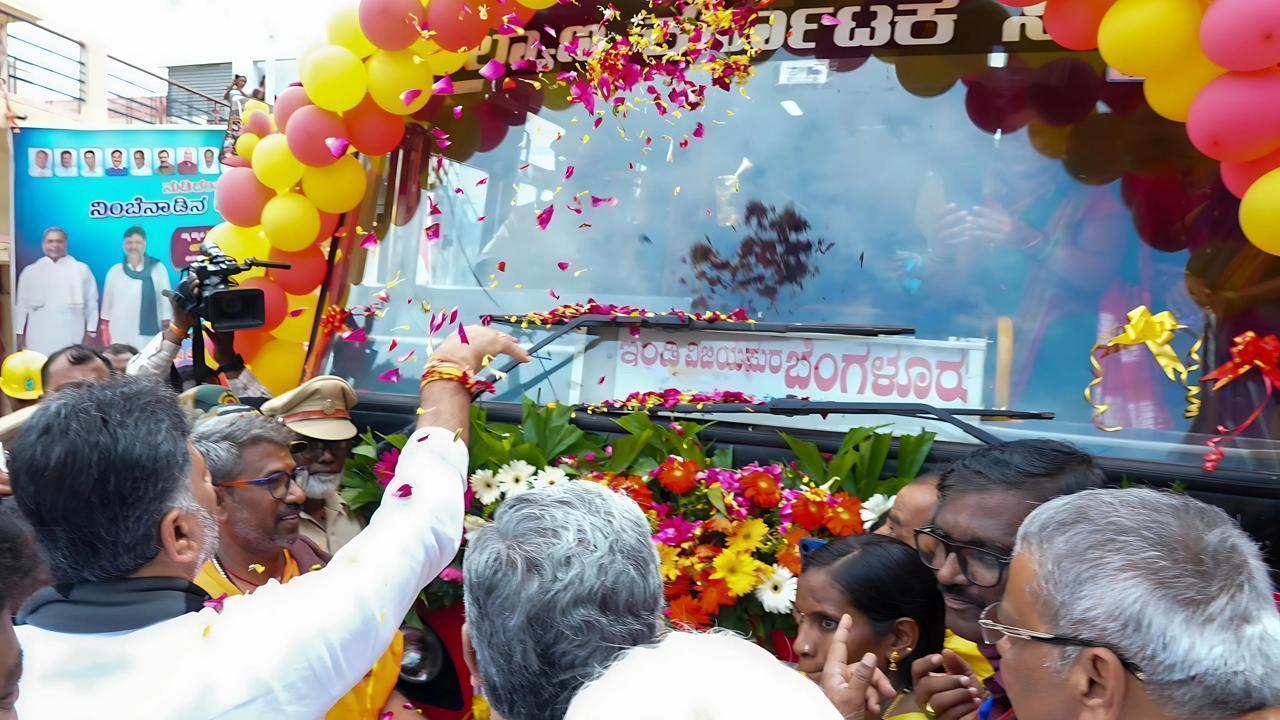
In a landmark moment for Karnataka’s ambitious free travel initiative for women, a factory worker from Bengaluru was handed the 500th crore ticket issued under the Shakti Scheme, reflecting the overwhelming scale and public response to the state government’s welfare measure. This symbolic ticket, offered to a daily commuter, not only marks a numerical milestone but also reinforces how transformative the scheme has been for lakhs of working-class women across the state.
The Lucky Commuter: A Factory Worker Who Embodies the Scheme's Spirit
The 500th crore ticket was handed over to Sunitha R, a resident of Kamakshipalya and a factory worker who relies on public transport to get to her workplace every day. Boarding a KSRTC bus on her routine route, she became part of a larger celebration led by Karnataka Deputy Chief Minister D K Shivakumar, who personally acknowledged her with a certificate and a rose to commemorate the occasion.
Sunitha’s daily life—marked by tight schedules, long travel hours, and work responsibilities—reflects the core demographic that the Shakti Scheme has aimed to uplift. Her selection wasn’t coincidental. It was a well-timed gesture meant to highlight the scheme’s reach among lower-income, urban working women who form the backbone of Karnataka’s economy.
The Numbers Behind the Celebration: 500 Crore and Growing
The enormity of 500 crore tickets in just over a year signals not just acceptance but dependence on the scheme for millions of women across Karnataka. The Shakti Scheme, which offers free bus travel for women within the state, was launched in June 2023 as a flagship welfare initiative by the Congress-led state government.
As per official data, since its inception, more than 400 crore kilometers of travel have been recorded by women under the scheme, with BMTC, KSRTC, NWKRTC, and KKRTC all reporting increased daily ridership numbers. BMTC alone caters to over 30 lakh women passengers daily, and many of them are daily wage workers, students, and small entrepreneurs.
A Political Statement Wrapped in a Welfare Package
The event wasn’t just symbolic—it was also political. Speaking at the function, Deputy CM D K Shivakumar reiterated that the Congress government kept its promise to Karnataka’s women. "When we promised free bus travel for women, many said it was impossible. Today, with 500 crore tickets issued, we have shown what political will can achieve," he said.
Chief Minister Siddaramaiah, while not physically present at the event, also issued a statement praising the success of the scheme and indicating that similar public welfare measures would be expanded in the coming months. He called the 500 crore mark “a sign of social mobility powered by governance.”
Boosting Women’s Agency and Mobility
Several reports over the past year have validated the impact of the Shakti Scheme beyond just numbers. Mobility access has directly correlated with increased women’s participation in employment, vocational training, and even political activities in both urban and rural parts of the state.
NGOs and independent observers have reported that women, especially from marginalized communities, now feel more empowered to seek jobs far from home, attend night school, or access healthcare without worrying about travel costs.
Operational Challenges and Evolving Logistics
While the success is being celebrated, the scheme hasn’t been without hurdles. BMTC and other transport corporations have repeatedly highlighted increased demand pressures, leading to bus shortages, overloading, and logistical bottlenecks. Maintenance schedules have become tighter, and staffing shortages have forced bus drivers and conductors to work overtime.
Yet, the government has remained proactive. The state has increased its focus on electrifying the fleet, expanding depot capacity, and has launched several new buses across routes where demand has spiked post-Shakti Scheme implementation. Officials say these steps are necessary to ensure that the quality of service matches the quantity of ridership.
Tech-Enabled Tracking and Transparent Data
One of the reasons the 500 crore ticket count could be celebrated so precisely is the digital ticketing infrastructure adopted across major transport corporations in Karnataka. Most buses are now fitted with ETMs (Electronic Ticketing Machines) that track every ticket issued, helping transport bodies collect granular ridership data.
This tech-backed transparency has not only streamlined subsidy claims from the government but has also allowed better route optimization based on real-time demand from women passengers.
Public Sentiment: Mixed, but Leaning Positive
The public response has mostly been positive, especially among the intended beneficiaries. Social media is flooded with videos of women thanking the government and encouraging others to utilize the scheme. However, some male passengers and transport workers have expressed concerns about over-crowding and perceived “inconvenience” due to the prioritization of female passengers.
Still, a majority of public discourse remains in favor of the scheme, especially as it aligns with global goals of gender equity in mobility. Urban planners and social researchers are now looking at Karnataka’s Shakti Scheme as a case study in transport-led social reform.
What's Next for Shakti?
The 500 crore milestone is not the finish line. Officials have already begun consultations to expand the scheme’s reach to inter-city buses, integrate with metro rail feeder services, and introduce monthly passes with app-based verification to reduce reliance on printed tickets.
There are also proposals on the table to explore similar mobility schemes for senior citizens, transgender persons, and persons with disabilities, though these are still in early stages.
For now, though, the 500 crore ticket issued to Sunitha R stands as a quiet, powerful reminder that sometimes a simple bus ride can change lives—and that mass mobility, when made free and accessible, can become the bedrock of empowerment.
Shakti Scheme, India, Transport



Advances in Aerospace Technology and Commercial Aviation Recovery
Insights into breakthrough aerospace technologies and commercial aviation’s recovery amid 2025 chall

Defense Modernization and Strategic Spending Trends
Explore key trends in global defense modernization and strategic military spending shaping 2025 secu

Tens of Thousands Protest in Serbia on Anniversary of Deadly Roof Collapse
Tens of thousands in Novi Sad mark a year since a deadly station roof collapse that killed 16, prote

Canada PM Carney Apologizes to Trump Over Controversial Reagan Anti-Tariff Ad
Canadian PM Mark Carney apologized to President Trump over an Ontario anti-tariff ad quoting Reagan,

The ad that stirred a hornets nest, and made Canadian PM Carney say sorry to Trump
Canadian PM Mark Carney apologizes to US President Trump after a tariff-related ad causes diplomatic

Bengaluru-Mumbai Superfast Train Approved After 30-Year Wait
Railways approves new superfast train connecting Bengaluru and Mumbai, ending a 30-year demand, easi




