Post by : Saif
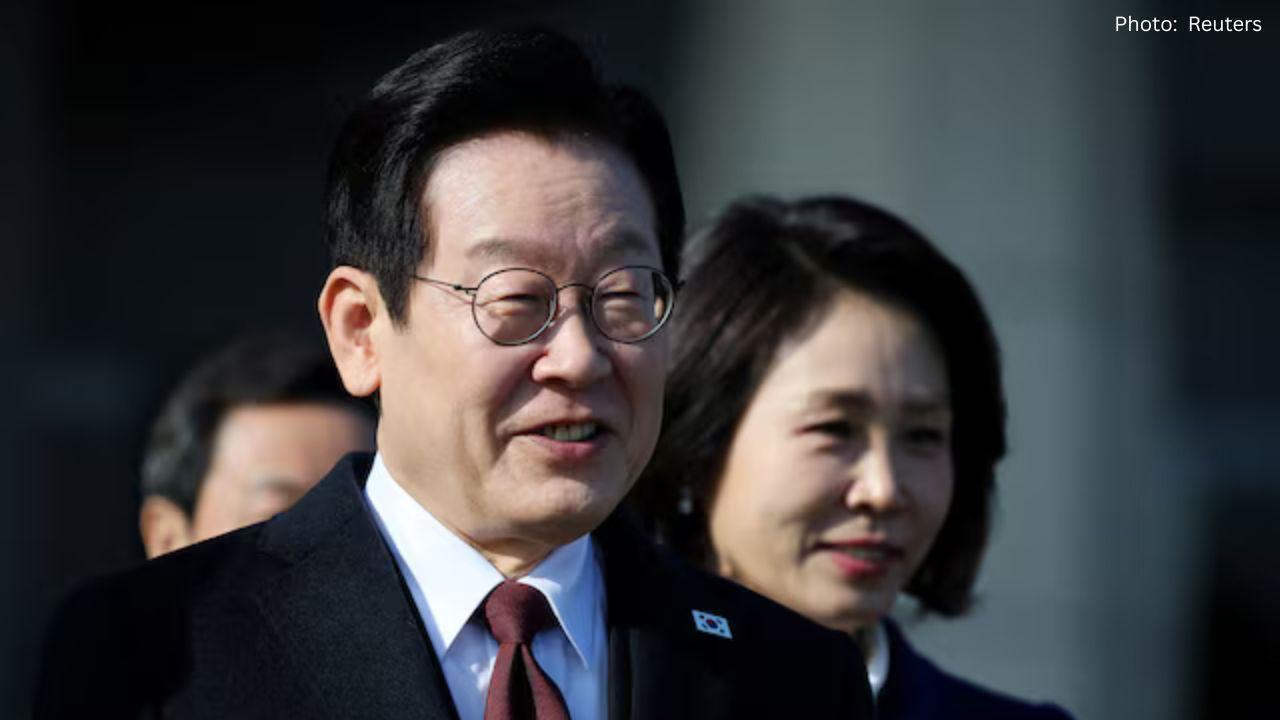
South Korean President Lee Jae Myung is set to visit Japan for a summit with Prime Minister Sanae Takaichi, just one week after holding talks with Chinese President Xi Jinping. This quick sequence of high-level meetings highlights South Korea’s effort to maintain balanced and practical relations with its two powerful neighbours.
The meeting in Japan’s Nara City comes at a time when relations between China and Japan are tense. Disputes over regional security and Taiwan have strained ties between Beijing and Tokyo. In this situation, South Korea is trying to avoid choosing sides and instead focus on stable diplomacy that protects its own national interests.
President Lee has described his foreign policy approach as “pragmatic diplomacy.” This means working with all major partners based on practical needs rather than ideology. His recent visit to China and upcoming trip to Japan show this strategy in action. Seoul wants to keep communication open with both countries, even when they disagree with each other.
Analysts believe Japan may use the summit to underline its strong ties with the United States and South Korea. At the same time, South Korea is expected to avoid getting directly involved in the Japan-China dispute. Lee himself has clearly said that relations with Japan are just as important as relations with China.
Apart from regional tensions, the two leaders are likely to discuss long-standing issues related to North Korea. These include denuclearisation of the Korean Peninsula and the issue of Japanese citizens abducted by North Korea in past decades. These topics have remained important for all countries in the region.
However, experts say the best chance for real progress lies in economic and technology cooperation. Areas such as artificial intelligence, semiconductor chips, intellectual property, and business travel are expected to be key points of discussion. Cooperation in these fields can directly benefit people’s daily lives and strengthen trust between the two nations.
The visit is also part of “shuttle diplomacy,” an agreement between South Korea and Japan to hold frequent leader-level meetings. Even if no major agreements are signed, regular talks help prevent misunderstandings and keep relations steady.
Historical issues linked to Japan’s colonial rule of Korea still exist, including sensitive topics related to wartime actions. While these issues are not expected to dominate the talks, they remain important to many people in South Korea.
Overall, President Lee’s visit to Japan sends a clear message. South Korea wants calm dialogue, steady cooperation, and balanced relations in a region often shaped by rivalry. By keeping talks going with both China and Japan, Seoul hopes to secure peace, growth, and stability for the future.
#trending #latest#SouthKorea #JapanSummit #ChinaRelations #AsianDiplomacy #LeeJaeMyung #GlobalPolitics #EastAsia



Advances in Aerospace Technology and Commercial Aviation Recovery
Insights into breakthrough aerospace technologies and commercial aviation’s recovery amid 2025 chall

Defense Modernization and Strategic Spending Trends
Explore key trends in global defense modernization and strategic military spending shaping 2025 secu

Tens of Thousands Protest in Serbia on Anniversary of Deadly Roof Collapse
Tens of thousands in Novi Sad mark a year since a deadly station roof collapse that killed 16, prote

Canada PM Carney Apologizes to Trump Over Controversial Reagan Anti-Tariff Ad
Canadian PM Mark Carney apologized to President Trump over an Ontario anti-tariff ad quoting Reagan,

The ad that stirred a hornets nest, and made Canadian PM Carney say sorry to Trump
Canadian PM Mark Carney apologizes to US President Trump after a tariff-related ad causes diplomatic

Bengaluru-Mumbai Superfast Train Approved After 30-Year Wait
Railways approves new superfast train connecting Bengaluru and Mumbai, ending a 30-year demand, easi




