Post by : Amit
StoreDot Secures Patent for Breakthrough Silicon EV Battery Promising Ultra-Fast Charging and Longer Lifespan
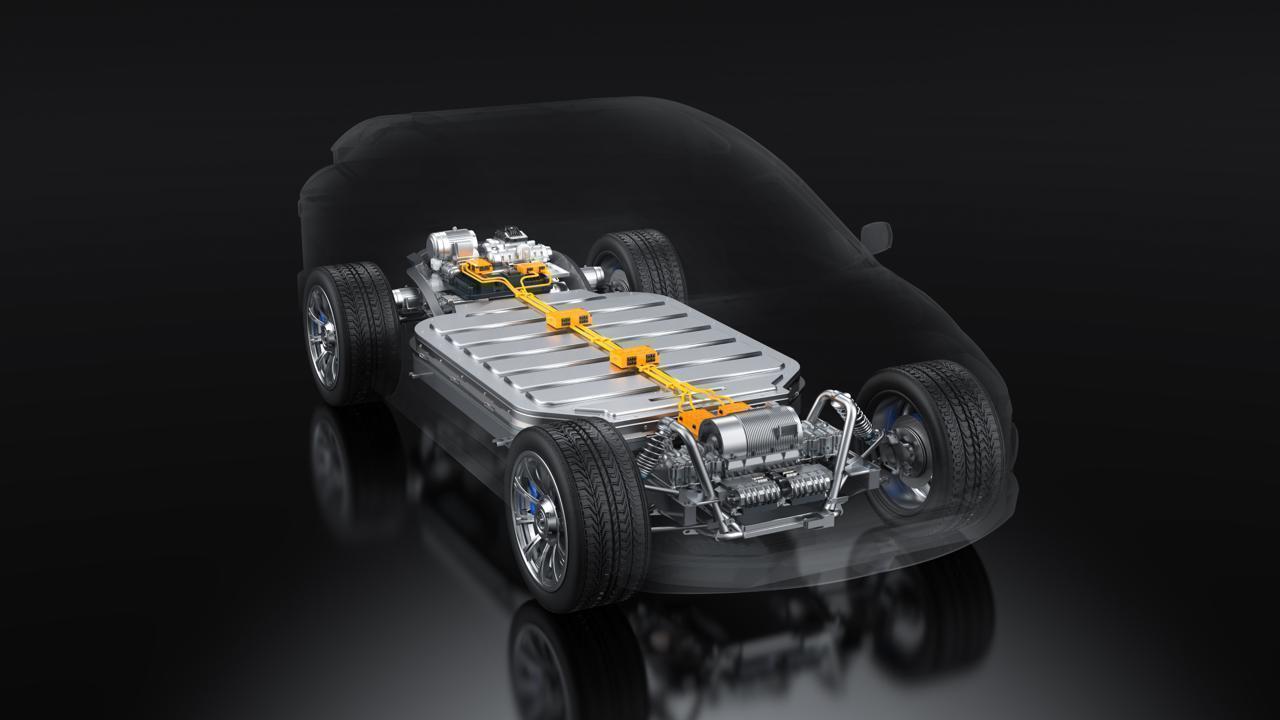
In a significant leap forward for the electric vehicle (EV) industry, Israel-based battery innovator StoreDot has secured a new US patent for its groundbreaking silicon-dominant lithium-ion battery technology, designed to enable ultra-fast charging and extended battery life for EVs. This breakthrough is set to redefine the way electric vehicles are charged, potentially reducing charging times to just a few minutes while improving overall durability and efficiency.
StoreDot’s patented solution, which focuses on silicon anode composition, paves the way for a new generation of batteries that can outperform traditional graphite-based lithium-ion cells, both in terms of speed and longevity.
The Technology: Silicon Anode Unlocks Faster, Safer Charging
The core innovation lies in StoreDot's use of high-content silicon in the battery’s anode, replacing conventional graphite. Silicon has long been regarded as a promising material for EV batteries because of its ability to store significantly more lithium ions, which translates into higher energy density and faster charging capability.
StoreDot’s patented formulation addresses previous challenges associated with silicon anodes, such as volume expansion and instability during charging cycles, through proprietary additives and electrode design. The result is a battery that can safely handle high-current charging, enabling EVs to achieve full charges in under 10 minutes.
Transforming the EV Charging Experience
StoreDot’s new battery technology aims to eliminate range anxiety—one of the biggest barriers to widespread EV adoption—by drastically reducing charging times without compromising safety or battery lifespan. The company claims its silicon-based batteries can offer:
This innovation could make electric mobility more practical and appealing for mainstream consumers, commercial fleet operators, and even public transport providers.
Commercialization Timeline: Eyes on 2027 Mass Deployment
StoreDot has already drawn global attention with its “100-in-5” battery concept, which aims to deliver 100 miles of range in five minutes—a benchmark the company says it has already demonstrated at the lab level.
The company plans to commercially deploy its XFC (Extreme Fast Charging) battery cells by 2027, with partnerships already underway with several major automotive OEMs, including Volvo, VinFast, and Polestar. StoreDot’s technology is currently being integrated into prototype vehicles for real-world testing and validation.
A Potential Shift in Global Battery Supply Chains
StoreDot’s patent not only signals technical progress but also highlights the ongoing geopolitical shift in battery supply chains. As the EV industry seeks to reduce dependence on Chinese-dominated battery manufacturing and rare-earth materials, silicon-based batteries offer a more sustainable, locally-sourced alternative.
Silicon is abundant, less toxic, and more environmentally friendly compared to traditional cobalt- or nickel-heavy cathode materials, making it an attractive choice for automakers aiming to meet ESG (Environmental, Social, and Governance) commitments.
Competitive Landscape: The Race for Fast-Charging Dominance
StoreDot’s move intensifies the global race to develop fast-charging battery technologies, with competitors such as QuantumScape, Sila Nanotechnologies, and CATL also investing heavily in next-generation energy storage solutions.
What sets StoreDot apart is its patented approach to stabilizing silicon, which could give it a crucial edge in both performance and commercial scalability.
Addressing Industry Challenges
While the technology holds immense promise, StoreDot and its partners will need to address several critical challenges before mass adoption, including:
Industry analysts believe that StoreDot’s innovation could accelerate the shift towards EVs, especially in markets where charging speed and battery cost remain barriers.
Broader Applications Beyond Electric Cars
In addition to passenger vehicles, StoreDot’s silicon battery technology could have far-reaching implications for other sectors, including:
The adaptability of this technology across industries could further disrupt the global energy storage market, creating new opportunities for innovation and growth.
StoreDot’s Silicon Battery Sets New Benchmark for EV Future
With its newly patented silicon battery technology, StoreDot has taken a decisive step towards making ultra-fast charging a commercial reality, potentially transforming how consumers and industries view electric vehicles. By combining speed, longevity, and sustainability, this innovation could become a cornerstone of the next phase of the electric mobility revolution.
As StoreDot advances toward commercialization, the world edges closer to a future where EV charging is as quick and convenient as refueling a conventional car—without the environmental toll of fossil fuels.
Silicon EV Battery, Ev charging



Advances in Aerospace Technology and Commercial Aviation Recovery
Insights into breakthrough aerospace technologies and commercial aviation’s recovery amid 2025 chall

Defense Modernization and Strategic Spending Trends
Explore key trends in global defense modernization and strategic military spending shaping 2025 secu

Tens of Thousands Protest in Serbia on Anniversary of Deadly Roof Collapse
Tens of thousands in Novi Sad mark a year since a deadly station roof collapse that killed 16, prote

Canada PM Carney Apologizes to Trump Over Controversial Reagan Anti-Tariff Ad
Canadian PM Mark Carney apologized to President Trump over an Ontario anti-tariff ad quoting Reagan,

The ad that stirred a hornets nest, and made Canadian PM Carney say sorry to Trump
Canadian PM Mark Carney apologizes to US President Trump after a tariff-related ad causes diplomatic

Bengaluru-Mumbai Superfast Train Approved After 30-Year Wait
Railways approves new superfast train connecting Bengaluru and Mumbai, ending a 30-year demand, easi




