Post by : Saif
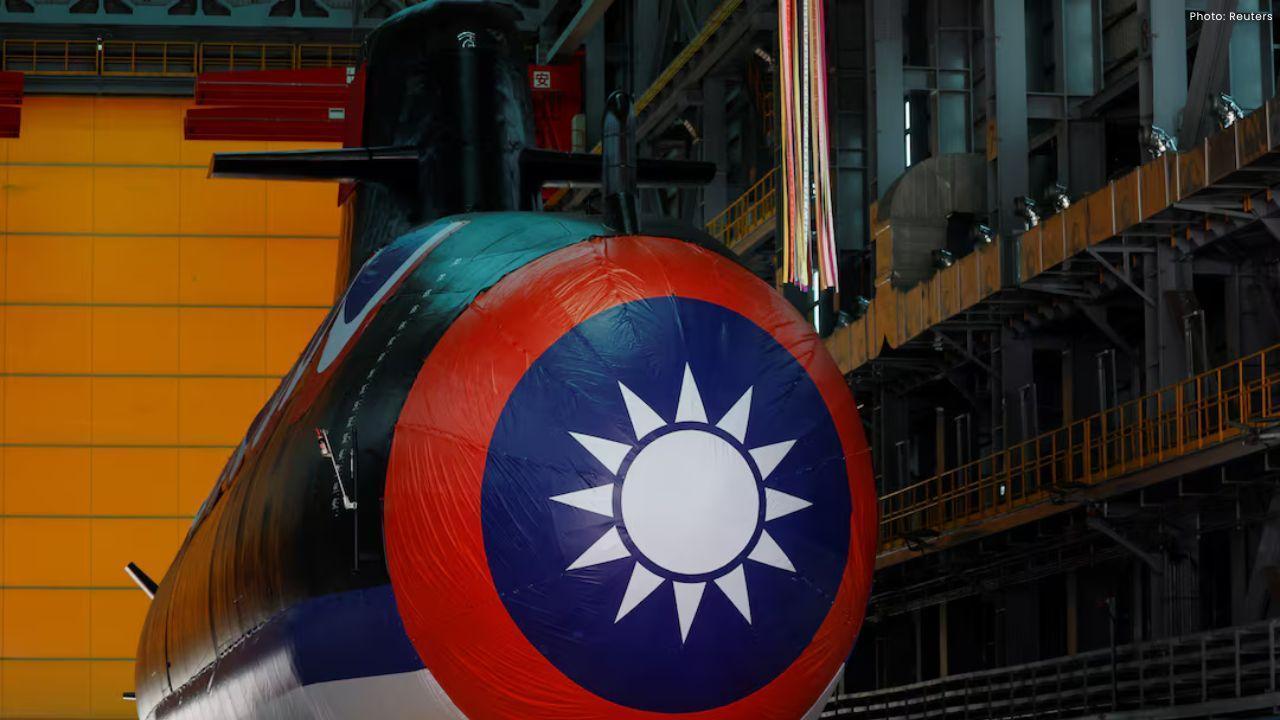
Taiwan has completed the first underwater sea trial of its first domestically built submarine, marking an important moment in the island’s effort to strengthen its defense capabilities. The trial is seen as a major step in Taiwan’s plan to protect its surrounding waters and deter growing military pressure from China.
The submarine, named Narwhal, carried out a shallow-water submerged navigation test off the southern port city of Kaohsiung. This was the first time the vessel operated underwater at sea, confirming that key systems are functioning as designed. Taiwanese officials described the test as a critical milestone after years of planning, construction, and delays.
Taiwan has made its indigenous submarine program a central part of its military modernization. China claims Taiwan as its own territory and has increased military activity around the island, including frequent air and naval exercises. In response, Taiwan is focusing on systems that can slow or deter a much larger force, especially in surrounding sea lanes that are vital for trade and security.
The submarine program has relied on technical support and components from several countries, including the United States and the United Kingdom. This cooperation is significant for Taiwan, which faces diplomatic isolation due to pressure from Beijing. The involvement of foreign partners helped Taiwan overcome long-standing barriers to building advanced submarines.
Construction of the submarine is led by Taiwan’s CSBC Corporation, which plans to build a total of eight submarines over time. The Narwhal was originally expected to be delivered to the navy in 2024, but international pressure and technical challenges caused delays. Despite this, Taiwan aims to deploy at least two locally built submarines by 2027.
The first submarine carries a high price tag and is equipped with advanced combat systems supplied by U.S. defense companies. It is also designed to use heavyweight torpedoes made in the United States. Future submarines may be fitted with missile systems, further increasing their deterrent value.
Taiwan’s military remains far smaller than China’s, which operates aircraft carriers, ballistic missile submarines, and advanced fighter jets. Because of this imbalance, Taiwan is preparing for what it calls “asymmetric warfare.” This strategy relies on smaller, mobile, and harder-to-detect weapons such as submarines, drones, and mobile missile units.
Officials say submarines are especially important because they can hide underwater, monitor enemy movements, and threaten larger ships if conflict breaks out. Even a small fleet can force an opponent to move more cautiously.
The successful underwater test does not mean the submarine is ready for service yet. More trials are expected before it is formally handed over to the navy. Still, the test sends a strong signal that Taiwan’s long-term defense plans are moving forward despite political pressure and technical hurdles.
As tensions in the region remain high, Taiwan’s submarine program is likely to draw close attention from both allies and rivals. For Taipei, the message is clear: building its own defense capabilities is no longer just an option, but a necessity.
#trending #latest #Taiwan #SubmarineProgram #IndigenousDefense #AsiaSecurity #ChinaTaiwan #MilitaryModernization #NavalPower



Advances in Aerospace Technology and Commercial Aviation Recovery
Insights into breakthrough aerospace technologies and commercial aviation’s recovery amid 2025 chall

Defense Modernization and Strategic Spending Trends
Explore key trends in global defense modernization and strategic military spending shaping 2025 secu

Tens of Thousands Protest in Serbia on Anniversary of Deadly Roof Collapse
Tens of thousands in Novi Sad mark a year since a deadly station roof collapse that killed 16, prote

Canada PM Carney Apologizes to Trump Over Controversial Reagan Anti-Tariff Ad
Canadian PM Mark Carney apologized to President Trump over an Ontario anti-tariff ad quoting Reagan,

The ad that stirred a hornets nest, and made Canadian PM Carney say sorry to Trump
Canadian PM Mark Carney apologizes to US President Trump after a tariff-related ad causes diplomatic

Bengaluru-Mumbai Superfast Train Approved After 30-Year Wait
Railways approves new superfast train connecting Bengaluru and Mumbai, ending a 30-year demand, easi




