Post by : Saif
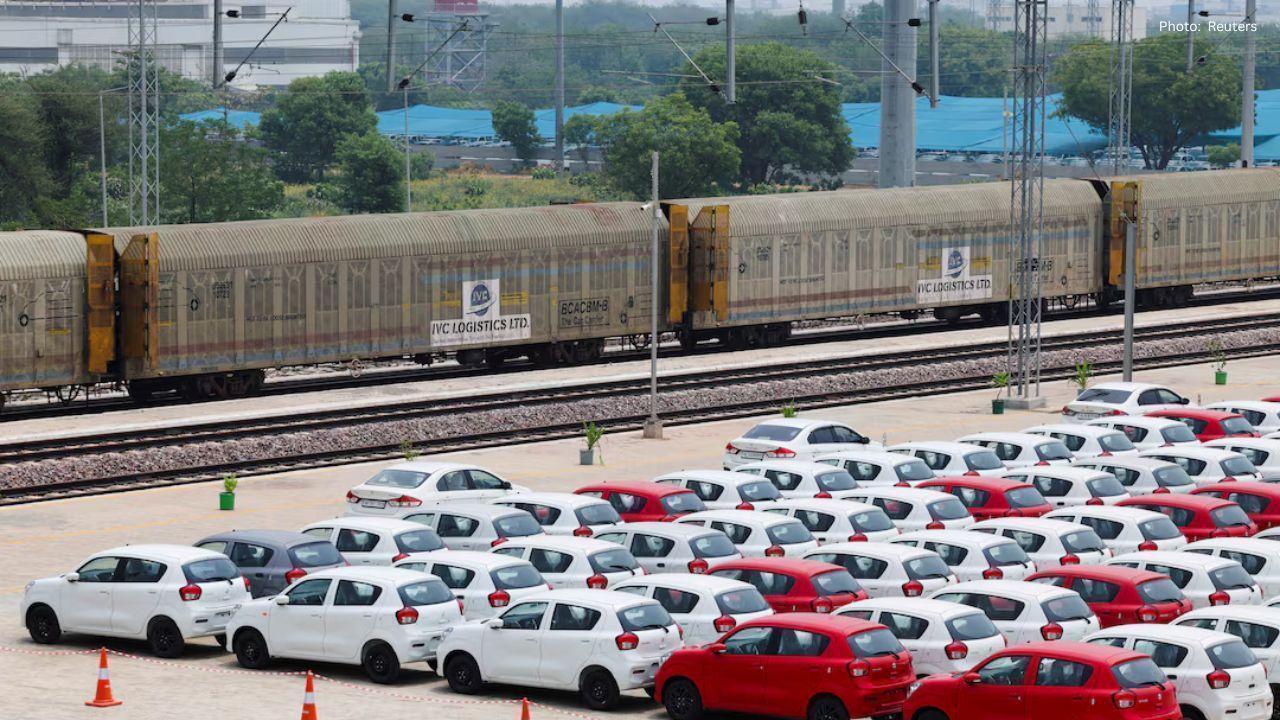
A major debate has opened up inside India’s car industry as top automakers like Tata Motors, Hyundai, Mahindra & Mahindra, and JSW MG Motor have urged the government to cancel a new weight-based emission concession for small cars. These companies say the planned rule will mostly help one company—Maruti Suzuki—while possibly slowing India’s progress toward electric vehicles.
The dispute comes at a time when India is preparing tighter fuel efficiency rules for passenger vehicles. These new rules will cut the acceptable average carbon dioxide (CO2) emissions from 113 grams per km to 91.7 grams per km. Automakers will need to improve their technology or sell more electric vehicles to meet this target.
However, the government’s draft rules include a special relaxation for petrol cars that weigh 909 kg or less, are shorter than 4 meters, and have engines no bigger than 1200 cc. Officials say these small cars have “limited potential for efficiency improvements,” which means they might struggle to meet the tougher emission targets without help.
This part of the proposal has divided India’s auto industry. Tata, Hyundai, Mahindra, and JSW MG Motor argue that the 909-kg cutoff has no international basis and gives an unfair advantage to companies that sell lighter cars. According to industry data and several executives, Maruti Suzuki—India’s largest seller of small cars—would be the biggest winner from this rule.
Letters reviewed by Reuters show that these companies want the concession removed completely. They say the rule risks damaging India’s push for cleaner vehicles, especially electric cars. Hyundai wrote that such an exemption could make India look like it is moving backward while the world moves toward strict zero-emission standards. It also warned that sudden changes in policy could hurt customer trust and affect future investments.
Mahindra told the government that creating special categories based on size or weight could harm the goal of building safer and cleaner cars in India. JSW MG Motor noted that more than 95% of cars under the 909-kg limit come from a single manufacturer, suggesting that the benefit is not being shared across the industry.
Government ministries did not respond to Reuters’ requests for comments. The companies that wrote the letters also did not comment further.
Maruti Suzuki, however, defended the proposal. It said many global markets such as Europe, the United States, China, Korea, and Japan have similar rules to protect very small cars. According to Maruti, small cars not only use less fuel but also produce far fewer emissions than larger vehicles like SUVs. The company said such a safeguard helps both the environment and customers who prefer affordable, fuel-efficient cars.
Even though about 16% of Maruti’s sales come from cars weighing less than 909 kg, demand for these smaller models has been falling as Indian buyers increasingly choose bigger SUVs.
The disagreement shows a fundamental divide in India’s fast-changing car market. On one side are companies that are pushing electric and larger vehicles. On the other side are automakers focused on small cars that remain important for many middle-class families.
With the new emissions policy still under discussion, the final decision will play a key role in shaping future investments and the direction of India’s auto industry for years to come.
#trending #latest #IndiaAutoNews #EmissionRules #TataMotors #Hyundai #MarutiSuzuki #EVIndia #AutoPolicy #CleanEnergy



Advances in Aerospace Technology and Commercial Aviation Recovery
Insights into breakthrough aerospace technologies and commercial aviation’s recovery amid 2025 chall

Defense Modernization and Strategic Spending Trends
Explore key trends in global defense modernization and strategic military spending shaping 2025 secu

Tens of Thousands Protest in Serbia on Anniversary of Deadly Roof Collapse
Tens of thousands in Novi Sad mark a year since a deadly station roof collapse that killed 16, prote

Canada PM Carney Apologizes to Trump Over Controversial Reagan Anti-Tariff Ad
Canadian PM Mark Carney apologized to President Trump over an Ontario anti-tariff ad quoting Reagan,

The ad that stirred a hornets nest, and made Canadian PM Carney say sorry to Trump
Canadian PM Mark Carney apologizes to US President Trump after a tariff-related ad causes diplomatic

Bengaluru-Mumbai Superfast Train Approved After 30-Year Wait
Railways approves new superfast train connecting Bengaluru and Mumbai, ending a 30-year demand, easi




